 by
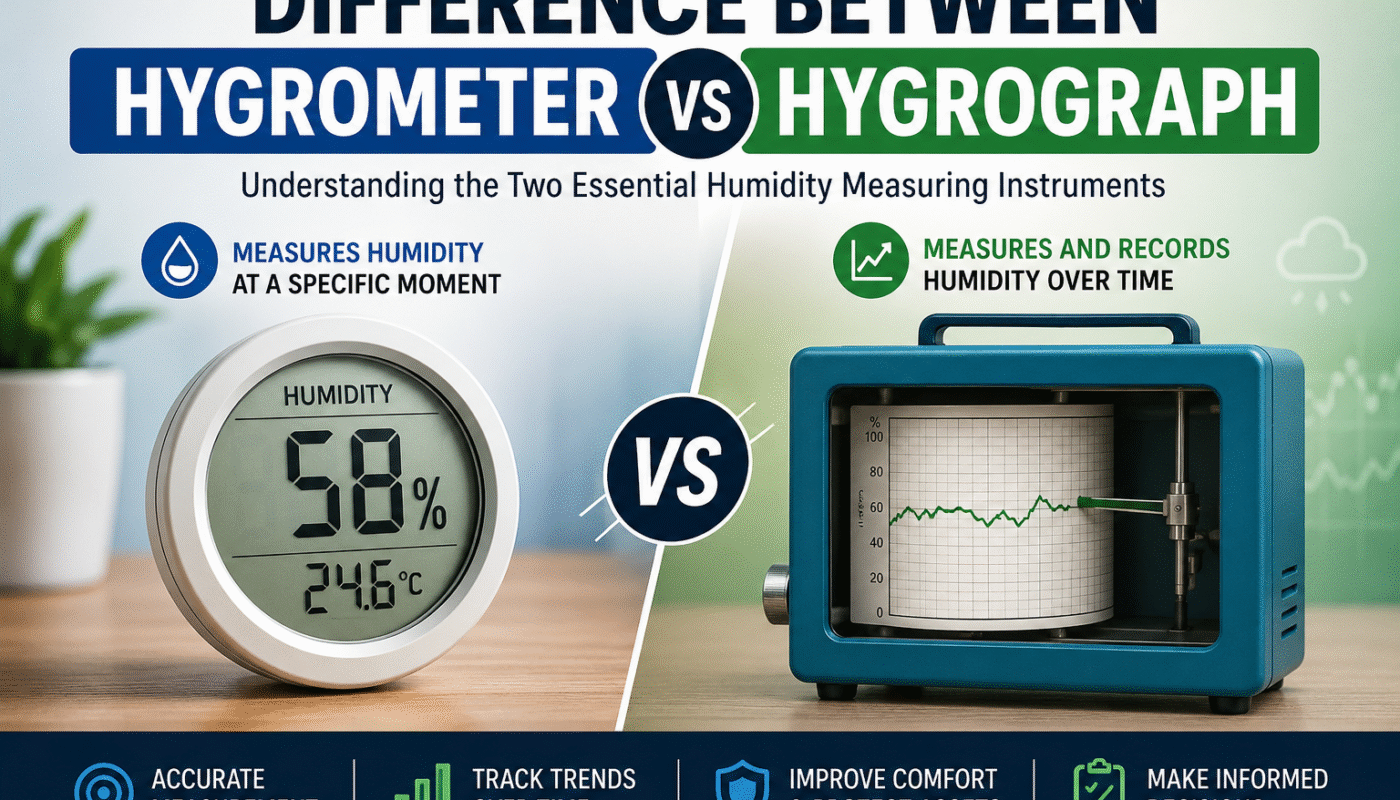
by Difference Between Hygrometer and Hygrograph: Understanding the Two Essential Humidity Measuring Instruments
Humidity plays a crucial role in our daily lives. From weather forecasting and agriculture to manufacturing and indoor comfort, measuring humidity accurately is essential. Two instruments commonly used for this purpose are the hygrometer and the hygrograph.
Although these terms are often used interchangeably, they are not the same. Both instruments measure humidity, but they differ significantly in how they operate, record data, and serve various applications.
If you’ve ever wondered about the difference between a hygrometer and a hygrograph, this comprehensive guide will explain everything you need to know.
What Is Humidity?
Before diving into the instruments, it’s important to understand humidity itself.
Humidity refers to the amount of water vapor present in the air. It is commonly expressed as:
- Absolute Humidity: Total amount of water vapor in a specific volume of air.
- Relative Humidity (RH): Percentage of water vapor in the air compared to the maximum amount the air can hold at a given temperature.
Monitoring humidity is important because excessive or insufficient moisture can affect:
- Human health and comfort
- Agricultural productivity
- Manufacturing processes
- Preservation of artifacts and documents
- Weather prediction
This is where hygrometers and hygrographs come into play.
What Is a Hygrometer?
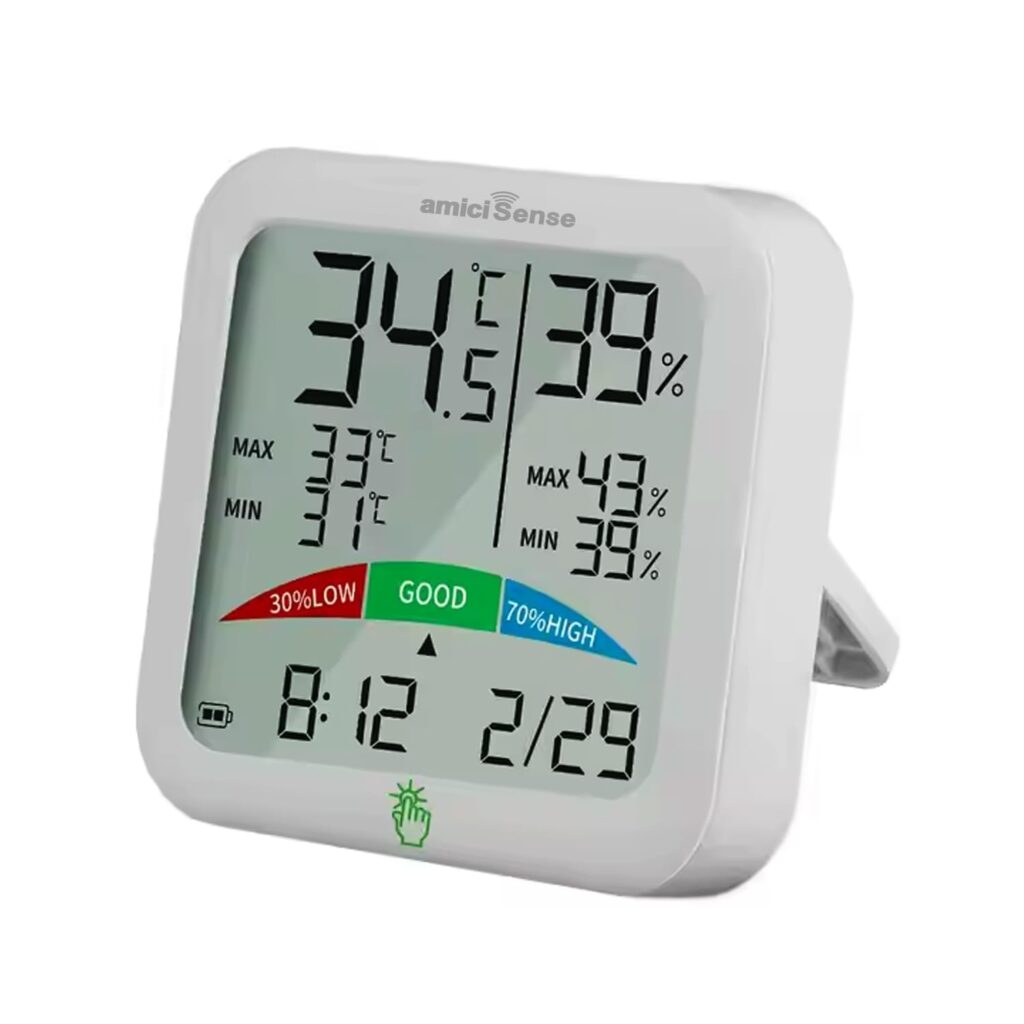
A hygrometer is an instrument designed to measure the humidity level in the atmosphere at a specific moment.
Think of it as a humidity thermometer. Just as a thermometer tells you the temperature at a given time, a hygrometer tells you the humidity level at that moment.
How Does a Hygrometer Work?
Different hygrometers use different technologies, including:
1. Mechanical Hygrometers
These use materials such as human hair or synthetic fibers that expand and contract based on moisture levels.
2. Psychrometers
They consist of:
- Dry-bulb thermometer
- Wet-bulb thermometer
The difference between the two temperature readings helps calculate humidity.
3. Electronic Hygrometers
Modern digital hygrometers use electronic sensors that detect changes in moisture levels and display humidity readings instantly.
Common Uses of Hygrometers
Hygrometers are widely used in:
Home Monitoring
Maintaining comfortable indoor humidity levels.
Greenhouses
Ensuring ideal growing conditions for plants.
Museums
Protecting valuable artifacts from moisture damage.
Laboratories
Monitoring environmental conditions during experiments.
HVAC Systems
Improving heating, ventilation, and air conditioning efficiency.
Industrial Facilities
Maintaining product quality and process control.
Advantages of Hygrometers
Easy to Use
Most modern hygrometers provide instant readings.
Portable
Many models are compact and lightweight.
Affordable
Digital hygrometers are available at reasonable prices.
Quick Results
Users can immediately check current humidity levels.
Limitations of Hygrometers
While useful, hygrometers have some limitations:
- Only provide current humidity readings.
- Cannot automatically track changes over time.
- Historical data is often unavailable unless connected to data logging systems.
This limitation led to the development of another instrument: the hygrograph.
What Is a Hygrograph?
A hygrograph is an instrument that not only measures humidity but also continuously records humidity changes over a period of time.
In simple terms:
A hygrometer measures humidity.
A hygrograph measures and records humidity.
A hygrograph creates a visual record, allowing users to analyze humidity trends throughout hours, days, or even weeks.
How Does a Hygrograph Work?
Traditional hygrographs operate using a humidity-sensitive element such as:
- Human hair
- Synthetic fibers
- Organic materials
When humidity changes:
- The material expands or contracts.
- Mechanical movement occurs.
- A pen attached to the mechanism records humidity values on a rotating chart.
As the chart rotates continuously, it creates a graph showing humidity variations over time.
Modern electronic hygrographs use digital sensors and software-based recording systems.
Common Uses of Hygrographs
Hygrographs are particularly valuable where continuous monitoring is necessary.
Meteorological Stations
Tracking humidity trends for weather forecasting.
Research Facilities
Collecting environmental data over long periods.
Agriculture
Monitoring climate conditions affecting crops.
Industrial Manufacturing
Maintaining quality standards in production environments.
Archives and Libraries
Protecting documents and books from moisture damage.
Pharmaceutical Industry
Ensuring proper storage conditions for medicines.
Advantages of Hygrographs
Continuous Recording
Provides a complete history of humidity levels.
Trend Analysis
Helps identify patterns and fluctuations.
Better Data Management
Useful for scientific studies and reporting.
Improved Decision-Making
Allows users to take preventive measures before humidity-related problems occur.
Limitations of Hygrographs
Despite their advantages, hygrographs also have drawbacks.
Higher Cost
Generally more expensive than standard hygrometers.
Maintenance Requirements
Mechanical components require periodic calibration.
Larger Size
Traditional hygrographs are less portable.
Complex Operation
May require training for proper interpretation of recorded charts.
Key Difference Between Hygrometer and Hygrograph
The primary distinction lies in their functionality.
A hygrometer simply indicates the current humidity level.
A hygrograph continuously records humidity changes over time and presents them graphically.
Let’s examine the differences in detail.
Hygrometer vs Hygrograph Comparison Table
| Feature | Hygrometer | Hygrograph |
|---|---|---|
| Primary Function | Measures humidity | Measures and records humidity |
| Data Recording | No continuous recording | Continuous recording available |
| Output | Instant humidity reading | Graphical humidity record |
| Complexity | Simple | More complex |
| Cost | Lower | Higher |
| Portability | Highly portable | Usually less portable |
| Maintenance | Minimal | Moderate to high |
| Historical Data | Usually unavailable | Available |
| Applications | Homes, offices, greenhouses | Weather stations, research centers |
| Monitoring Type | Spot measurement | Long-term monitoring |
Why Humidity Monitoring Matters
Humidity influences numerous aspects of daily life and industry.
Human Comfort
Ideal indoor humidity typically ranges between 30% and 60%.
Low humidity can cause:
- Dry skin
- Irritated eyes
- Respiratory discomfort
High humidity can lead to:
- Mold growth
- Dust mites
- Reduced comfort
Agriculture
Humidity affects:
- Seed germination
- Plant growth
- Disease development
Manufacturing
Many products require precise humidity control, including:
- Electronics
- Pharmaceuticals
- Textiles
- Food products
Preservation
Museums and archives rely on humidity monitoring to prevent deterioration of valuable collections.
Modern Evolution: Digital Hygrometers and Data Loggers
Technology has transformed humidity monitoring.
Today’s digital hygrometers often include:
- Data logging capabilities
- Wireless connectivity
- Smartphone integration
- Cloud storage
As a result, modern digital hygrometers can perform many functions traditionally associated with hygrographs.
Some advanced devices:
- Record humidity continuously
- Store historical data
- Generate charts automatically
- Send alerts when humidity exceeds preset limits
This has blurred the line between hygrometers and hygrographs in modern applications.
Which Instrument Should You Choose?
The choice depends on your requirements.
Choose a Hygrometer If:
You need:
- Quick humidity readings
- Portable equipment
- Low-cost monitoring
- Home or office use
Choose a Hygrograph If:
You need:
- Long-term humidity records
- Trend analysis
- Scientific data collection
- Industrial monitoring
- Regulatory compliance
Real-World Examples
Example 1: Homeowner
A homeowner wants to monitor humidity in a bedroom.
A digital hygrometer is usually sufficient because only current humidity levels are needed.
Example 2: Weather Observatory
Meteorologists need humidity data throughout the day.
A hygrograph or modern digital recording system is the better choice because it provides continuous records.
Example 3: Museum Curator
Protecting priceless artifacts requires tracking humidity fluctuations.
Continuous recording through a hygrograph helps identify environmental risks before damage occurs.
Future of Humidity Measurement
Humidity monitoring technology continues to evolve rapidly.
Emerging innovations include:
- Internet of Things (IoT) sensors
- Smart building integration
- AI-based environmental monitoring
- Remote cloud analytics
- Real-time alerts and automation
These advancements provide greater accuracy, accessibility, and efficiency than ever before.
As industries increasingly rely on environmental data, the importance of humidity measurement instruments will continue to grow.
Frequently Asked Questions (FAQs)
Is a hygrograph the same as a hygrometer?
No. A hygrometer measures humidity at a specific moment, while a hygrograph measures and continuously records humidity changes over time.
Which instrument is more accurate?
Accuracy depends on the design and calibration. Modern digital versions of both instruments can provide highly accurate measurements.
Are hygrographs still used today?
Yes. Although many organizations now use digital humidity monitoring systems, hygrographs remain valuable for continuous recording applications.
Can a digital hygrometer replace a hygrograph?
Many advanced digital hygrometers include data logging features and can perform functions similar to a hygrograph.
Where are hygrographs commonly used?
They are commonly used in weather stations, research laboratories, museums, archives, industrial facilities, and agricultural environments.
Final Thoughts
Understanding the difference between a hygrometer and a hygrograph is essential for selecting the right humidity monitoring instrument.
A hygrometer provides a snapshot of current humidity conditions, making it ideal for everyday monitoring and quick measurements. A hygrograph, on the other hand, continuously records humidity changes over time, making it invaluable for scientific research, weather forecasting, industrial operations, and environmental management.
As digital technology continues to advance, modern humidity monitoring systems increasingly combine the strengths of both instruments. Nevertheless, the fundamental distinction remains clear: a hygrometer measures humidity, while a hygrograph measures and records it.
Whether you’re a homeowner, researcher, farmer, or industry professional, choosing the appropriate instrument can help you maintain optimal environmental conditions, protect valuable assets, and make informed decisions based on accurate humidity data.
🔁 Readers also enjoyed these blog posts:
- Safety Management’s Role: The Unsung Hero Behind Every Successful Organization
- Safety Management and Its Responsibilities: Protecting People, Preventing Hazards, and Promoting a Culture of Care
- Benchmarking for Safety Performance: A Key to Continuous Improvement
“Start Your Website Journey Today – Exclusive Hostinger Discounts!”

Turn Any Idea into Viral,
Jaw-Dropping AI Videos in Seconds!