 by
by Different Methods for Control of Heat Stress
Summer temperatures are rising across the globe, and with them comes an invisible workplace hazard that affects millions of workers every year: heat stress. Whether employees work on construction sites, in manufacturing plants, warehouses, foundries, farms, kitchens, or outdoors under the blazing sun, excessive heat can quickly turn a normal workday into a medical emergency.
Heat stress is more than just feeling uncomfortable. It can reduce concentration, slow reaction time, increase workplace accidents, and lead to serious illnesses such as heat cramps, heat exhaustion, and even life-threatening heat stroke.
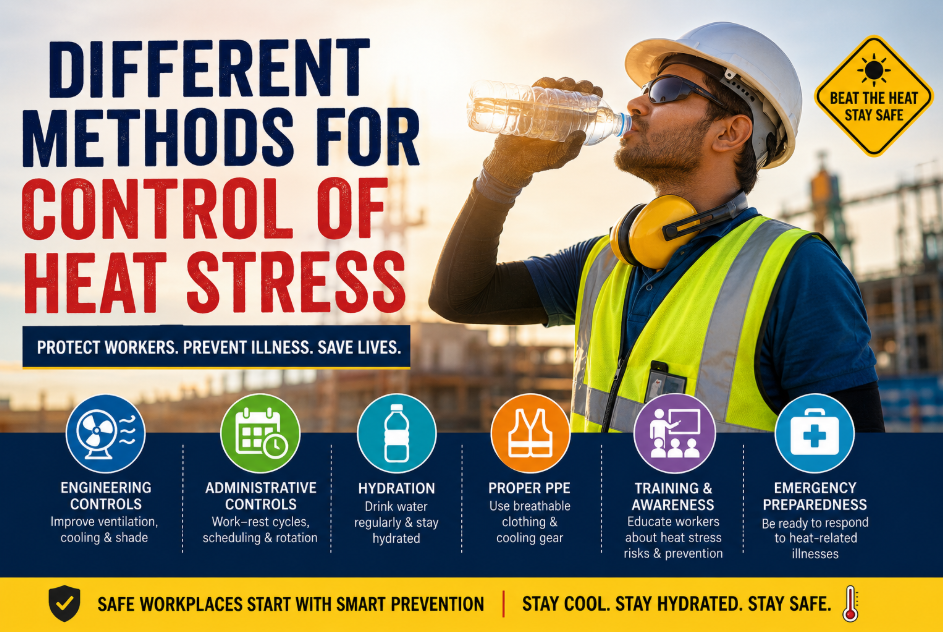
The good news is that heat stress is largely preventable. By combining engineering controls, administrative measures, proper hydration, suitable personal protective equipment (PPE), and employee education, organizations can significantly reduce heat-related risks.
In this guide, we’ll explore the different methods for control of heat stress, practical workplace solutions, and best practices that help create a safer and healthier work environment.
What Is Heat Stress?
Heat stress occurs when the body absorbs more heat than it can release. Normally, the human body cools itself by sweating and increasing blood flow to the skin. However, when temperatures are extremely high, humidity is elevated, heavy PPE is worn, or physical work is intense, the body’s cooling system becomes overwhelmed.
Without proper intervention, this imbalance can lead to severe heat-related illnesses.
Common Causes of Heat Stress
Several workplace factors contribute to heat stress:
- High air temperatures
- High humidity
- Direct sunlight
- Radiant heat from machinery
- Poor ventilation
- Heavy physical work
- Wearing impermeable protective clothing
- Lack of drinking water
- Long working hours
- Inadequate rest breaks
Understanding these factors helps employers select the right control methods.
Why Controlling Heat Stress Is Important
Ignoring heat stress doesn’t just affect worker comfort. It can lead to:
- Reduced productivity
- Increased workplace accidents
- Fatigue
- Dehydration
- Heat cramps
- Heat exhaustion
- Heat stroke
- Long-term health complications
- Increased absenteeism
A strong heat stress prevention program protects both employees and business operations.
1. Engineering Controls
Engineering controls are the most effective long-term solutions because they reduce heat at its source.
Improve Ventilation
Proper airflow removes hot air and replaces it with cooler fresh air.
Methods include:
- Natural ventilation
- Mechanical ventilation
- Exhaust systems
- Roof ventilators
- Wall-mounted exhaust fans
Better airflow helps sweat evaporate more efficiently.
Install Air Conditioning
Air conditioning is one of the most effective methods for controlling indoor heat stress.
It is especially useful in:
- Control rooms
- Offices
- Medical rooms
- Rest areas
- Manufacturing facilities
Use Cooling Fans
Industrial fans improve air circulation and increase evaporation of sweat.
Examples include:
- Portable fans
- Ceiling fans
- High-volume low-speed (HVLS) fans
- Air movers
Insulate Hot Equipment
Machinery often generates enormous amounts of radiant heat.
Heat insulation can include:
- Thermal barriers
- Heat shields
- Reflective insulation
- Pipe insulation
Reducing radiant heat lowers worker exposure.
Install Reflective Roofing
Buildings with reflective roofs absorb less solar heat.
Benefits include:
- Lower indoor temperatures
- Reduced energy costs
- Improved worker comfort
Provide Shade Structures
Outdoor workers benefit greatly from:
- Temporary shelters
- Shade tents
- Portable canopies
- Tree-covered rest areas
Even a few degrees of temperature reduction makes a noticeable difference.
2. Administrative Controls
Administrative controls change how work is organized.
Schedule Heavy Work During Cooler Hours
Instead of working during peak afternoon temperatures, schedule demanding tasks:
- Early morning
- Evening
- Night shifts (where feasible)
This significantly lowers heat exposure.
Work-Rest Cycles
Employees should receive scheduled cooling breaks.
Example:
- 45 minutes work
- 15 minutes rest
The exact schedule depends on temperature and workload.
Rotate Workers
Instead of one employee working continuously in hot conditions, rotate workers between:
- Hot areas
- Cooler tasks
- Indoor work
This reduces total heat exposure.
Acclimatization
New workers are more likely to experience heat illness.
Gradually increase workload over 7 to 14 days.
Acclimatization allows the body to adapt by:
- Sweating earlier
- Sweating more efficiently
- Reducing heart strain
Monitor Weather Conditions
Use:
- Heat Index
- Wet Bulb Globe Temperature (WBGT)
- Local weather forecasts
Supervisors should modify work schedules during extreme heat.
3. Hydration Programs
Water is one of the simplest and most effective heat stress controls.
Workers should:
- Drink water before feeling thirsty.
- Consume small amounts frequently.
- Avoid dehydration.
- Replenish fluids throughout the day.
For prolonged heavy work, electrolyte drinks may help replace salts lost through sweating.
Avoid:
- Alcohol
- Excessive caffeine
- Sugary soft drinks
4. Personal Protective Equipment (PPE)
Although PPE sometimes increases heat, specialized cooling equipment can reduce heat stress.
Examples include:
- Cooling vests
- Cooling neck wraps
- Breathable clothing
- Moisture-wicking fabrics
- Wide-brim hats for outdoor workers
- UV-protective clothing
Whenever possible, choose lightweight PPE that still meets safety standards.
5. Worker Training and Awareness
Education is one of the most overlooked control measures.
Training should cover:
- Symptoms of heat illness
- Importance of hydration
- Proper use of PPE
- Emergency procedures
- Reporting symptoms early
- Heat stress prevention techniques
An informed workforce responds faster during emergencies.
6. Health Monitoring
Employers should encourage workers to watch for early warning signs such as:
- Heavy sweating
- Headache
- Muscle cramps
- Weakness
- Dizziness
- Nausea
- Confusion
Workers with heart disease, diabetes, obesity, or certain medications may require additional precautions.
7. Buddy System
Employees should never work alone in extremely hot environments.
A buddy system allows coworkers to:
- Watch for symptoms
- Remind each other to drink water
- Report emergencies quickly
- Assist during medical incidents
Early detection can save lives.
8. Emergency Preparedness
Every workplace should have a heat illness emergency plan.
The plan should include:
- Emergency contact numbers
- First aid procedures
- Ice packs
- Cooling blankets
- Cold water availability
- Transportation arrangements
- Emergency medical services access
Quick action during heat stroke can be life-saving.
Recognizing Heat-Related Illnesses
Heat Rash
Small red bumps caused by blocked sweat ducts.
First Aid: Keep the skin cool and dry.
Heat Cramps
Painful muscle spasms caused by dehydration and electrolyte loss.
First Aid: Rest, drink fluids, and gently stretch affected muscles.
Heat Exhaustion
Symptoms include heavy sweating, dizziness, headache, weakness, nausea, and cool, clammy skin.
First Aid: Move the person to a cool place, loosen clothing, provide cool water if they are alert, and apply cool compresses.
Heat Stroke
Symptoms include confusion, loss of consciousness, seizures, hot skin, or a body temperature above 40°C (104°F).
First Aid: Call emergency medical services immediately, move the person to a cooler area, and begin rapid cooling while waiting for professional help. Do not delay treatment.
Best Practices for Employers
A successful heat stress prevention program should include:
- Conducting heat risk assessments.
- Providing unlimited access to drinking water.
- Ensuring shaded or cooled rest areas.
- Monitoring workers during heat waves.
- Maintaining ventilation and cooling systems.
- Reviewing incidents to improve future prevention.
- Encouraging workers to report symptoms without fear of punishment.
Benefits of Effective Heat Stress Control
Investing in heat stress prevention delivers multiple benefits:
- Fewer workplace injuries
- Lower medical costs
- Higher employee morale
- Increased productivity
- Better regulatory compliance
- Reduced absenteeism
- Improved overall safety culture
Protecting workers from heat also protects business continuity.
Frequently Asked Questions (FAQ)
What is heat stress?
Heat stress is the body’s inability to cool itself effectively when exposed to high temperatures, humidity, physical exertion, or radiant heat.
Who is at risk?
Construction workers, factory employees, farmers, landscapers, miners, warehouse staff, firefighters, kitchen workers, and anyone working in hot environments are at higher risk.
What is the most effective way to control heat stress?
A combination of engineering controls, administrative controls, adequate hydration, worker training, acclimatization, and emergency preparedness provides the best protection.
Why is acclimatization important?
It allows the body to gradually adapt to hot conditions, reducing the likelihood of heat-related illnesses.
Can dehydration increase the risk of heat stress?
Yes. Even mild dehydration reduces the body’s ability to regulate temperature and increases the risk of heat exhaustion and heat stroke.
Conclusion
Heat stress remains one of the most significant occupational hazards in hot environments, yet it is highly preventable with the right planning and controls. By implementing engineering improvements, adjusting work schedules, promoting hydration, providing suitable PPE, educating employees, and preparing for emergencies, organizations can dramatically reduce heat-related incidents.
A proactive approach does more than meet safety requirements. It protects lives, boosts productivity, and creates a workplace where employees can perform confidently even during the hottest months. As global temperatures continue to rise, investing in effective heat stress control is no longer optional. It is an essential part of responsible workplace safety management.
🔁 Readers also enjoyed these blog posts:
- Safety Management’s Role: The Unsung Hero Behind Every Successful Organization
- Safety Management and Its Responsibilities: Protecting People, Preventing Hazards, and Promoting a Culture of Care
- Benchmarking for Safety Performance: A Key to Continuous Improvement
“Start Your Website Journey Today – Exclusive Hostinger Discounts!”

Turn Any Idea into Viral,
Jaw-Dropping AI Videos in Seconds!