 by
by Difference Between Heat Stress and Heat Strain: Understanding the Hidden Threat of Working in Hot Environments
When temperatures soar, the dangers of heat exposure become a serious concern for workers across industries. Construction sites, manufacturing plants, warehouses, mining operations, agriculture fields, and even outdoor service sectors often expose employees to extreme heat conditions. Yet, many people use the terms heat stress and heat strain interchangeably without understanding that they are not the same thing.
Knowing the difference between heat stress and heat strain is essential for protecting workers, preventing heat-related illnesses, and creating safer workplaces.
In this article, we will explore the meaning of heat stress and heat strain, how they differ, their causes, symptoms, health impacts, and effective prevention strategies.
What is Heat Stress?
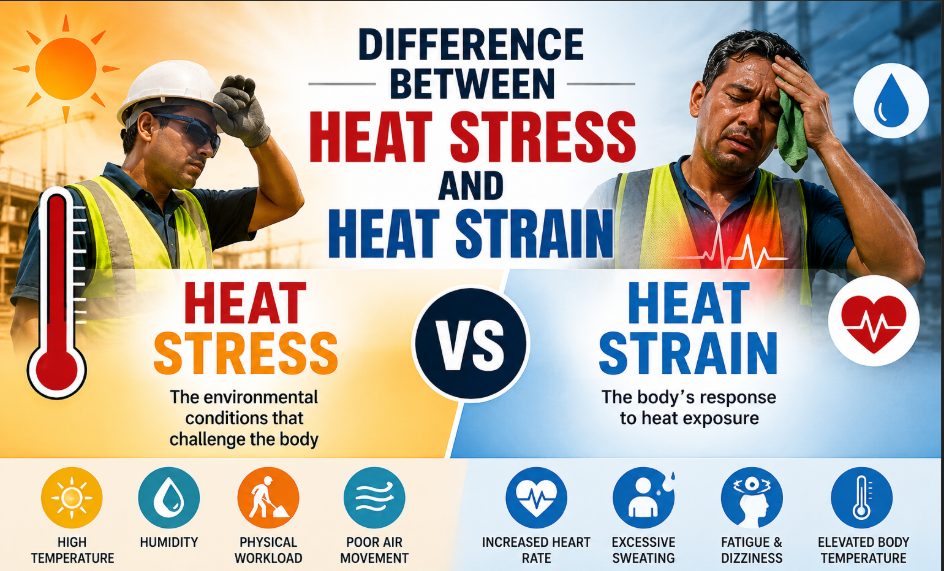
Heat stress refers to the external heat load placed on the body due to environmental conditions and work activities.
It is the combination of factors that make it difficult for the body to maintain a normal temperature. Heat stress is essentially the challenge that the environment presents to a worker.
Factors That Contribute to Heat Stress
Several factors influence heat stress, including:
1. Air Temperature
High ambient temperatures increase the body’s heat gain.
2. Humidity
When humidity is high, sweat evaporates more slowly, reducing the body’s natural cooling ability.
3. Radiant Heat
Heat emitted from the sun, machinery, furnaces, ovens, or hot surfaces increases heat exposure.
4. Air Movement
Poor airflow limits cooling through sweat evaporation.
5. Physical Workload
Heavy labor generates additional internal body heat.
6. Protective Clothing
Personal protective equipment (PPE) can trap heat and restrict cooling.
Examples of Heat Stress
- A construction worker working under direct sunlight.
- A welder operating near high-temperature equipment.
- A foundry worker exposed to radiant heat from molten metal.
- Agricultural workers harvesting crops during summer afternoons.
In simple terms, heat stress is the environmental and occupational challenge that can potentially overwhelm the body’s cooling mechanisms.
What is Heat Strain?
Heat strain refers to the body’s physiological response to heat stress.
It is how the human body reacts when exposed to heat stress conditions. Heat strain reflects the level of stress experienced by the body’s systems as they work to maintain a safe internal temperature.
Indicators of Heat Strain
Common physiological responses include:
- Increased heart rate
- Elevated body temperature
- Excessive sweating
- Dehydration
- Fatigue
- Reduced mental alertness
- Increased breathing rate
If heat strain becomes severe, it can lead to heat-related illnesses such as:
- Heat rash
- Heat cramps
- Heat exhaustion
- Heat syncope (fainting)
- Heat stroke
Examples of Heat Strain
- A worker’s heart rate increases significantly while working in hot weather.
- A laborer becomes dizzy and fatigued after prolonged exposure to heat.
- An employee experiences dehydration and muscle cramps during a long shift.
In simple terms, heat strain is the body’s reaction to heat stress.
The Simple Relationship Between Heat Stress and Heat Strain
Think of heat stress as the cause and heat strain as the effect.
Easy Analogy
Imagine a car climbing a steep hill.
- The steep hill represents heat stress.
- The strain on the engine represents heat strain.
The steeper the hill, the harder the engine must work.
Similarly, the greater the heat stress, the more strain the body experiences.
Key Differences Between Heat Stress and Heat Strain
| Aspect | Heat Stress | Heat Strain |
|---|---|---|
| Definition | External heat load on the body | Body’s response to heat exposure |
| Nature | Environmental condition | Physiological reaction |
| Cause | Temperature, humidity, workload, radiant heat | Result of exposure to heat stress |
| Measurement | WBGT, air temperature, humidity | Heart rate, body temperature, sweating |
| Focus | Workplace conditions | Worker’s health condition |
| Control | Environmental controls | Medical monitoring and personal protection |
| Examples | Hot weather, furnaces, heavy work | Fatigue, dehydration, elevated heart rate |
Common Symptoms of Heat Strain
Workers experiencing heat strain may show the following signs:
Physical Symptoms
- Heavy sweating
- Weakness
- Muscle cramps
- Headache
- Dizziness
- Nausea
- Thirst
- Fatigue
Mental Symptoms
- Difficulty concentrating
- Slower reaction times
- Confusion
- Irritability
- Poor decision-making
These symptoms should never be ignored because they may indicate the onset of serious heat-related illnesses.
How Heat Stress Leads to Heat Strain
The human body continuously generates heat through metabolism and physical activity.
Under normal conditions, the body cools itself through:
- Sweating
- Increased blood flow to the skin
- Radiation of heat into the surrounding environment
However, when environmental heat becomes excessive, these cooling mechanisms become less effective.
The body responds by:
- Increasing sweat production.
- Increasing heart rate.
- Redirecting blood flow to the skin.
- Consuming more energy.
Over time, these compensatory mechanisms place significant strain on the body, leading to heat strain.
Industries Most at Risk
Certain industries face higher risks of heat stress and heat strain.
Construction
Outdoor workers often face prolonged exposure to sunlight and high temperatures.
Manufacturing
Factories with ovens, furnaces, and heavy machinery create intense heat conditions.
Mining
Underground and surface mining operations can expose workers to extreme temperatures.
Agriculture
Farm workers frequently perform physically demanding tasks under direct sunlight.
Oil and Gas
Workers often wear heavy protective equipment in hot environments.
Transportation and Logistics
Warehouse workers and delivery personnel may face heat exposure throughout the day.
Health Effects of Severe Heat Strain
If heat strain is not controlled, serious health consequences may occur.
Heat Cramps
Painful muscle spasms caused by electrolyte loss through sweating.
Heat Exhaustion
Symptoms include:
- Heavy sweating
- Weakness
- Nausea
- Dizziness
- Rapid pulse
Heat exhaustion requires immediate attention.
Heat Stroke
Heat stroke is a medical emergency.
Symptoms include:
- Body temperature above 40°C (104°F)
- Confusion
- Loss of consciousness
- Hot skin
- Seizures
Without immediate treatment, heat stroke can be fatal.
Factors That Increase Heat Strain
Not everyone responds to heat in the same way.
Several personal factors influence heat strain levels:
Age
Older workers may have reduced heat tolerance.
Physical Fitness
Poor fitness can increase susceptibility.
Hydration Status
Dehydration significantly increases risk.
Medical Conditions
Heart disease, diabetes, and other illnesses can affect heat tolerance.
Medications
Some medications interfere with temperature regulation.
Acclimatization
Workers new to hot environments often face greater risks.
How to Assess Heat Stress
Organizations commonly use the following methods:
Wet Bulb Globe Temperature (WBGT)
WBGT is one of the most widely accepted methods for evaluating heat stress.
It considers:
- Air temperature
- Humidity
- Radiant heat
- Air movement
Heat Index
The heat index combines temperature and humidity to estimate perceived heat.
Environmental Monitoring
Regular measurements help identify hazardous conditions before workers become affected.
How to Monitor Heat Strain
Heat strain can be assessed through:
Heart Rate Monitoring
Elevated heart rates may indicate excessive physiological strain.
Core Body Temperature
Monitoring body temperature helps detect dangerous heat exposure.
Observation of Symptoms
Supervisors should watch for signs of heat-related illness.
Wearable Technology
Modern wearable devices can track physiological responses in real time.
Effective Strategies to Prevent Heat Stress and Heat Strain
1. Provide Adequate Hydration
Workers should drink water regularly throughout the day.
Avoid waiting until thirst develops.
2. Implement Work-Rest Cycles
Frequent breaks help the body recover.
3. Provide Shade and Cooling Areas
Rest areas should be available near work zones.
4. Use Engineering Controls
Examples include:
- Ventilation systems
- Air conditioning
- Cooling fans
- Heat shields
5. Schedule Work Wisely
Heavy tasks should be performed during cooler hours whenever possible.
6. Train Employees
Workers should understand:
- Heat hazards
- Warning signs
- Emergency procedures
7. Acclimatize New Workers
Gradually increase exposure over 1 to 2 weeks.
8. Wear Appropriate Clothing
Lightweight and breathable clothing improves heat dissipation.
Why Understanding the Difference Matters
Many workplace incidents occur because organizations focus only on environmental conditions without monitoring workers’ physiological responses.
Understanding both concepts allows employers to:
- Identify hazards earlier.
- Reduce heat-related illnesses.
- Improve productivity.
- Meet regulatory requirements.
- Protect worker health and safety.
Heat stress assessments help determine workplace risks, while heat strain monitoring helps determine how workers are actually responding to those risks.
Both are necessary for an effective heat management program.
Final Thoughts
Although the terms are often confused, heat stress and heat strain represent two distinct aspects of heat exposure.
Heat stress is the external heat burden created by environmental and workplace conditions.
Heat strain is the body’s internal response to that burden.
One is the hazard, and the other is the effect.
By recognizing the difference and implementing comprehensive heat management programs, organizations can significantly reduce injuries, illnesses, and fatalities associated with heat exposure.
As global temperatures continue to rise and extreme weather events become more common, understanding heat stress and heat strain is no longer just a safety requirement. It is a critical step toward protecting workers, maintaining productivity, and building resilient workplaces for the future.
Frequently Asked Questions (FAQs)
Is heat stress the same as heat strain?
No. Heat stress refers to environmental heat exposure, while heat strain refers to the body’s physiological response to that exposure.
Can heat strain occur without heat stress?
No. Heat strain develops as a result of heat stress.
Which is more dangerous?
Heat strain is the direct health impact on the worker, but both must be managed to prevent serious illnesses.
How can employers reduce heat stress?
By improving ventilation, providing shade, reducing workload, and implementing cooling measures.
What is the most severe heat-related illness?
Heat stroke is the most serious heat-related illness and requires immediate emergency medical treatment.
🔁 Readers also enjoyed these blog posts:
- Safety Management’s Role: The Unsung Hero Behind Every Successful Organization
- Safety Management and Its Responsibilities: Protecting People, Preventing Hazards, and Promoting a Culture of Care
- Benchmarking for Safety Performance: A Key to Continuous Improvement
“Start Your Website Journey Today – Exclusive Hostinger Discounts!”

Turn Any Idea into Viral,
Jaw-Dropping AI Videos in Seconds!