 by
by Difference Between Good and Bad Ventilation
Have you ever walked into a room and instantly felt refreshed—or, on the flip side, suffocated without knowing why? That feeling often comes down to one crucial factor: ventilation.
Ventilation isn’t just about opening windows or turning on a fan. It’s about how air moves, refreshes, and supports life inside a space. Whether it’s your home, office, or even a classroom, ventilation plays a silent but powerful role in your daily comfort and long-term health.
In this blog, we’ll break down the real difference between good and bad ventilation, why it matters, and how you can improve it without major renovations.
What Is Ventilation?
Before diving into comparisons, let’s understand the basics.
Ventilation is the process of supplying fresh air to a space while removing stale air. It helps regulate:
- Temperature
- Humidity
- Air quality
- Odors
- Airborne contaminants
There are three main types of ventilation:
- Natural ventilation – through windows, doors, and openings
- Mechanical ventilation – using fans, exhausts, or HVAC systems
- Hybrid ventilation – a mix of both
Now, let’s explore what separates good ventilation from bad.
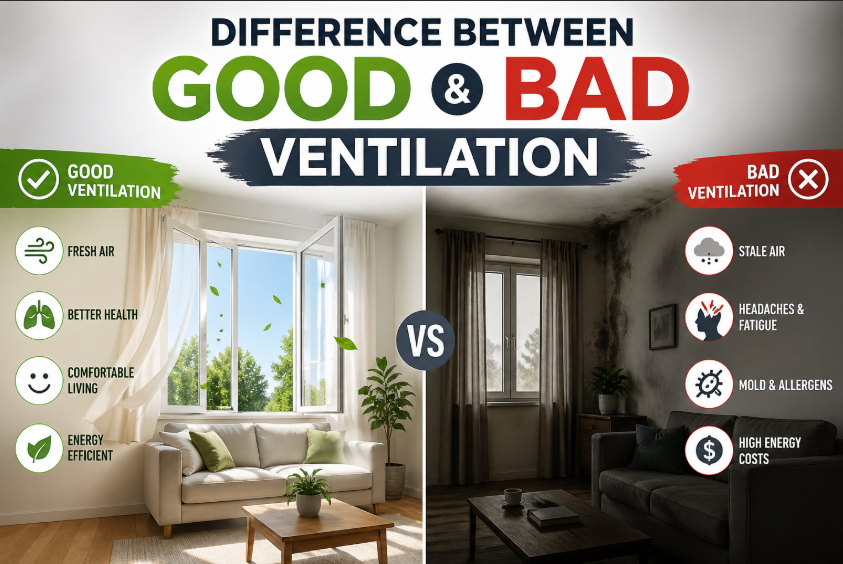
Good Ventilation vs Bad Ventilation: Key Differences
1. Air Quality
Good Ventilation
- Constant flow of fresh air
- Removes pollutants, dust, and allergens
- Reduces carbon dioxide levels
- Keeps oxygen levels balanced
Bad Ventilation
- Air feels stale or stuffy
- Accumulation of dust, smoke, and toxins
- High CO₂ levels leading to fatigue
- Lingering odors
👉 Bottom line: If the air feels heavy or smells unpleasant, ventilation is likely poor.
2. Health Impact
Good Ventilation
- Reduces risk of respiratory issues
- Minimizes allergies and asthma triggers
- Prevents mold growth
- Enhances mental clarity and focus
Bad Ventilation
- Causes headaches, dizziness, and fatigue
- Increases chances of infections spreading
- Triggers allergies and breathing problems
- Promotes mold and bacteria growth
👉 Poor ventilation is often linked to what experts call “sick building syndrome.”
3. Temperature Control
Good Ventilation
- Maintains consistent indoor temperature
- Prevents overheating
- Supports cooling in summer and freshness in winter
Bad Ventilation
- Hot and stuffy rooms
- Uneven temperature distribution
- Over-reliance on AC or heaters
👉 Ever felt hotter inside a room than outside? That’s bad ventilation at work.
4. Humidity Levels
Good Ventilation
- Keeps humidity balanced
- Prevents dampness
- Protects furniture and walls
Bad Ventilation
- Excess moisture leading to damp walls
- Condensation on windows
- Growth of mold and mildew
👉 High humidity is a silent destroyer of both health and property.
5. Energy Efficiency
Good Ventilation
- Reduces need for artificial cooling/heating
- Saves electricity bills
- Supports sustainable living
Bad Ventilation
- Increases energy consumption
- Overworks HVAC systems
- Leads to higher utility costs
👉 Good airflow = lower bills.
6. Comfort Level
Good Ventilation
- Fresh, breathable environment
- Better sleep quality
- Increased productivity
Bad Ventilation
- Suffocating feeling
- Poor sleep
- Reduced concentration
👉 Comfort isn’t just luxury—it’s a necessity.
Signs of Bad Ventilation (Don’t Ignore These!)
Sometimes, poor ventilation isn’t obvious until it starts affecting your lifestyle. Here are warning signs:
- Persistent bad odor
- Frequent headaches indoors
- Mold spots on walls or ceilings
- Foggy windows
- Excessive dust accumulation
- Feeling tired indoors but fine outside
If you notice even 2–3 of these signs regularly, it’s time to act.
What Causes Poor Ventilation?
Understanding the root causes can help you fix the problem effectively.
1. Poor Building Design
- Lack of windows or airflow pathways
- Closed layouts with no cross ventilation
2. Blocked Airflow
- Furniture blocking windows or vents
- Closed doors limiting circulation
3. Lack of Exhaust Systems
- No kitchen or bathroom exhaust fans
4. Overuse of Air Conditioning
- AC without fresh air intake
5. Sealed Environments
- Modern airtight homes trap pollutants
Benefits of Good Ventilation
Let’s flip the perspective and look at what you gain with proper ventilation.
1. Better Health
Clean air reduces illness and boosts immunity.
2. Improved Sleep
Fresh oxygen levels help you sleep deeper and wake up refreshed.
3. Higher Productivity
Good airflow improves focus and energy levels.
4. Odor Control
No more lingering cooking smells or damp odors.
5. Longer Lifespan of Interiors
Furniture, paint, and walls last longer without moisture damage.
How to Improve Ventilation in Your Home
You don’t always need expensive solutions. Small changes can make a big difference.
1. Open Windows Strategically
Create cross ventilation by opening windows on opposite sides.
2. Use Exhaust Fans
Install them in:
- Kitchen
- Bathroom
- Laundry area
3. Rearrange Furniture
Avoid blocking airflow paths.
4. Add Indoor Plants
Plants can help improve air quality naturally.
5. Install Ventilators or Air Bricks
These allow continuous airflow even when windows are closed.
6. Use Ceiling Fans Wisely
They help circulate air evenly across the room.
7. Clean Air Filters Regularly
Dirty filters restrict airflow and spread dust.
8. Consider Mechanical Ventilation Systems
For modern homes, systems like:
- Air purifiers
- HVAC with fresh air intake
can be very effective.
Good Ventilation in Different Spaces
1. Bedrooms
- Essential for restful sleep
- Keep windows slightly open when possible
2. Kitchens
- Use chimneys or exhaust fans
- Prevent smoke buildup
3. Bathrooms
- Remove moisture quickly
- Prevent mold growth
4. Offices
- Boost productivity
- Reduce fatigue
Natural vs Mechanical Ventilation: Which Is Better?
Natural Ventilation
✔ Cost-effective
✔ Eco-friendly
✘ Depends on weather
Mechanical Ventilation
✔ Controlled airflow
✔ Works in all conditions
✘ Requires electricity
👉 Best approach: Combine both for optimal results.
Common Myths About Ventilation
Myth 1: Air Conditioning Means Good Ventilation
❌ False — AC often recirculates the same air.
Myth 2: Small Rooms Don’t Need Ventilation
❌ Wrong — smaller spaces need it even more.
Myth 3: Opening One Window Is Enough
❌ Not effective — cross ventilation is key.
Why Ventilation Is Crucial in Modern Homes
Modern homes are designed to be energy-efficient, but that often means they’re tightly sealed. While this reduces energy loss, it also traps pollutants indoors.
That’s why ventilation is no longer optional—it’s essential.
Especially in urban environments where outdoor pollution is high, managing indoor air quality becomes even more important.
Final Thoughts
The difference between good and bad ventilation isn’t just about comfort—it’s about health, efficiency, and quality of life.
Good ventilation:
- Keeps you healthy
- Saves energy
- Improves daily living
Bad ventilation:
- Drains your energy
- Harms your health
- Damages your home
The good news? Fixing ventilation issues is often simple and affordable.
Start small—open windows, improve airflow, and pay attention to how your space feels. Because sometimes, the air you breathe makes all the difference.
Quick Recap
- Good ventilation = fresh, clean, balanced air
- Bad ventilation = stale, polluted, unhealthy air
- It impacts health, comfort, and energy use
- Simple changes can dramatically improve airflow
If you found this helpful, consider sharing it—because everyone deserves to breathe better.
🔁 Readers also enjoyed these blog posts:
- Safety Management’s Role: The Unsung Hero Behind Every Successful Organization
- Safety Management and Its Responsibilities: Protecting People, Preventing Hazards, and Promoting a Culture of Care
- Benchmarking for Safety Performance: A Key to Continuous Improvement
“Start Your Website Journey Today – Exclusive Hostinger Discounts!”

Turn Any Idea into Viral,
Jaw-Dropping AI Videos in Seconds!