 by
by Local Exhaust Ventilation and Its Design Aspects: A Complete Guide for Safer Workspaces
When you walk into a workshop filled with fumes, dust, or chemical odors, your first instinct is usually to step back. That reaction exists for a reason—our bodies are wired to avoid harmful air. But in many industries, exposure to airborne contaminants isn’t just occasional—it’s part of the job.
This is where Local Exhaust Ventilation (LEV) steps in as a silent protector.
Rather than trying to clean the entire room, LEV systems target pollutants right at the source—capturing, containing, and removing them before they spread. It’s efficient, cost-effective, and, when designed properly, incredibly powerful.
In this article, we’ll break down what LEV is, why it matters, and—most importantly—how to design it effectively.
What is Local Exhaust Ventilation (LEV)?
Local Exhaust Ventilation is an engineering control system used to capture airborne contaminants at or near their source and remove them from the workplace before they can be inhaled.
Unlike general ventilation, which dilutes contaminants by introducing fresh air, LEV focuses on precision removal. Think of it as a vacuum cleaner for hazardous air—except smarter and purpose-built.
Common contaminants controlled by LEV:
- Dust (wood, silica, metal)
- Fumes (welding, soldering)
- Vapors (solvents, chemicals)
- Smoke and mist
LEV systems are widely used in:
- Manufacturing plants
- Laboratories
- Welding shops
- Pharmaceutical industries
- Food processing units
Why is LEV So Important?
Let’s not sugarcoat it—poor air quality at work can lead to serious health issues.
Health Risks Without LEV
- Respiratory diseases
- Occupational asthma
- Skin irritation
- Long-term organ damage
Business Impacts
- Reduced productivity
- Higher absenteeism
- Regulatory penalties
- Equipment damage due to dust accumulation
A well-designed LEV system is not just a safety feature—it’s an investment in people, productivity, and compliance.
Main Components of an LEV System
To understand design, you first need to know the building blocks. Every LEV system has four essential components:
1. Hood (Capture Device)
This is where everything begins. The hood captures contaminants right at the source.
Types of hoods:
- Enclosing hoods
- Receiving hoods
- Capture hoods
The closer and more enclosed the hood, the better it performs.
2. Ducting System
Ducts transport contaminated air from the hood to the filtration unit.
Good duct design ensures:
- Minimal pressure loss
- Smooth airflow
- No dust accumulation
3. Air Cleaning Device
Before releasing air into the environment, contaminants must be removed.
Examples include:
- Cyclones
- Bag filters
- Electrostatic precipitators
- Scrubbers
4. Fan (Air Mover)
The fan provides the energy needed to pull air through the system.
Choosing the right fan ensures:
- Proper airflow
- Energy efficiency
- Quiet operation
Key Design Aspects of Local Exhaust Ventilation
Now we get to the heart of the topic—designing an effective LEV system.
Design isn’t just about assembling components. It’s about understanding airflow, behavior of contaminants, and how workers interact with the system.
1. Understanding the Source of Contaminants
Before designing anything, ask:
- What type of contaminant is generated?
- At what rate is it released?
- Is it hot, cold, heavy, or light?
For example:
- Hot fumes rise (thermal currents)
- Heavy dust settles quickly
Your design must adapt to these behaviors.
2. Hood Design: The Most Critical Factor
A poorly designed hood can make the entire system useless.
Key principles:
- Place the hood as close as possible to the source
- Enclose the process where feasible
- Avoid interference from cross-drafts
Capture Velocity
This is the air speed required to capture contaminants effectively.
Typical ranges:
- Light vapors: 0.25–0.5 m/s
- Heavy dust: 1–2.5 m/s
Too low? Contaminants escape.
Too high? Energy waste and turbulence.
3. Airflow Rate (Q)
Airflow determines how much contaminated air is removed.
Formula:
Q = V × A
Where:
- Q = airflow rate
- V = capture velocity
- A = area of hood opening
Designers must strike a balance:
- Enough airflow to capture pollutants
- Not so much that it wastes energy
4. Duct Design and Layout
Ducting is often overlooked—but it’s where many systems fail.
Good duct design ensures:
- Consistent airflow
- Minimal resistance
- No clogging
Best practices:
- Use smooth, round ducts
- Avoid sharp bends
- Maintain proper transport velocity
Typical transport velocities:
- Dust: 10–20 m/s
- Fumes: 5–10 m/s
5. Pressure Loss Calculations
Air loses energy as it travels through ducts, filters, and fittings.
Designers must calculate:
- Friction losses
- Dynamic losses (bends, joints)
If not accounted for:
- System performance drops
- Fan may underperform
6. Fan Selection
Choosing the right fan is crucial.
Consider:
- Required airflow
- Total system resistance
- Noise levels
- Energy consumption
Types of fans:
- Centrifugal fans (most common)
- Axial fans (for large volumes, low pressure)
7. Air Cleaning Efficiency
Different contaminants require different filtration methods.
Examples:
- Dust → Bag filters
- Fine particles → HEPA filters
- Chemical vapors → Activated carbon
Efficiency must meet environmental regulations.
8. System Balancing
Even a perfectly designed system can fail if not balanced.
Balancing ensures:
- Equal airflow across all hoods
- Proper suction at each point
This is done using:
- Dampers
- Measurement instruments
9. Energy Efficiency Considerations
LEV systems run for long hours—energy use matters.
Tips to improve efficiency:
- Use variable frequency drives (VFDs)
- Optimize duct layout
- Avoid overdesigning airflow
A smart design reduces operating costs without compromising safety.
10. Maintenance and Accessibility
Design should always consider future maintenance.
Include:
- Access doors in ducts
- Easy filter replacement
- Monitoring systems
A neglected LEV system is as dangerous as having none.
Common Mistakes in LEV Design
Even experienced engineers slip up. Here are some common pitfalls:
- Hood placed too far from source
- Ignoring cross-air currents
- Undersized ducts
- Poor fan selection
- Lack of maintenance planning
Avoiding these can significantly improve system performance.
Real-World Example
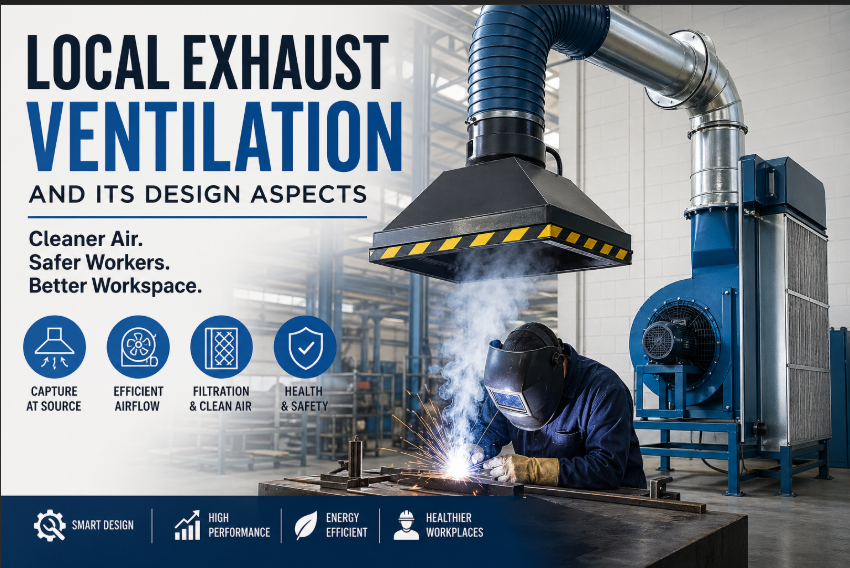
Imagine a welding workshop without LEV.
Smoke rises, spreads, and workers inhale metal fumes. Now install a well-designed LEV:
- Hood placed directly above welding arc
- Proper capture velocity applied
- Fumes extracted instantly
Result?
Cleaner air, healthier workers, better productivity.
Latest Trends in LEV Design
Technology is reshaping ventilation systems.
Emerging trends:
- Smart sensors for air quality monitoring
- Automated airflow control
- Energy-efficient fans
- Integration with IoT systems
Modern LEV systems are becoming smarter, greener, and more adaptive.
Regulations and Standards
LEV systems must comply with safety guidelines.
Common standards:
- OSHA (Occupational Safety and Health Administration)
- ACGIH guidelines
- ISO standards
Compliance ensures both safety and legal protection.
Benefits of a Well-Designed LEV System
Let’s summarize the advantages:
For Workers
- Cleaner air
- Reduced health risks
- Better comfort
For Businesses
- Higher productivity
- Lower absenteeism
- Regulatory compliance
- Equipment protection
For Environment
- Reduced emissions
- Cleaner surroundings
Final Thoughts
Local Exhaust Ventilation isn’t just a technical system—it’s a lifeline for industrial environments.
A well-designed LEV system:
- Protects health
- Improves efficiency
- Saves money in the long run
But here’s the catch—design matters more than installation. Even the most expensive system can fail if poorly planned.
If you’re designing or upgrading an LEV system, focus on:
- Understanding contaminants
- Optimizing hood design
- Ensuring proper airflow and maintenance
Because at the end of the day, clean air isn’t a luxury—it’s a necessity.
Bonus: Quick LEV Design Checklist
Before wrapping up, here’s a handy checklist:
✔ Identify contaminant source
✔ Select appropriate hood type
✔ Calculate capture velocity
✔ Design efficient duct layout
✔ Choose correct fan
✔ Ensure proper filtration
✔ Plan maintenance access
✔ Test and balance system
If you found this guide useful, consider sharing it with colleagues or bookmarking it for future reference. Clean air starts with smart design—and now, you’re one step closer to mastering it.
🔁 Readers also enjoyed these blog posts:
- Safety Management’s Role: The Unsung Hero Behind Every Successful Organization
- Safety Management and Its Responsibilities: Protecting People, Preventing Hazards, and Promoting a Culture of Care
- Benchmarking for Safety Performance: A Key to Continuous Improvement
“Start Your Website Journey Today – Exclusive Hostinger Discounts!”

Turn Any Idea into Viral,
Jaw-Dropping AI Videos in Seconds!