 by
by Cowl Type Roof Ventilation: A Game-Changer for Modern Buildings
If you’ve ever stepped into a warehouse, factory, or even a residential attic during peak summer, you know how unbearable trapped heat can be. The air feels stale, heavy, and suffocating. Now imagine solving that problem without relying heavily on electricity or complex cooling systems.
That’s where cowl type roof ventilation steps in—a simple yet highly effective solution that’s quietly transforming how buildings breathe.
In this guide, we’ll explore everything you need to know about cowl roof ventilators—how they work, why they’re gaining popularity, and how you can make the most of them.
What is Cowl Type Roof Ventilation?
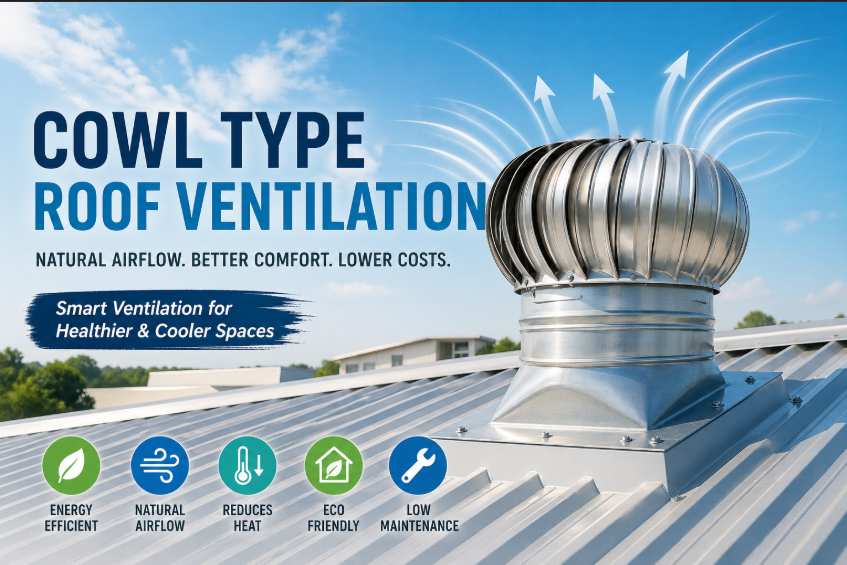
Cowl type roof ventilation is a wind-driven ventilation system installed on rooftops. It uses natural wind energy to extract hot air, fumes, and stale air from inside a building.
The “cowl” refers to the dome-shaped or turbine-like structure that rotates when wind passes through it. This spinning motion creates a vacuum that pulls indoor air upward and out of the building.
Think of it as a natural exhaust fan—without electricity.
How Does a Cowl Roof Ventilator Work?
At its core, the system relies on two natural principles:
1. Wind Power
When wind flows over the cowl, it causes the turbine blades to spin. This rotation creates suction inside the ventilator.
2. Stack Effect (Hot Air Rises)
Warm air naturally rises. The ventilator takes advantage of this by allowing hot air to escape through the roof opening.
The Result?
- Continuous airflow
- Reduced indoor temperature
- Improved air quality
Even on days with minimal wind, the temperature difference inside and outside helps keep the air moving.
Why Cowl Type Ventilation is Becoming Popular
Modern buildings demand smarter, more sustainable solutions—and cowl ventilators deliver exactly that.
Here’s why they’re trending:
✔ Energy Efficiency
No electricity required means zero operating cost.
✔ Eco-Friendly
Reduces carbon footprint by minimizing reliance on powered ventilation systems.
✔ Low Maintenance
With fewer moving parts, maintenance is minimal compared to electric exhaust systems.
✔ Cost-Effective
Affordable installation with long-term savings.
✔ Versatility
Suitable for:
- Warehouses
- Factories
- Workshops
- Commercial buildings
- Residential attics
Top Benefits of Cowl Type Roof Ventilation
1. Significant Heat Reduction
Hot air trapped inside buildings can increase temperatures by several degrees. Cowl ventilators continuously expel this heat, making indoor spaces noticeably cooler.
2. Improved Air Quality
They remove:
- Smoke
- Dust
- Fumes
- Moisture
This is especially important in industrial settings where air quality directly impacts worker health.
3. Moisture Control
Excess moisture can lead to mold and structural damage. Proper ventilation prevents condensation buildup.
4. Enhanced Comfort
Better airflow means:
- Cooler interiors
- Less humidity
- Healthier environment
5. Reduced Energy Bills
With lower indoor temperatures, dependence on air conditioning drops significantly.
Types of Cowl Roof Ventilators
Not all cowl ventilators are the same. Choosing the right type depends on your needs.
1. Aluminum Ventilators
- Lightweight
- Corrosion-resistant
- Ideal for coastal or humid areas
2. Stainless Steel Ventilators
- Strong and durable
- Suitable for industrial environments
3. Plastic (Polymer) Ventilators
- Budget-friendly
- Resistant to chemicals
4. Hybrid Ventilators
Some models combine wind power with electric backup for consistent performance.
Where Can You Use Cowl Roof Ventilation?
Cowl ventilators are incredibly versatile. Here are some common applications:
Industrial Spaces
Factories and manufacturing units benefit from constant removal of heat and fumes.
Warehouses
Prevent heat buildup that can damage stored goods.
Commercial Buildings
Improve indoor air quality without increasing energy costs.
Residential Homes
Especially useful in:
- Attics
- Kitchens
- Garages
Installation Guide: What You Need to Know
Installing a cowl roof ventilator isn’t overly complicated, but proper placement is key.
Step 1: Assess Your Roof
- Identify high heat zones
- Ensure structural support
Step 2: Choose the Right Size
Larger spaces require more or bigger ventilators.
Step 3: Proper Positioning
Install at the highest point of the roof for maximum efficiency.
Step 4: Secure Mounting
Ensure airtight sealing to prevent leaks.
Step 5: Test Airflow
Check for smooth rotation and proper suction.
How Many Ventilators Do You Need?
This depends on:
- Building size
- Heat generation
- Roof height
- Ventilator capacity
Quick Rule of Thumb:
One ventilator for every 30–50 square meters is a common guideline, but professional assessment is recommended for accuracy.
Maintenance Tips for Long-Term Performance
Cowl ventilators are low maintenance, but a little care goes a long way.
Regular Checks
- Ensure blades rotate freely
- Remove debris or dust buildup
Lubrication
Occasionally lubricate moving parts if required.
Inspection
Check for:
- Rust
- Loose fittings
- Damage after storms
Common Myths About Cowl Roof Ventilation
Myth 1: They Don’t Work Without Wind
Even in low wind, the stack effect helps maintain airflow.
Myth 2: They Are Noisy
Modern designs are engineered for silent operation.
Myth 3: Only for Industrial Use
They’re equally effective in homes and commercial buildings.
Cowl Ventilators vs. Electric Exhaust Fans
| Feature | Cowl Ventilator | Electric Exhaust Fan |
|---|---|---|
| Energy Use | None | Requires electricity |
| Maintenance | Low | Moderate |
| Cost | One-time investment | Ongoing bills |
| Eco-Friendly | Yes | Limited |
| Noise | Minimal | Can be noisy |
Verdict:
Cowl ventilators are a smarter long-term investment, especially for large spaces.
Design Considerations for Maximum Efficiency
To get the best performance, consider:
Roof Design
Sloped roofs improve airflow efficiency.
Air Inlets
Ensure proper entry points for fresh air.
Spacing
Avoid overcrowding ventilators.
Weather Conditions
Choose materials suited to your climate.
Future of Roof Ventilation
With growing emphasis on sustainability, cowl roof ventilators are becoming a preferred choice in modern architecture.
Innovations include:
- Aerodynamic designs
- Hybrid systems
- Smart monitoring integration
As energy costs rise, passive ventilation systems like these are no longer optional—they’re essential.
Real-World Impact: Why Businesses Are Switching
Many industries are replacing traditional ventilation systems with cowl ventilators because:
- They cut operational costs
- Improve worker productivity
- Reduce environmental impact
In large facilities, even a small temperature drop can lead to massive savings.
Is Cowl Type Roof Ventilation Right for You?
Ask yourself:
- Do you struggle with heat buildup?
- Are energy bills too high?
- Is indoor air quality poor?
If the answer is yes, then cowl ventilation could be the upgrade your space needs.
Final Thoughts
Cowl type roof ventilation proves that sometimes, the simplest solutions are the most powerful.
By harnessing natural forces like wind and heat movement, these systems offer a cost-effective, eco-friendly way to improve indoor environments. Whether you’re managing a factory, warehouse, or even your home, investing in proper ventilation isn’t just smart—it’s essential.
Ready to Transform Your Space?
Start with better airflow. Start with smarter ventilation.
Because fresh air isn’t a luxury—it’s a necessity.
🔁 Readers also enjoyed these blog posts:
- Safety Management’s Role: The Unsung Hero Behind Every Successful Organization
- Safety Management and Its Responsibilities: Protecting People, Preventing Hazards, and Promoting a Culture of Care
- Benchmarking for Safety Performance: A Key to Continuous Improvement
“Start Your Website Journey Today – Exclusive Hostinger Discounts!”

Turn Any Idea into Viral,
Jaw-Dropping AI Videos in Seconds!