 by
by Introduction: Why Clean Air Matters More Than Ever
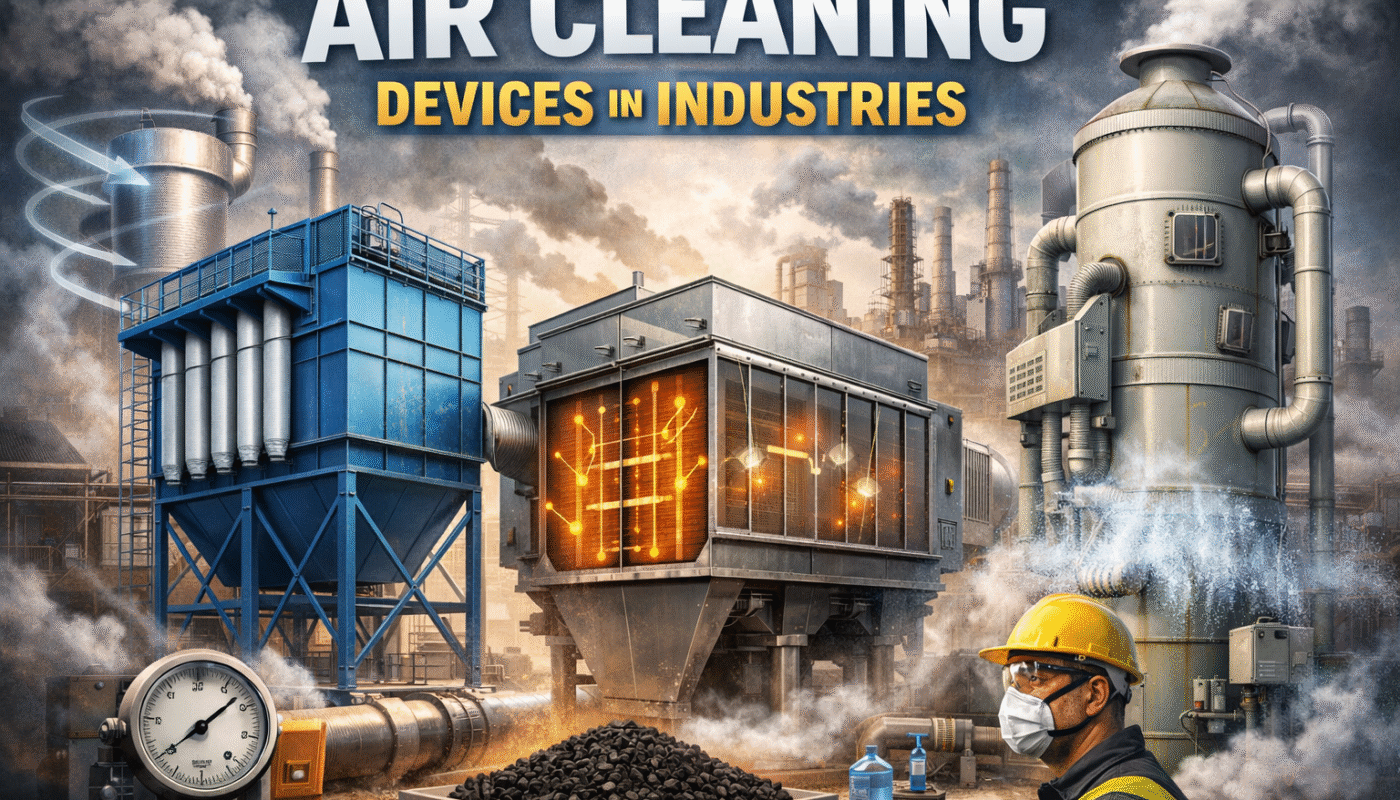
Step inside any industrial facility, and one thing becomes immediately clear—air quality isn’t just about comfort; it’s about survival, efficiency, and responsibility. From manufacturing plants to chemical processing units, industries generate airborne contaminants that can harm workers, damage equipment, and pollute the environment.
Air cleaning devices are no longer optional—they are essential. But with so many options available, selecting the right system can feel overwhelming. Should you go for a baghouse filter? An electrostatic precipitator? A wet scrubber?
This guide breaks it all down. We’ll explore the fundamental principles behind industrial air cleaning and walk you through the key criteria to choose the right device for your needs.
Understanding Industrial Air Pollutants
Before choosing an air cleaning device, you need to understand what you’re dealing with.
Industrial air pollutants generally fall into these categories:
- Particulate Matter (PM): Dust, smoke, fumes, and aerosols
- Gaseous Pollutants: VOCs, sulfur dioxide, nitrogen oxides
- Biological Contaminants: Bacteria, mold spores
- Toxic Chemicals: Hazardous airborne substances
Each pollutant behaves differently in the air, which directly impacts the type of cleaning technology required.
Core Principles of Air Cleaning Devices
All air cleaning systems operate based on a few fundamental principles. Understanding these helps you make smarter decisions when selecting equipment.
1. Filtration
Filtration is one of the most common and straightforward methods.
- Air passes through a filter medium
- Particles are captured based on size and filter pore structure
Examples:
- Baghouse filters
- HEPA filters
Best for: Solid particulate removal
2. Inertial Separation
This method uses the principle of inertia:
- Heavier particles cannot follow the airflow when it changes direction
- They collide with surfaces and get collected
Examples:
- Cyclone separators
Best for: Large, coarse particles
3. Electrostatic Attraction
Particles are electrically charged and then attracted to oppositely charged plates.
Examples:
- Electrostatic precipitators (ESPs)
Best for: Fine particles like smoke and fumes
4. Absorption (Scrubbing)
Pollutants are absorbed into a liquid, typically water or a chemical solution.
Examples:
- Wet scrubbers
Best for: Gaseous pollutants and sticky particles
5. Adsorption
Gases adhere to the surface of a solid material like activated carbon.
Examples:
- Carbon filters
Best for: Odors, VOCs, and chemical vapors
Types of Industrial Air Cleaning Devices
Let’s take a closer look at the most widely used devices in industries.
1. Cyclone Separators
- Simple design
- Uses centrifugal force
- Low maintenance
Limitations: Not effective for fine particles
2. Baghouse Filters
- Fabric filters capture dust
- High efficiency (up to 99%)
Best for: Cement, food processing, and metal industries
3. Electrostatic Precipitators (ESPs)
- Highly efficient for fine particles
- Common in power plants
Drawback: High initial cost
4. Wet Scrubbers
- Uses liquid to trap pollutants
- Effective for both gases and particulates
Challenges: Wastewater handling
5. Cartridge Collectors
- Compact design
- High filtration efficiency
Ideal for: Small to medium operations
6. Activated Carbon Filters
- Excellent for removing odors and gases
- Often used in combination systems
Key Selection Criteria for Air Cleaning Devices
Now comes the most critical part—choosing the right system.
1. Nature of Pollutants
Ask yourself:
- Are they solid, liquid, or gas?
- What is the particle size distribution?
- Are they toxic or corrosive?
Why it matters: Different devices are designed for different pollutant types.
2. Particle Size
- Coarse particles (>10 microns): Cyclones
- Fine particles (<2.5 microns): ESPs or bag filters
Tip: Always analyze particle size before deciding.
3. Air Volume and Flow Rate
Measured in CFM (Cubic Feet per Minute):
- High airflow requires robust systems
- Incorrect sizing reduces efficiency
4. Temperature and Humidity
Some systems cannot handle extreme conditions:
- High temperatures may damage filters
- Moisture can clog systems
5. Efficiency Requirements
Consider:
- Regulatory standards
- Workplace safety norms
High-risk industries need high-efficiency systems.
6. Pressure Drop
- Indicates resistance to airflow
- Higher pressure drop = higher energy consumption
Goal: Balance efficiency and energy cost
7. Maintenance and Operating Costs
Don’t just look at initial cost.
Consider:
- Filter replacement
- Cleaning frequency
- Downtime
8. Space Availability
Some systems are bulky (e.g., baghouses), while others are compact (cartridge filters).
9. Environmental Regulations
Compliance is non-negotiable.
- Local pollution control norms
- Industry-specific standards
Failure to comply can lead to fines or shutdowns.
10. Safety Considerations
Certain dust types are:
- Flammable
- Explosive
- Toxic
Ensure the system includes safety mechanisms like explosion vents.
Matching Devices to Applications
Here’s a quick reference to help you decide:
| Industry | Recommended Device |
|---|---|
| Cement | Baghouse Filters |
| Power Plants | ESPs |
| Chemical Processing | Wet Scrubbers |
| Food Industry | Cartridge Filters |
| Metal Fabrication | Cyclones + Bag Filters |
Common Mistakes to Avoid
Even experienced engineers make these mistakes:
❌ Ignoring Particle Size Analysis
Leads to poor system performance
❌ Choosing Based on Cost Alone
Cheap systems often cost more in the long run
❌ Overlooking Maintenance Needs
Results in downtime and inefficiency
❌ Not Planning for Expansion
Future scalability matters
Emerging Trends in Air Cleaning Technology
Industrial air cleaning is evolving rapidly. Here’s what’s shaping the future:
Smart Monitoring Systems
Sensors track air quality in real time
Hybrid Systems
Combining multiple technologies for better efficiency
Energy-Efficient Designs
Lower operational costs
Sustainable Solutions
Reduced waste and eco-friendly materials
Practical Tips for Better Decision-Making
- Conduct a detailed air quality assessment
- Consult with experts or system manufacturers
- Always request performance data
- Run pilot tests if possible
Conclusion: Clean Air is a Smart Investment
Choosing the right air cleaning device isn’t just about compliance—it’s about creating a safer, more efficient, and sustainable industrial environment.
When you understand the principles and apply the right selection criteria, you’re not just installing a machine—you’re investing in long-term performance, worker health, and environmental responsibility.
Clean air isn’t a luxury. In today’s industrial world, it’s a necessity.
Final Thoughts
Whether you’re upgrading an existing system or installing a new one, take the time to evaluate your needs thoroughly. The right air cleaning device can transform your operations—boosting efficiency while protecting both people and the planet.
If you found this guide helpful, consider sharing it with your team or bookmarking it for future reference. Clean air starts with informed decisions.
🔁 Readers also enjoyed these blog posts:
- Safety Management’s Role: The Unsung Hero Behind Every Successful Organization
- Safety Management and Its Responsibilities: Protecting People, Preventing Hazards, and Promoting a Culture of Care
- Benchmarking for Safety Performance: A Key to Continuous Improvement
“Start Your Website Journey Today – Exclusive Hostinger Discounts!”

Turn Any Idea into Viral,
Jaw-Dropping AI Videos in Seconds!