 by
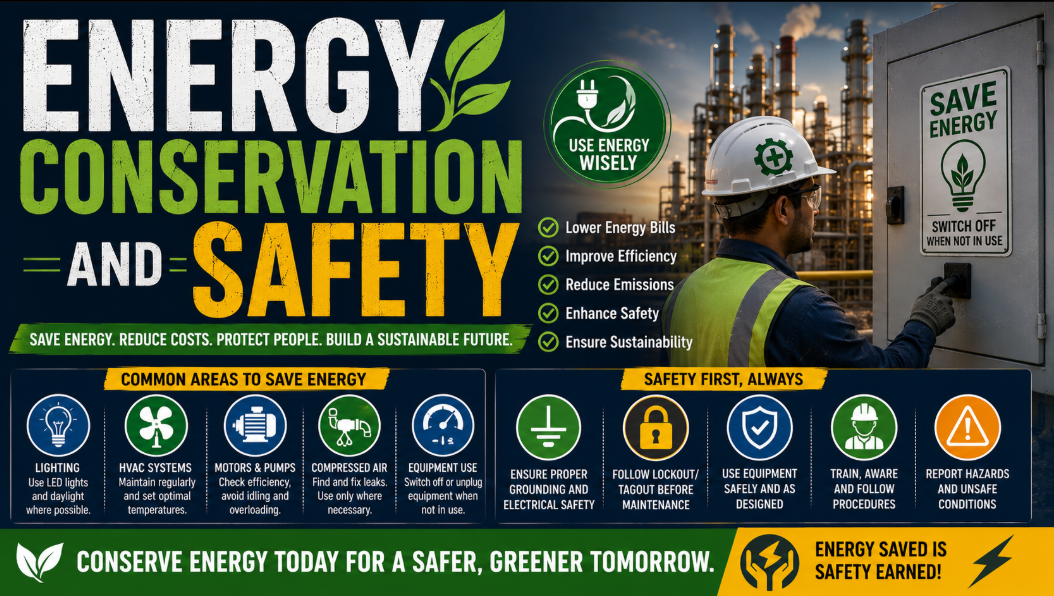
by ENERGY CONSERVATION AND SAFETY
Why Saving Energy Should Never Come at the Cost of Safety
Energy is essential to almost every workplace.
Factories need electricity to operate machines. Offices need power for lighting, computers, air conditioning, and communication systems. Construction sites rely on generators and electrical equipment. Hospitals, warehouses, laboratories, commercial buildings, and process plants all depend on energy to keep operations running.
But energy consumption also comes with costs and risks.
High energy consumption increases operating expenses and environmental impact. Poorly maintained electrical systems can create fire and shock hazards. Inefficient equipment can overheat. Improper attempts to reduce energy consumption can even create new safety risks.
This is why energy conservation and safety should not be treated as two separate subjects.
The best energy-saving programs achieve both objectives:
Use less energy, operate more efficiently, and make the workplace safer.
Energy conservation is not simply about switching off lights.
It is about understanding how energy is generated, distributed, consumed, wasted, and controlled—and then finding safer and more efficient ways to use it.
What Is Energy Conservation?
Energy conservation means reducing unnecessary energy consumption while maintaining the required level of productivity, comfort, quality, and safety.
It can involve:
- Eliminating energy waste
- Improving equipment efficiency
- Optimizing operating practices
- Maintaining machinery
- Reducing unnecessary running time
- Improving insulation
- Managing heating and cooling
- Using efficient lighting
- Monitoring energy consumption
- Improving electrical systems
- Using automation and controls
- Educating employees
Energy conservation does not necessarily mean using less energy at any cost.
The objective is to use energy efficiently and responsibly.
For example, switching off an essential ventilation system to save electricity may reduce energy consumption temporarily, but it could create a serious safety problem.
A successful energy-conservation program therefore asks:
How can we reduce unnecessary energy use without compromising people, equipment, processes, or the environment?
Why Energy Conservation Is Important
Energy conservation provides several benefits to an organization.
1. Reduces Operating Costs
Electricity, fuel, steam, compressed air, and other forms of energy can represent a significant operating expense.
Reducing unnecessary consumption directly improves efficiency and can lower utility costs.
2. Reduces Environmental Impact
Lower energy consumption can reduce the environmental impact associated with energy generation and fuel consumption.
Energy efficiency therefore supports broader sustainability objectives.
3. Improves Equipment Performance
Efficient equipment is often well maintained and properly operated.
This can reduce unnecessary losses and improve reliability.
4. Reduces Equipment Stress
Overloaded, poorly maintained, or inefficient equipment may operate at higher temperatures or under excessive load.
Proper energy management can help identify these problems.
5. Supports Safety
Energy-management activities can reveal:
- Overloaded circuits
- Damaged cables
- Poor connections
- Overheating equipment
- Leakage
- Poor maintenance
- Abnormal operating conditions
These conditions may represent both energy losses and safety hazards.
The Connection Between Energy Conservation and Safety
At first glance, energy conservation and workplace safety may seem unrelated.
One focuses on reducing energy consumption.
The other focuses on preventing injury and illness.
In reality, they often overlap.
Consider an electrical motor.
A poorly maintained motor may consume more electricity than necessary.
At the same time, overheating bearings, damaged insulation, poor electrical connections, or excessive loading could create a fire or equipment-failure risk.
Corrective maintenance can therefore achieve two objectives:
Reduce energy waste + reduce safety risk.
This principle applies across many workplace systems.
Energy Sources Used in Industry
Energy conservation isn’t limited to electricity.
Industrial facilities may use:
- Electricity
- Diesel
- Petrol
- Natural gas
- LPG
- Steam
- Compressed air
- Hot water
- Chilled water
- Thermal energy
- Renewable energy
Each energy source presents its own hazards.
For example:
Electricity can cause shock, arc flash, burns, and fire.
Diesel and petrol are combustible and require appropriate storage and handling.
Natural gas and LPG can create fire and explosion hazards if released.
Steam can cause severe burns and pressure-related injuries.
Compressed air can cause mechanical and injection hazards.
Therefore, energy conservation programs must consider both efficiency and hazard control.
Electrical Energy Conservation
Electricity is one of the most commonly consumed forms of energy in workplaces.
Several simple strategies can reduce unnecessary electrical consumption.
Switch Off Unnecessary Equipment
Equipment that does not need to operate continuously should not be left running unnecessarily.
Examples include:
- Lights
- Computers
- Printers
- Fans
- Air conditioners
- Pumps
- Motors
- Compressors
- Machinery
However, equipment should only be switched off when doing so is operationally and safely acceptable.
Critical systems such as emergency equipment, safety systems, fire protection systems, essential ventilation, and process-control systems should never be switched off simply to save energy.
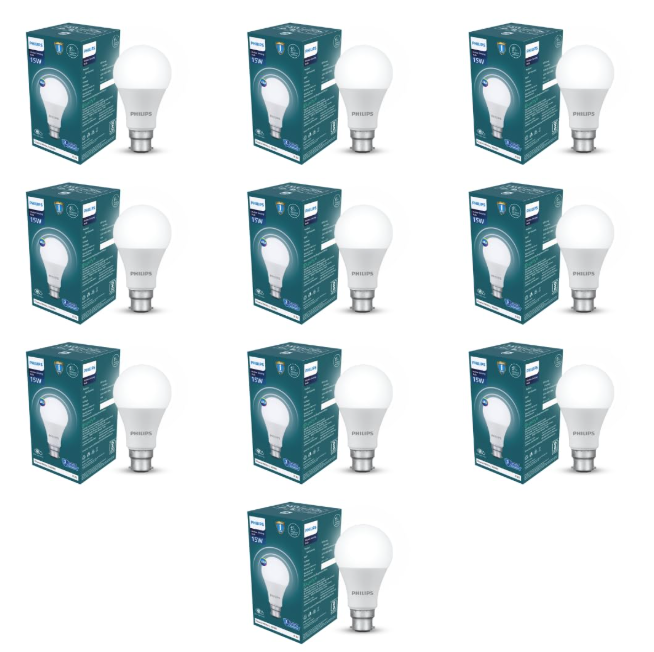
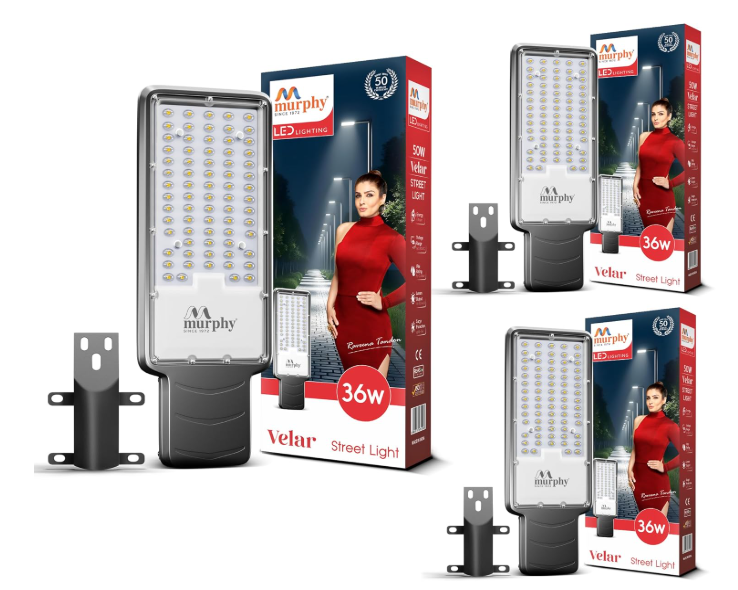
Use Energy-Efficient Lighting
Lighting can represent a significant portion of energy consumption in commercial and industrial buildings.
Energy-efficient lighting technologies can reduce consumption while maintaining adequate illumination.

But energy conservation should never mean working in insufficient light.
Poor lighting can contribute to:
- Trips and falls
- Incorrect work
- Machine-operation errors
- Eye strain
- Reduced visibility
- Accidents
Therefore:
The goal is not minimum lighting. The goal is adequate lighting with minimum unnecessary energy consumption.
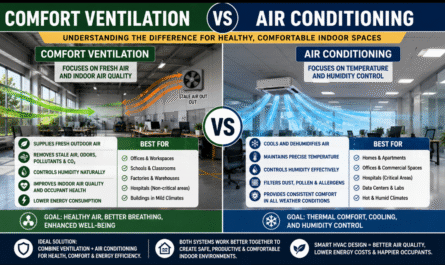
Optimize Air Conditioning
Heating, ventilation, and air-conditioning systems can consume substantial amounts of energy.
Energy can be saved by:
- Maintaining appropriate temperature settings
- Cleaning filters
- Maintaining HVAC equipment
- Keeping doors and windows properly managed
- Preventing unnecessary cooling
- Maintaining insulation
- Using controls and timers where appropriate
However, ventilation is also a safety control in many workplaces.
Ventilation may be necessary to:
- Remove contaminants
- Control heat
- Prevent accumulation of vapors
- Maintain indoor air quality
- Control hazardous atmospheres
Therefore, never disable required ventilation solely to reduce energy consumption.
Energy Conservation in Motors
Electric motors are major energy consumers in industrial facilities.
Energy efficiency can be improved through:
- Correct motor sizing
- Preventive maintenance
- Proper lubrication
- Alignment
- Bearing maintenance
- Avoiding unnecessary idling
- Variable-speed control where appropriate
- Maintaining electrical connections
- Preventing excessive mechanical load
An oversized motor operating far below its intended load may not always be the most efficient choice.
Similarly, a motor operating under excessive load may overheat and consume more energy.
Correct selection and maintenance are therefore important.
Compressed Air: The Hidden Energy Consumer
Compressed air is extremely useful in industry.
It powers:
- Pneumatic tools
- Actuators
- Valves
- Cleaning equipment
- Production machinery
But compressed air systems can waste large amounts of energy through leakage.
A small leak may seem insignificant.
Across hundreds of connections, however, the total loss can become substantial.
Regular inspection should identify:
- Hose leaks
- Pipe leaks
- Faulty couplings
- Damaged fittings
- Open lines
- Pressure losses
Repairing leaks can reduce energy consumption while also improving system performance.
Never Use Compressed Air Carelessly
Energy conservation must never create a new safety problem.
Compressed air should not be used for unsafe cleaning practices, such as blowing dust or contaminants toward people.
Improper compressed-air use can cause:
- Eye injuries
- Hearing damage
- Dust exposure
- Skin injuries
- Contamination
- Serious compressed-air injection injuries
The correct approach is to use approved cleaning methods and follow site procedures.
Steam and Thermal Energy Conservation
Steam systems can lose energy through:
- Poor insulation
- Steam leaks
- Faulty traps
- Unnecessary steam use
- Poor condensate recovery
- Improper pressure management
Regular inspection and maintenance can reduce losses.
At the same time, steam systems operate under pressure and temperature.
Workers must therefore be protected against:
- Burns
- Hot surfaces
- Pressure release
- Steam leaks
- Unexpected equipment movement
Energy-saving maintenance on steam systems should only be performed using appropriate isolation and safe-work procedures.
Insulation: Saving Energy and Preventing Burns
Proper insulation is an excellent example of energy conservation supporting safety.
Insulation can reduce heat loss from:
- Steam pipes
- Hot-water lines
- Boilers
- Process equipment
- Chilled-water systems
- HVAC systems
It can also reduce the temperature of exposed surfaces.
This can help prevent accidental contact burns.
Damaged or missing insulation should therefore not be considered only an energy-efficiency problem.
It may also represent a workplace safety issue.
Preventive Maintenance and Energy Conservation
One of the strongest connections between energy efficiency and safety is preventive maintenance.
Equipment that is poorly maintained may:
- Consume more energy
- Produce more heat
- Vibrate excessively
- Fail unexpectedly
- Create noise
- Develop leaks
- Become a fire risk
Regular maintenance can identify these conditions before they become serious.
Maintenance activities may include:
- Lubrication
- Cleaning
- Alignment
- Inspection
- Electrical testing
- Filter replacement
- Leak detection
- Bearing inspection
- Calibration
- Thermal inspection
A well-maintained machine is often both safer and more energy efficient.
Energy Conservation Through Good Housekeeping
Good housekeeping is another low-cost energy-saving strategy.
Examples include:
- Keeping HVAC filters clean
- Keeping cooling coils clean
- Preventing dust accumulation on equipment
- Maintaining clear ventilation paths
- Repairing leaking compressed-air lines
- Keeping equipment accessible for maintenance
- Preventing unnecessary lighting
- Removing unused equipment from service
In industrial environments, dust accumulation can also create fire or explosion hazards.
Therefore, housekeeping can simultaneously support:
Energy efficiency + fire prevention + equipment reliability + workplace safety.
The Importance of Energy Audits
An energy audit is a systematic assessment of how energy is consumed within a facility.
It can help identify:
- Major energy consumers
- Energy losses
- Inefficient equipment
- Operating inefficiencies
- Leakage
- Poor insulation
- Excessive consumption
- Opportunities for improvement
An energy audit should not only ask:
“Where are we using the most energy?”
It should also ask:
“Why are we using this energy, and is there a safer and more efficient way to perform the same function?”
This broader approach produces better results.
Energy Monitoring and Measurement
You cannot effectively manage what you do not measure.
Energy meters and monitoring systems can help organizations understand consumption patterns.
Useful measurements may include:
- Electricity consumption
- Fuel consumption
- Compressed-air demand
- Steam consumption
- Peak electrical demand
- Production-related energy consumption
Instead of simply looking at total energy use, organizations can also consider energy intensity.
For example:
Energy consumed per unit of production
This provides a better understanding of whether efficiency is actually improving.
Employee Involvement Is Essential
Energy conservation should not be the responsibility of the EHS or maintenance department alone.
Everyone has a role.
Employees can help by:
- Switching off unnecessary equipment
- Reporting leaks
- Reporting overheating
- Reporting damaged cables
- Following operating procedures
- Avoiding unnecessary machine idling
- Using resources responsibly
- Participating in energy-saving initiatives
A simple employee observation can sometimes reveal a major energy loss.
For example:
“This compressor runs continuously even when production has stopped.”
That observation could lead to an investigation and significant improvement.
Energy Conservation Must Not Override Safety Controls
This is perhaps the most important principle of this entire topic.
Never sacrifice a safety control to save energy.
Examples include:
Don’t switch off emergency lighting
Emergency lighting may be essential during a power failure.
Don’t disable fire-protection systems
Fire pumps, alarms, detection systems, and other essential systems must remain operational as required.
Don’t stop required ventilation
Ventilation may be necessary for controlling hazardous atmospheres or workplace exposure.
Don’t bypass safety interlocks
Safety interlocks exist to prevent dangerous operating conditions.
Don’t reduce PPE
Reducing PPE is not an energy-conservation measure.
Don’t disable alarms
Alarms are safety barriers.
Don’t compromise machine guarding
Removing guards may make maintenance or operation easier, but it creates unacceptable risk.
The correct philosophy is:
Conserve unnecessary energy—not essential safety.
Energy Conservation and Electrical Safety
Electrical energy-saving initiatives must be implemented carefully.
Workers may encounter:
- Electrical panels
- Motors
- Capacitors
- Transformers
- Generators
- Distribution boards
- Cables
- Battery systems
Electrical work should only be performed by appropriately qualified or authorized personnel.
Before electrical maintenance, appropriate procedures may include:
- Identify the energy source.
- Isolate the equipment.
- Apply lockout/tagout where required.
- Verify isolation.
- Perform the work using appropriate procedures.
- Restore energy safely after completion.
Saving energy never eliminates the need for electrical safety.
Lockout/Tagout and Energy Conservation
Lockout/tagout, or LOTO, is primarily a safety procedure for controlling hazardous energy during maintenance.
It can involve energy sources such as:
- Electrical energy
- Mechanical energy
- Hydraulic energy
- Pneumatic energy
- Thermal energy
- Stored pressure
- Gravity
- Chemical energy
The key principle is simple:
Before maintenance begins, hazardous energy must be identified, isolated, and controlled.
Energy conservation and energy isolation are different concepts.
Energy conservation aims to reduce unnecessary consumption.
Energy isolation aims to prevent unexpected energy release.
Both require a clear understanding of energy systems.
Renewable Energy and Workplace Safety
Many organizations are adopting renewable energy technologies such as:
- Solar photovoltaic systems
- Battery energy storage
- Wind energy
- Other renewable-energy systems
These technologies can support energy and sustainability goals.
However, they also introduce specific safety considerations.
For example, solar installations may involve:
- Electrical shock
- DC electrical hazards
- Working at height
- Weather exposure
- Fire risks
- Battery hazards
Energy transition does not eliminate safety responsibilities.
Every new technology should be accompanied by appropriate:
Risk assessment + engineering controls + procedures + training + emergency planning.
Energy Conservation in Offices
Energy conservation isn’t only an industrial issue.
Office employees can contribute by:
- Switching off lights in unused rooms
- Using power-management settings
- Switching off monitors when appropriate
- Avoiding unnecessary printing
- Using air conditioning responsibly
- Reporting faulty equipment
- Keeping doors closed when cooling is operating
- Avoiding unnecessary equipment standby
Small actions become significant when multiplied across hundreds of employees and working days.
Energy Conservation in Factories
Industrial facilities have greater opportunities for energy savings.
Areas to investigate include:
Motors
Check loading, maintenance, alignment, and operating hours.
Pumps
Review flow requirements, throttling, and system design.
Compressors
Look for leaks, pressure losses, and unnecessary operation.
HVAC
Check temperature settings, filters, insulation, and ventilation.
Lighting
Evaluate efficiency and operating schedules.
Boilers
Monitor efficiency, insulation, steam losses, and combustion performance.
Process Equipment
Identify idle-running equipment and unnecessary energy consumption.
Common Mistakes in Energy Conservation
Mistake 1: Focusing Only on Electricity
Fuel, steam, compressed air, and thermal energy can also represent major losses.
Mistake 2: Switching Off Critical Systems
Energy saving should never compromise safety-critical functions.
Mistake 3: Ignoring Maintenance
Poor maintenance can increase both energy consumption and safety risk.
Mistake 4: Using Unsafe Shortcuts
Removing guards or bypassing interlocks is not energy conservation.
Mistake 5: Ignoring Small Leaks
Many small leaks can produce a large cumulative energy loss.
Mistake 6: Not Measuring Results
Without measurement, it is difficult to determine whether an initiative actually worked.
Mistake 7: Ignoring Employees
Workers operating equipment every day often know where energy is being wasted.
A Practical Energy Conservation and Safety Checklist
Electrical Systems
- Switch off unnecessary equipment.
- Inspect electrical connections.
- Monitor overloaded circuits.
- Maintain motors and transformers.
- Replace damaged cables.
- Keep electrical equipment clean and accessible.
Mechanical Equipment
- Maintain lubrication.
- Check alignment.
- Inspect bearings.
- Prevent unnecessary idling.
- Monitor abnormal vibration and temperature.
Compressed Air
- Inspect for leaks.
- Maintain appropriate pressure.
- Repair damaged hoses.
- Prevent unnecessary operation.
HVAC
- Clean filters.
- Maintain equipment.
- Prevent unnecessary cooling.
- Maintain insulation.
- Never compromise required ventilation.
Lighting
- Use efficient lighting.
- Switch off unnecessary lights.
- Use automatic controls where appropriate.
- Maintain adequate illumination for safe work.
Safety
- Never bypass safety systems.
- Maintain emergency systems.
- Follow LOTO procedures.
- Use appropriate PPE.
- Train employees.
- Report unsafe conditions.
Building an Energy-Conscious Safety Culture
The most successful organizations don’t treat energy conservation as a one-time campaign.
They create a culture where employees continuously ask:
Can we do this more efficiently?
Can we eliminate this waste?
Can we reduce unnecessary operating time?
Can we improve equipment performance?
Can we do it without increasing risk?
This last question is critical.
A strong energy culture is not:
“Save energy at any cost.”
It is:
“Use energy efficiently while protecting people, equipment, production, and the environment.”
The Role of EHS Professionals
EHS professionals can contribute to energy conservation by integrating it into existing safety programs.
Energy-related risks can be considered during:
- Risk assessments
- Inspections
- Audits
- Permit-to-work systems
- Emergency planning
- Contractor management
- Management of Change
- Training programs
- Incident investigations
For example, if an electrical overheating incident occurs, the investigation should not stop at:
“Why did the equipment overheat?”
It should also consider:
Was the equipment overloaded?
Was maintenance adequate?
Was the equipment correctly sized?
Was energy consumption abnormal?
This approach connects safety performance with energy performance.
Energy Conservation: Small Actions, Big Results
Energy conservation doesn’t always require expensive technology.
Some of the most effective improvements can be surprisingly simple:
Fix a compressed-air leak.
Repair damaged insulation.
Switch off unnecessary equipment.
Maintain filters.
Correct poor alignment.
Prevent unnecessary machine idling.
Maintain electrical connections.
Use efficient lighting.
Monitor energy consumption.
Train employees.
The key is consistency.
One small saving may seem insignificant.
But hundreds of small improvements across a facility can produce substantial results.
Final Thoughts: Save Energy, Protect People
Energy conservation is much more than an environmental initiative.
When approached correctly, it can improve:
- Operational efficiency
- Equipment reliability
- Cost control
- Environmental performance
- Process stability
- Workplace safety
But there is one principle that should always remain non-negotiable:
Energy conservation must never compromise safety.
Don’t switch off a safety-critical system simply to reduce consumption.
Don’t bypass an interlock to make equipment more efficient.
Don’t remove a guard to save operating time.
Don’t reduce ventilation where it is required for worker or process safety.
Instead, find the waste.
Find the inefficiency.
Find the unnecessary consumption.
Then eliminate it through engineering, maintenance, technology, monitoring, and good operating practices.
The best energy-saving program is one where employees don’t have to choose between efficiency and safety.
They achieve both.
Use energy wisely. Maintain equipment properly. Eliminate waste. Protect people.
Because the most sustainable workplace isn’t simply the one that consumes less energy.
It is the one that uses energy efficiently while keeping people safe.
Frequently Asked Questions
What is energy conservation?
Energy conservation is the practice of reducing unnecessary energy consumption while maintaining required productivity, quality, comfort, and safety.
Why is energy conservation important in the workplace?
It can reduce operating costs, improve equipment efficiency, reduce environmental impact, identify equipment problems, and support safer operations.
How are energy conservation and safety connected?
Poorly maintained or inefficient equipment can consume more energy while also creating hazards such as overheating, electrical faults, leaks, and equipment failure. Corrective action can therefore improve both energy performance and safety.
What is the easiest way to conserve energy?
Start by identifying unnecessary consumption. Switching off non-essential equipment, repairing leaks, maintaining machinery, improving insulation, and optimizing operating schedules can provide significant benefits.
Should safety systems ever be switched off to save energy?
No. Safety-critical systems should not be disabled simply to reduce energy consumption. Their operation should be determined by safety requirements, engineering design, applicable regulations, and approved procedures.
How can industries reduce electrical energy consumption?
Common approaches include efficient motors, preventive maintenance, optimized operating schedules, efficient lighting, appropriate HVAC management, correcting electrical issues, reducing idle operation, and monitoring consumption.
Can preventive maintenance save energy?
Yes. Poorly maintained motors, pumps, compressors, HVAC systems, and other equipment may operate inefficiently and consume more energy. Maintenance can improve performance while reducing potential safety risks.
What role do employees play in energy conservation?
Employees can identify unnecessary equipment operation, report leaks and abnormal conditions, follow energy-efficient operating procedures, and participate in energy-saving initiatives.
What is an energy audit?
An energy audit is a systematic assessment of how energy is consumed within a facility to identify significant energy users, losses, inefficiencies, and opportunities for improvement.
What is the most important rule for energy conservation and safety?
Never sacrifice a safety control to achieve an energy-saving target. The objective is to eliminate unnecessary energy consumption while maintaining safe and reliable operations.
Important Safety Note
This article is intended for general EHS, energy-management, and workplace-safety awareness. Energy-saving measures must be evaluated according to the specific equipment, process, workplace hazards, applicable regulations, manufacturer’s instructions, and site procedures.
Any work involving electrical systems, pressurized systems, steam, fuel, hazardous substances, machinery, or stored energy should be performed by competent and authorized personnel using appropriate isolation, permit, and safe-work procedures.
The goal of energy conservation is not simply to consume less energy—it is to eliminate unnecessary energy use without compromising safety, reliability, or environmental protection.
🔁 Readers also enjoyed these blog posts:
- Safety Management’s Role: The Unsung Hero Behind Every Successful Organization
- Safety Management and Its Responsibilities: Protecting People, Preventing Hazards, and Promoting a Culture of Care
- Benchmarking for Safety Performance: A Key to Continuous Improvement
“Start Your Website Journey Today – Exclusive Hostinger Discounts!”