 by
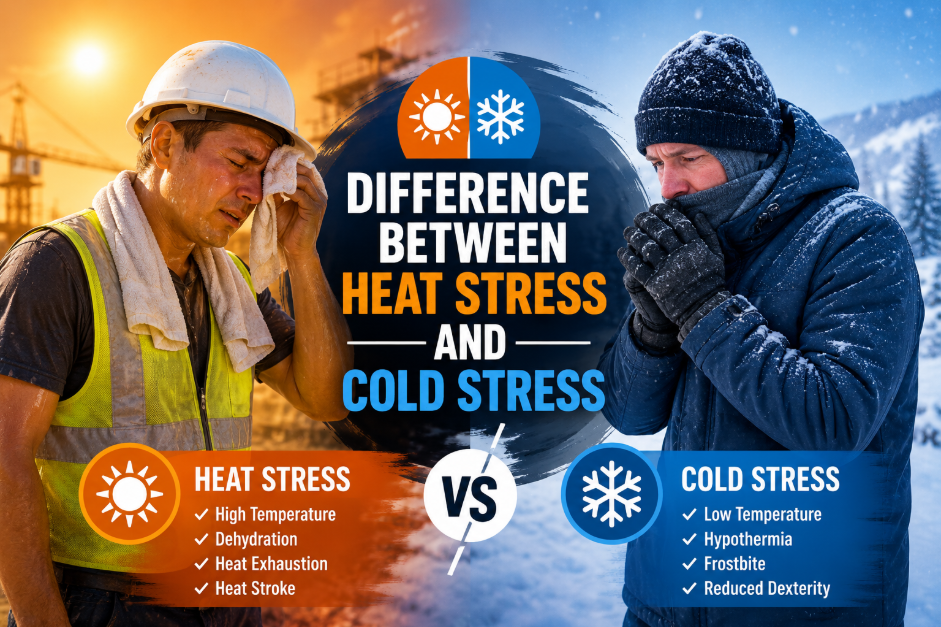
by Difference Between Heat Stress and Cold Stress
Introduction
Weather conditions can significantly impact human health and workplace safety. Whether it is the scorching heat of summer or the biting cold of winter, extreme temperatures can place tremendous stress on the human body. These conditions are commonly known as heat stress and cold stress.
Every year, thousands of workers across industries such as construction, manufacturing, agriculture, mining, transportation, and oil and gas face health risks due to exposure to extreme temperatures. Understanding the difference between heat stress and cold stress is essential for protecting workers, improving productivity, and preventing serious injuries or fatalities.
While both conditions result from exposure to extreme environmental temperatures, they affect the body in very different ways. This article explores the causes, symptoms, effects, risks, prevention strategies, and key differences between heat stress and cold stress.
What is Heat Stress?
Heat stress occurs when the body cannot effectively cool itself and maintain a normal temperature. The human body naturally cools through sweating and increased blood flow to the skin. However, when temperatures become too high or humidity levels rise, these cooling mechanisms may become ineffective.
As a result, body temperature increases, potentially leading to heat-related illnesses.
Common Causes of Heat Stress
- High environmental temperatures
- High humidity levels
- Direct sunlight exposure
- Physically demanding work
- Poor ventilation
- Wearing heavy protective clothing
- Inadequate hydration
- Lack of rest breaks
Heat-Related Illnesses
Heat stress can lead to several health conditions, including:
Heat Rash
A skin irritation caused by excessive sweating.
Heat Cramps
Painful muscle spasms resulting from loss of electrolytes through sweating.
Heat Exhaustion
A serious condition characterized by dehydration and inability to regulate body temperature.
Heat Stroke
The most severe heat-related illness. Heat stroke is a medical emergency that can cause organ damage or death if not treated immediately.
Symptoms of Heat Stress
Recognizing symptoms early can prevent serious complications.
Mild Symptoms
- Excessive sweating
- Thirst
- Fatigue
- Muscle cramps
- Dizziness
- Headache
Moderate Symptoms
- Weakness
- Nausea
- Rapid heartbeat
- Heavy sweating
- Reduced concentration
Severe Symptoms
- Confusion
- Loss of consciousness
- Hot, dry skin
- Seizures
- Body temperature above 40°C (104°F)
Immediate medical attention is required when severe symptoms appear.
What is Cold Stress?
Cold stress occurs when the body loses heat faster than it can produce it. The body works hard to maintain a stable internal temperature, but prolonged exposure to cold environments can overwhelm these protective mechanisms.
When body temperature drops, blood vessels constrict to conserve heat, reducing blood flow to extremities such as fingers, toes, ears, and nose. Prolonged exposure can lead to serious health issues.
Common Causes of Cold Stress
- Low air temperatures
- Windy conditions
- Rain or snow
- Cold water exposure
- Inadequate clothing
- Extended outdoor work
- Wet clothing
- Poor shelter conditions
Cold-Related Illnesses
Cold stress can result in various medical conditions, including:
Frostnip
A mild form of cold injury affecting exposed skin.
Frostbite
Freezing of skin and underlying tissues.
Trench Foot
Damage caused by prolonged exposure to cold and wet conditions.
Hypothermia
A dangerous drop in core body temperature that can become life-threatening.
Symptoms of Cold Stress
Early detection is critical for preventing severe injuries.
Mild Symptoms
- Shivering
- Cold hands and feet
- Numbness
- Reduced dexterity
Moderate Symptoms
- Slurred speech
- Fatigue
- Confusion
- Poor coordination
Severe Symptoms
- Uncontrolled shivering or no shivering
- Loss of consciousness
- Slow breathing
- Weak pulse
- Hypothermia
Medical attention should be sought immediately if severe symptoms develop.
Key Differences Between Heat Stress and Cold Stress
| Aspect | Heat Stress | Cold Stress |
|---|---|---|
| Temperature Exposure | High temperatures | Low temperatures |
| Body Response | Sweating and increased blood flow | Shivering and reduced blood flow |
| Main Risk | Overheating | Excessive heat loss |
| Common Illness | Heat Stroke | Hypothermia |
| Skin Appearance | Hot, red, sweaty | Pale, cold, numb |
| Hydration Impact | Dehydration common | Dehydration possible but less obvious |
| Productivity Effect | Fatigue and reduced focus | Reduced dexterity and slower reactions |
| Emergency Condition | Heat Stroke | Hypothermia |
| Prevention Focus | Cooling and hydration | Insulation and warming |
| Typical Season | Summer | Winter |
How Heat Stress Affects Workplace Safety
Heat stress is more than just discomfort. It can significantly increase workplace risks.
Reduced Concentration
Workers may struggle to focus, increasing the likelihood of errors and accidents.
Increased Fatigue
Physical exhaustion reduces productivity and reaction times.
Higher Accident Rates
Dehydration and dizziness can contribute to slips, trips, falls, and equipment-related incidents.
Health Emergencies
Heat stroke can develop rapidly and become fatal without immediate treatment.
Industries particularly vulnerable include:
- Construction
- Agriculture
- Warehousing
- Manufacturing
- Mining
- Transportation
How Cold Stress Affects Workplace Safety
Cold stress can be equally dangerous.
Reduced Hand Function
Cold temperatures affect grip strength and dexterity.
Slower Reactions
Workers may react more slowly to hazards.
Increased Injury Risk
Numbness can reduce awareness of injuries.
Equipment Handling Challenges
Cold conditions make operating tools and machinery more difficult.
High-risk industries include:
- Construction
- Utilities
- Transportation
- Fishing
- Forestry
- Oil and gas operations
Preventing Heat Stress
Prevention is the most effective strategy.
Stay Hydrated
Drink water regularly, even before feeling thirsty.
Schedule Work Wisely
Perform strenuous tasks during cooler parts of the day.
Take Frequent Breaks
Rest in shaded or air-conditioned areas.
Wear Appropriate Clothing
Choose lightweight, breathable fabrics whenever possible.
Monitor Weather Conditions
Use heat index forecasts to plan activities safely.
Provide Employee Training
Workers should recognize early warning signs and know emergency procedures.
Preventing Cold Stress
Cold stress prevention requires proper planning and protection.
Dress in Layers
Multiple layers provide better insulation than a single thick layer.
Keep Clothing Dry
Wet clothing dramatically increases heat loss.
Take Warm-Up Breaks
Use heated shelters or indoor areas regularly.
Monitor Weather Conditions
Pay attention to wind chill and temperature forecasts.
Use Proper PPE
Insulated gloves, boots, hats, and jackets are essential.
Stay Active
Movement helps generate body heat and maintain circulation.
First Aid for Heat Stress
For Heat Exhaustion
- Move the person to a cool area.
- Provide water if they are conscious.
- Loosen tight clothing.
- Apply cool, wet cloths.
For Heat Stroke
- Call emergency services immediately.
- Move the person to a cool location.
- Cool the body using water, ice packs, or fans.
- Do not leave the person unattended.
First Aid for Cold Stress
For Mild Cold Stress
- Move the person to a warm location.
- Remove wet clothing.
- Provide warm beverages if conscious.
- Cover with blankets.
For Hypothermia
- Call emergency medical services.
- Move the person to shelter.
- Warm the body gradually.
- Avoid direct heat sources.
- Monitor breathing and responsiveness.
Why Employers Must Address Both Risks
Employers have a responsibility to provide a safe work environment. Effective temperature-stress management programs help:
- Reduce workplace injuries
- Improve employee well-being
- Increase productivity
- Lower absenteeism
- Ensure regulatory compliance
- Build a stronger safety culture
Organizations that proactively address both heat stress and cold stress create healthier and safer workplaces throughout the year.
Conclusion
Heat stress and cold stress represent opposite environmental challenges, yet both can have serious consequences for worker health and safety. Heat stress occurs when the body gains more heat than it can release, while cold stress develops when the body loses heat faster than it can generate it.
Understanding the differences between these conditions is crucial for recognizing symptoms, responding quickly, and implementing effective prevention strategies. Proper hydration, suitable clothing, regular breaks, employee training, and continuous monitoring of environmental conditions can dramatically reduce risks.
No matter the season, workplace safety should remain a top priority. By educating workers and applying preventive measures, organizations can protect their most valuable asset: their people.
Final Thought
Extreme temperatures may be unavoidable, but the injuries and illnesses they cause are often preventable. Awareness, preparation, and timely action can make the difference between a safe workday and a serious emergency.
🔁 Readers also enjoyed these blog posts:
- Safety Management’s Role: The Unsung Hero Behind Every Successful Organization
- Safety Management and Its Responsibilities: Protecting People, Preventing Hazards, and Promoting a Culture of Care
- Benchmarking for Safety Performance: A Key to Continuous Improvement
“Start Your Website Journey Today – Exclusive Hostinger Discounts!”

Turn Any Idea into Viral,
Jaw-Dropping AI Videos in Seconds!