 by
by Introduction: Why Measuring Air Movement Matters More Than You Think
Have you ever walked into a factory floor, a laboratory, or even a large office building and felt that subtle draft of moving air?
That movement isn’t random.
It’s engineered.
Air movement plays a critical role in:
- Industrial ventilation
- Dust and fume control
- HVAC system efficiency
- Workplace safety compliance
- Cleanroom performance
- Environmental monitoring
And the only way to control air movement effectively is to measure it accurately.
In industries, especially manufacturing and process plants, air velocity measurement is not just about comfort — it’s about compliance, worker safety, and operational efficiency.
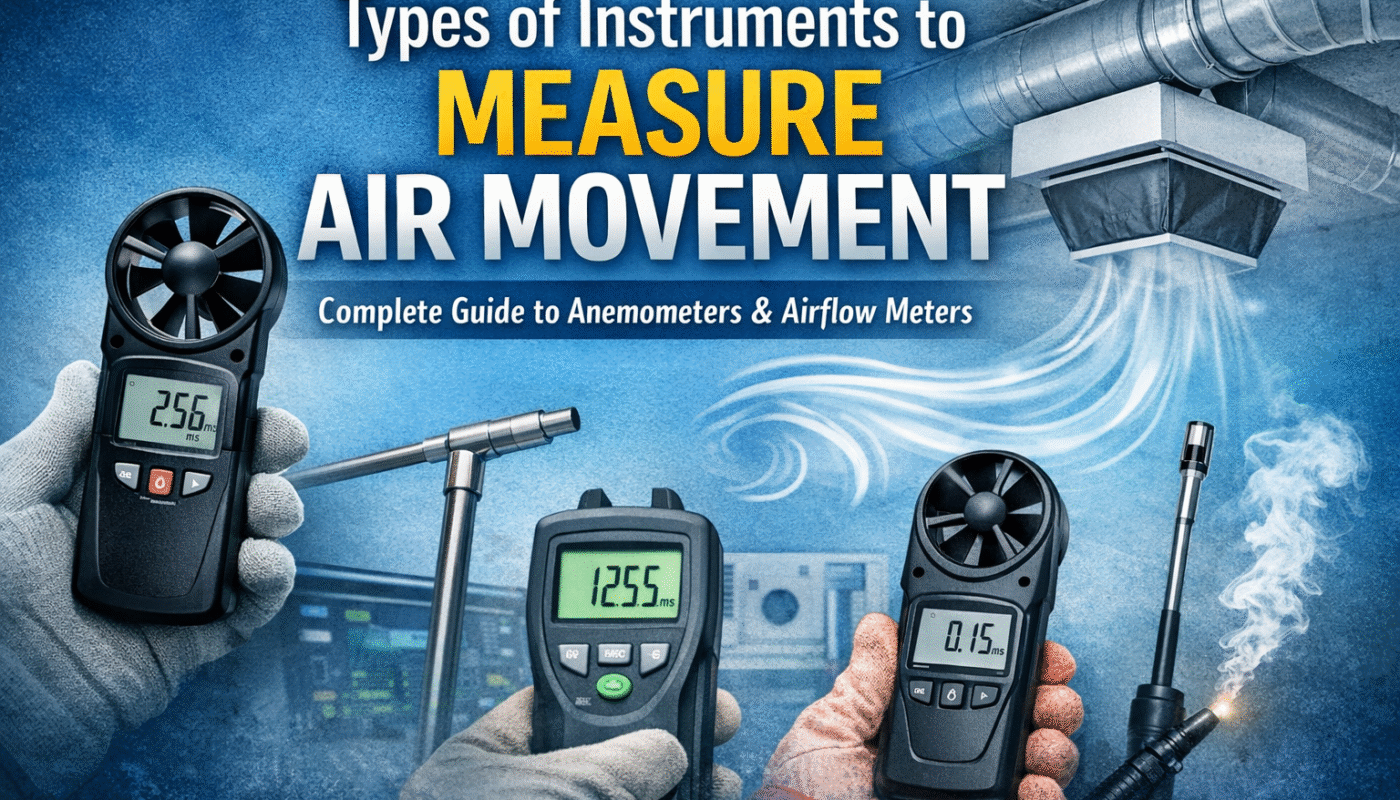
So, what are the instruments used to measure air movement?
Let’s break it down in a practical, easy-to-understand way.
What Is Air Movement Measurement?
Air movement measurement refers to determining:
- Air velocity (m/s, ft/min)
- Air volume (CFM or m³/hr)
- Air flow rate
- Air pressure differences
- Direction of airflow
The instrument used depends on:
- Required accuracy
- Environment (cleanroom vs dusty factory)
- Air speed range
- Budget
- Portability needs
Now let’s explore the different types of instruments.
1️⃣ Anemometer – The Most Common Air Velocity Measuring Instrument
When people talk about measuring air movement, they usually mean an anemometer.
An anemometer is a device used to measure wind speed or air velocity.
There are several types of anemometers, each suited for specific conditions.
A. Cup Anemometer
The classic design.
You’ve probably seen this on weather stations.
It consists of 3 or 4 cups mounted on horizontal arms. As air moves, the cups rotate. The speed of rotation determines wind speed.
✔ Best For:
- Outdoor wind speed measurement
- Meteorological studies
- Weather monitoring
❌ Not Ideal For:
- Low-speed indoor air movement
- HVAC duct measurement
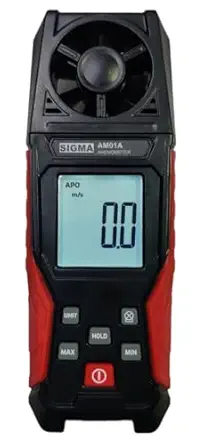
B. Vane Anemometer (Rotating Vane Anemometer)
One of the most commonly used instruments in HVAC and industrial ventilation.
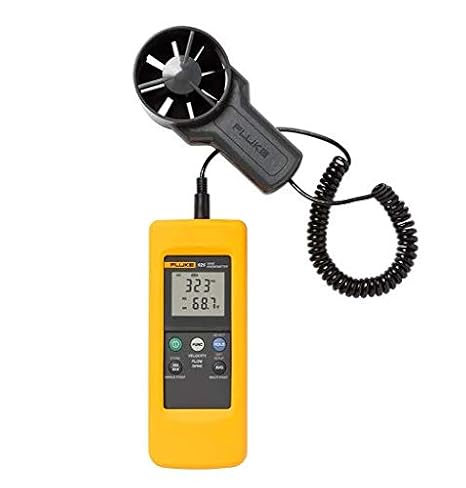
It looks like a small fan. When air passes through it, the vane rotates and measures velocity.
✔ Best For:
- HVAC balancing
- Duct airflow measurement
- Indoor air velocity checks
- Comfort ventilation studies
Advantages:
- Easy to use
- Affordable
- Durable
- Suitable for medium air speeds
This is the go-to instrument for many safety officers and maintenance engineers.
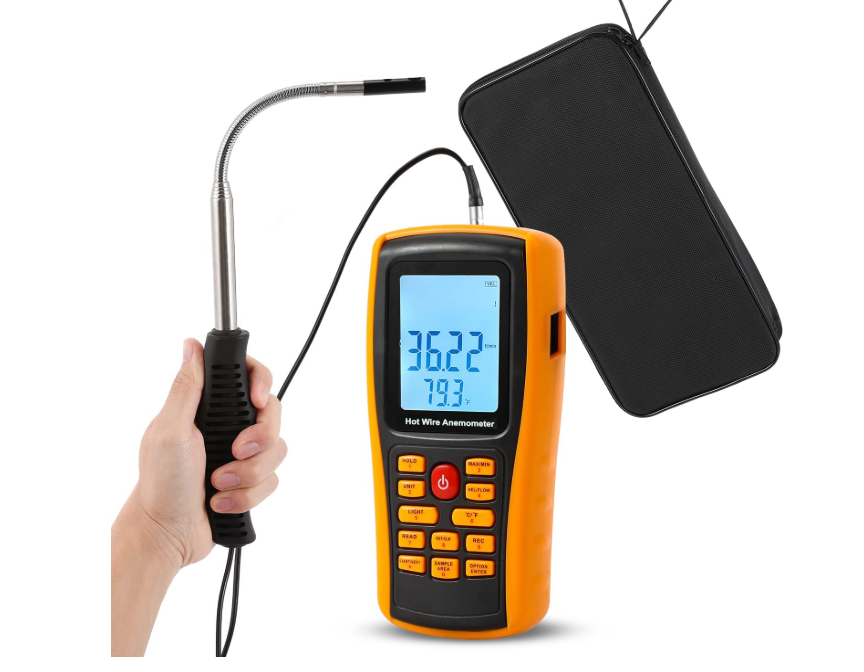
C. Hot Wire Anemometer
Now we move into precision territory.
A hot wire anemometer works on thermal principles. A thin wire is heated electrically. As air passes over it, the wire cools down. The cooling rate indicates air velocity.
✔ Best For:
- Very low air velocity measurement
- Cleanrooms
- Laboratories
- Laminar airflow cabinets
Why Professionals Love It:
- Highly sensitive
- Measures very low speeds accurately
- Compact and portable
Limitation:
- Fragile sensor
- Not ideal in dusty environments
If you’re working in pharmaceuticals or semiconductor industries, this is your instrument.
D. Thermal Anemometer
Closely related to hot wire types, thermal anemometers measure air movement based on heat transfer.
They are often digital and used in modern airflow diagnostics.
2️⃣ Pitot Tube – The Pressure-Based Measurement Tool
The Pitot tube works differently.
Instead of directly measuring velocity, it measures pressure difference.
It compares:
- Static pressure
- Total pressure
From this difference, air velocity is calculated using Bernoulli’s principle.
Fun fact: The Pitot tube is also used in aircraft to measure airspeed.
✔ Best For:
- High velocity ducts
- Industrial exhaust systems
- Large HVAC systems
Pros:
- Simple design
- Reliable
- Durable
Cons:
- Requires calculation
- Needs manometer or pressure gauge
This instrument is commonly used in industrial ventilation audits.
3️⃣ Manometer – Measuring Pressure to Understand Air Movement
While not directly measuring air velocity, a manometer measures pressure difference, which helps in calculating airflow.
Types include:
- U-tube manometer
- Inclined manometer
- Digital manometer
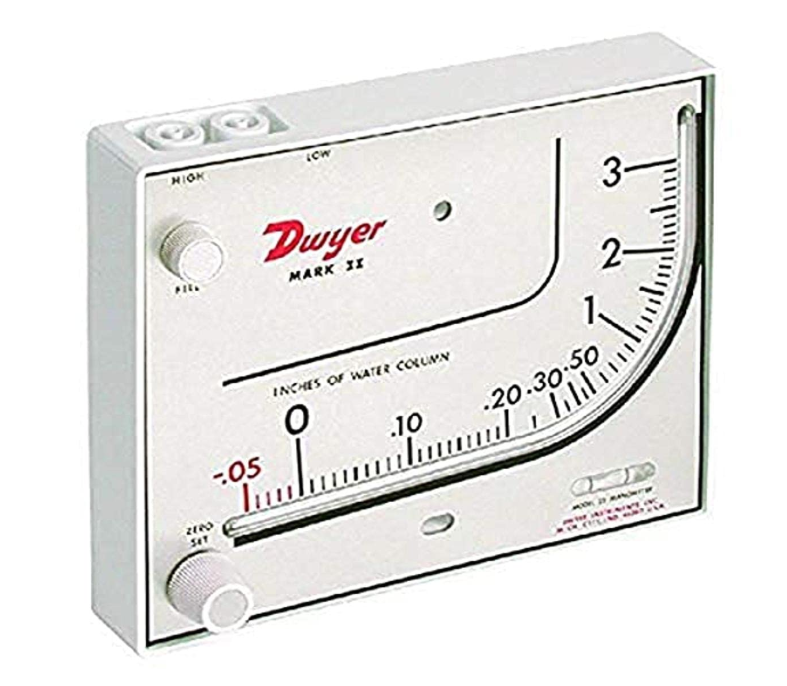
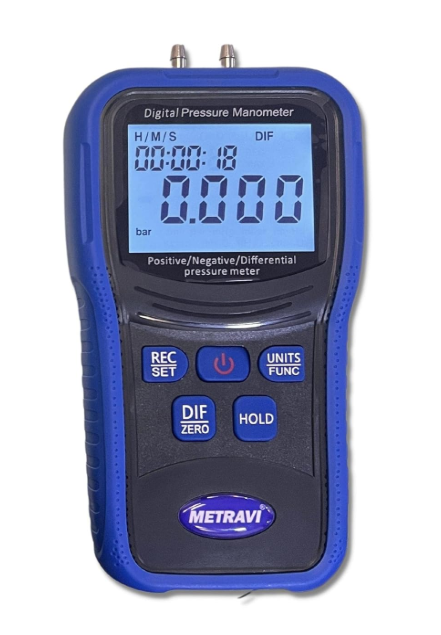
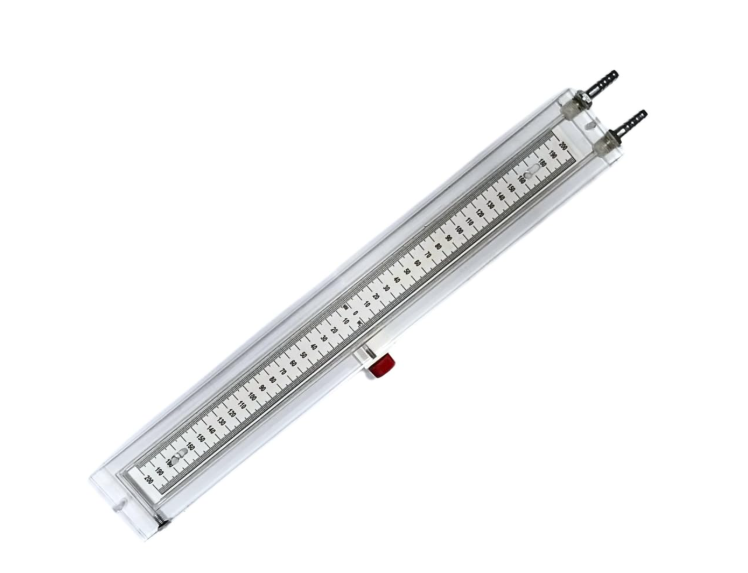
✔ Used For:
- Checking pressure drop across filters
- Measuring duct pressure
- Evaluating ventilation performance
It’s an essential supporting instrument for airflow analysis.
4️⃣ Airflow Capture Hood (Flow Hood)
This instrument is widely used in HVAC balancing.
It is placed over air diffusers or grills to measure airflow volume directly in CFM or m³/hr.
✔ Best For:
- Commercial building HVAC testing
- Air balancing
- Commissioning projects
Why It’s Popular:
- Direct airflow volume reading
- Easy to use
- Saves calculation time
If you’re doing HVAC testing and balancing, this is a must-have.
5️⃣ Smoke Tubes & Smoke Pens – Visual Airflow Indicators
Sometimes, you don’t need numbers.
You just need to see airflow direction.
Smoke tubes release visible smoke to show:
- Airflow direction
- Turbulence
- Leakage
- Laminar flow patterns
✔ Best For:
- Cleanroom testing
- Fume hood validation
- Air leakage detection
It’s a qualitative tool rather than quantitative — but incredibly useful.
6️⃣ Velometer
A velometer measures air velocity using a sensing head and digital display.
It’s commonly used in HVAC inspections.
In many modern contexts, velometers are integrated digital vane or thermal devices.
7️⃣ Ultrasonic Anemometer
This is advanced technology.
It uses ultrasonic sound waves between transducers.
Air movement affects the time it takes for sound to travel between sensors.
✔ Best For:
- Research applications
- Wind studies
- Environmental monitoring
Benefits:
- No moving parts
- Highly accurate
- Measures 3D wind components
Usually used in research labs or meteorology.
8️⃣ Differential Pressure Sensors (Modern Digital Systems)
Modern smart buildings use digital pressure sensors connected to Building Management Systems (BMS).
These sensors continuously monitor:
- Room pressure
- Cleanroom pressure differential
- Isolation room airflow
Used widely in hospitals and pharma industries.
Comparison Table: Which Instrument Should You Choose?
| Instrument | Best For | Accuracy | Environment |
|---|---|---|---|
| Vane Anemometer | HVAC ducts | Medium | Industrial & Commercial |
| Hot Wire Anemometer | Low velocity | High | Cleanrooms |
| Pitot Tube | High velocity ducts | High | Industrial |
| Capture Hood | Air diffusers | High | Commercial HVAC |
| Smoke Tube | Airflow direction | Visual only | Labs & Testing |
| Ultrasonic Anemometer | Research | Very High | Outdoor & Labs |
Key Factors to Consider Before Selecting an Instrument
Before purchasing an air movement measuring device, consider:
1. Air Velocity Range
Low speed (0.1 m/s) requires thermal type.
2. Environment
Dusty? Avoid hot wire.
3. Accuracy Requirement
Regulatory audit? Choose calibrated digital instrument.
4. Portability
Field inspection requires handheld device.
5. Budget
Basic vane models are affordable. Ultrasonic systems are premium.
Why Air Movement Measurement Is Critical for Workplace Safety
In industrial safety management, airflow measurement ensures:
- Removal of hazardous fumes
- Control of combustible dust
- Adequate oxygen levels
- Compliance with ventilation standards
- Thermal comfort
Improper ventilation can lead to:
- Heat stress
- Chemical exposure
- Respiratory hazards
- Explosion risk
As a safety professional, understanding these instruments is not optional — it’s essential.
Real-World Applications of Air Movement Instruments
Let’s look at practical industry scenarios.
🏭 Manufacturing Plants
Dust extraction systems measured using Pitot tube & vane anemometer.
🧪 Pharmaceutical Industry
Laminar airflow validation using hot wire anemometer.
🏢 Commercial Buildings
HVAC airflow balancing using capture hood.
🏥 Hospitals
Differential pressure monitoring in isolation rooms.
🌬️ Environmental Monitoring
Ultrasonic anemometers for wind studies.
Calibration & Maintenance – Often Ignored but Critical
Airflow instruments must be:
- Calibrated annually
- Stored properly
- Cleaned regularly
- Checked before critical measurement
Uncalibrated instruments can give misleading results — which can result in non-compliance during audits.
Emerging Trends in Air Movement Measurement
Technology is evolving rapidly.
We are seeing:
- Wireless airflow sensors
- IoT-enabled smart ventilation monitoring
- AI-based airflow analytics
- Continuous monitoring dashboards
Smart factories and smart buildings are adopting real-time airflow tracking.
The future is continuous monitoring, not periodic inspection.
Final Thoughts: Choosing the Right Tool Makes All the Difference
Air movement measurement is more than just taking readings.
It’s about:
- Protecting workers
- Ensuring compliance
- Improving efficiency
- Preventing accidents
- Optimizing HVAC performance
Whether you’re a safety officer, HVAC technician, maintenance engineer, or environmental professional — understanding the types of instruments used to measure air movement gives you an operational advantage.
The right instrument saves time.
The right instrument prevents risk.
The right instrument ensures compliance.
And in safety management, precision matters.
🔁 Readers also enjoyed these blog posts:
- Safety Management’s Role: The Unsung Hero Behind Every Successful Organization
- Safety Management and Its Responsibilities: Protecting People, Preventing Hazards, and Promoting a Culture of Care
- Benchmarking for Safety Performance: A Key to Continuous Improvement
“Start Your Website Journey Today – Exclusive Hostinger Discounts!”

Turn Any Idea into Viral,
Jaw-Dropping AI Videos in Seconds!