 by
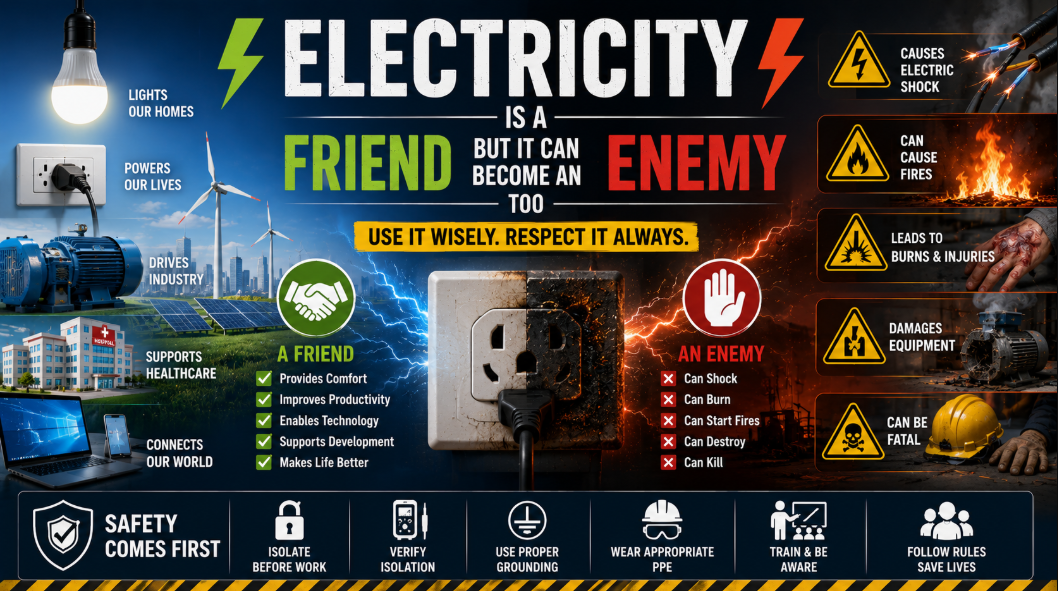
by Electricity Is a Friend of Men but It Can Become an Enemy Too
Understanding the Power That Runs Our Lives—and the Risks We Must Respect
Imagine waking up in the morning and finding that there is no electricity.
No lights.
No fan or air conditioner.
No refrigerator.
No internet router.
No mobile-phone charging.
No elevators.
No computers.
No traffic signals.
No modern factories or hospitals operating normally.
It would take only a few minutes to realize how deeply electricity is connected to our daily lives.
Electricity is one of the greatest conveniences of modern civilization. It powers our homes, workplaces, transportation systems, communication networks, hospitals, industries, and almost every technology we depend upon.
Yet the same electricity that gives us light can cause a fatal electric shock.
The same electrical system that operates a machine can start a fire.
The same power that drives an industrial motor can cause severe burns if it is uncontrolled.
That is the meaning behind the statement:
“Electricity is a friend of men, but it can become an enemy too.”
Electricity itself is neither a friend nor an enemy. Its effect depends on how it is generated, controlled, distributed, used, maintained, and respected.
When properly designed and controlled, electricity is incredibly useful.
When improperly handled, it can become one of the most dangerous hazards in a workplace.
Understanding both sides of electricity is therefore essential for everyone—not just electricians.
What Does the Statement Mean?
The statement has a simple but powerful message.
Electricity is our friend because:
- It provides lighting.
- It powers machines.
- It enables communication.
- It supports medical equipment.
- It provides heating and cooling.
- It powers computers and electronic devices.
- It supports transportation.
- It drives industrial production.
- It makes modern infrastructure possible.
Electricity can become our enemy because:
- It can cause electric shock.
- It can cause fatal electrocution.
- It can produce severe burns.
- It can cause arc-flash injuries.
- It can start electrical fires.
- It can damage equipment.
- It can trigger explosions in hazardous environments.
- It can cause unexpected machine movement.
- It can result in serious or fatal workplace accidents.
The difference is control.
Electricity that is properly controlled is useful.
Electricity that is uncontrolled or encountered unexpectedly can be dangerous.
Electricity as a Friend
1. Electricity Gives Us Light
One of the most basic benefits of electricity is lighting.
Before widespread electrical lighting, people relied heavily on candles, oil lamps, and other sources of illumination.
Today, electricity allows us to illuminate:
- Homes
- Offices
- Roads
- Factories
- Hospitals
- Warehouses
- Schools
- Construction sites
Adequate lighting itself contributes to safety by helping workers identify obstacles, read labels, operate equipment, and move safely through their surroundings.
2. Electricity Powers Industry
Modern manufacturing would be almost impossible without electricity.
Industrial electrical systems power:
- Motors
- Pumps
- Compressors
- Conveyors
- Fans
- Cranes
- Machine tools
- Control systems
- Instrumentation
- Production lines
A single factory can have thousands of electrical components working together.
Electric motors convert electrical energy into mechanical energy, allowing machines to perform work that would otherwise require enormous amounts of human effort.
This is one of the clearest examples of electricity being a friend of humanity.
3. Electricity Supports Healthcare
Electricity is particularly important in healthcare.
Hospitals depend on electrical power for:
- Life-support equipment
- Ventilators
- Patient monitors
- Diagnostic equipment
- Refrigeration
- Surgical equipment
- Lighting
- Communication systems
- Laboratory equipment
Reliable electrical supply can literally support life.
This demonstrates how electricity has moved far beyond being a convenience—it has become an essential part of modern healthcare.
4. Electricity Enables Communication
Think about how many times you use electricity indirectly to communicate during a normal day.
Mobile phones, computers, Wi-Fi equipment, data centers, telecommunications infrastructure, and charging systems all depend on electrical energy.
Without electricity, modern digital communication would largely stop.
5. Electricity Makes Everyday Life Easier
At home, electricity powers countless devices:
- Refrigerators
- Washing machines
- Water pumps
- Television
- Computers
- Kitchen appliances
- Fans
- Air conditioners
- Water heaters
- Chargers
These appliances save time and physical effort.
Electricity has dramatically improved comfort, productivity, and quality of life.
When Does Electricity Become an Enemy?
Electricity becomes dangerous when it is uncontrolled, improperly handled, poorly maintained, incorrectly installed, or unexpectedly released.
The danger becomes greater when people underestimate it.
One of the most common mistakes is thinking:
“It’s only electricity.”
There is no such thing as a harmless electrical hazard simply because the equipment looks small.
A seemingly ordinary electrical fault can develop into a serious incident within seconds.
Electrical Shock: When Electricity Passes Through the Body
One of the most familiar electrical hazards is electric shock.
An electric shock occurs when a person’s body becomes part of an electrical path.
The severity of the injury depends on many factors, including:
- Magnitude of current
- Duration of contact
- Current path through the body
- Body resistance
- Environmental conditions
- Contact area
- Whether the person can release the source
Electricity can interfere with the normal functioning of muscles and the heart.
It can also cause burns and secondary injuries.
A person receiving an electrical shock may fall from a ladder, platform, or elevated work area, creating additional hazards.
Therefore, an electrical accident may cause more than one type of injury.
Electricity and the Human Body
The human body is not designed to carry electrical current.
When electrical current passes through the body, it can interfere with the nervous system and muscular function.
Depending on the circumstances, electrical contact can result in:
- Pain
- Muscle contraction
- Loss of muscular control
- Burns
- Breathing difficulties
- Cardiac disturbances
- Unconsciousness
- Falls
- Serious injury
- Fatality
This is why electrical safety must never be based simply on whether a person has previously touched similar equipment without being injured.
Past experience is not proof of safety.
Electrical Burns
Electricity can cause severe burns.
Burns may occur at the points where current enters and leaves the body.
Electrical faults can also generate intense heat that causes burns without direct contact with an energized conductor.
Arc-flash events are another serious source of thermal energy.
The injuries associated with electrical incidents can therefore be far more severe than the brief shock people sometimes associate with electricity.
Arc Flash: A Hidden Electrical Hazard
An arc flash is a dangerous electrical event in which an electrical arc travels through an unintended path.
An arc can generate:
- Extremely high temperatures
- Intense light
- Pressure waves
- Molten metal
- Hot gases
- Sound energy
People working near electrical equipment can suffer severe injuries during an arc-flash event.
Potential injuries include:
- Thermal burns
- Eye injuries
- Hearing damage
- Impact injuries
- Clothing ignition
- Smoke exposure
Arc-flash risk is particularly important when working on or near energized electrical equipment.
The best approach is to de-energize whenever feasible and follow appropriate electrical safe-work practices.
Electrical Fires
Electricity can also become an enemy by causing fires.
Electrical fires may result from conditions such as:
- Overloaded circuits
- Short circuits
- Damaged insulation
- Loose electrical connections
- Improper wiring
- Faulty equipment
- Overheated components
- Poor maintenance
- Incorrectly rated equipment
An electrical fire can spread rapidly, particularly when combustible materials are nearby.
This is why electrical installations should be properly designed, installed, inspected, and maintained.
Overloading: When Too Much Demand Is Placed on a Circuit
Electrical circuits are designed to carry specified loads.
When too many devices are connected to a circuit, the electrical system may become overloaded.
Overloading can cause:
- Excessive heating
- Damage to conductors
- Insulation deterioration
- Equipment failure
- Fire risk
Using extension boards or adapters to connect multiple high-power appliances can create additional hazards when the equipment is not designed for the load.
The correct approach is not to keep adding connections.
The electrical system should be properly designed for the intended load.
Damaged Cables: A Small Defect With Serious Consequences
A damaged electrical cable may appear to be a minor maintenance issue.
It isn’t.
Exposed or damaged conductors can create:
- Electric shock hazards
- Short circuits
- Arc hazards
- Fire hazards
Cables may become damaged due to:
- Crushing
- Cutting
- Abrasion
- Heat
- Chemicals
- Poor handling
- Improper installation
- Age
Workers should report damaged electrical cables rather than attempting makeshift repairs.
Tape wrapped around a severely damaged cable is not a substitute for proper repair or replacement.
Water and Electricity: A Dangerous Combination
Water can increase electrical risk because wet conditions can change the resistance of the path through which current can flow.
This is why special care is necessary around:
- Wet floors
- Outdoor electrical equipment
- Bathrooms
- Washing areas
- Construction sites
- Chemical-processing areas
- Water pumps
Electrical equipment used in wet or damp locations should be suitable for the environment and protected appropriately.
A worker should never casually handle electrical equipment with wet hands or in conditions where electrical safety has not been established.
Electricity and Hazardous Atmospheres
Some workplaces contain:
- Flammable gases
- Vapors
- Mists
- Combustible dust
In these environments, electrical equipment can become an ignition source if it produces a spark, arc, hot surface, or other form of ignition.
This is why hazardous areas require appropriate equipment selection and engineering controls.
Electrical equipment installed in a hazardous location must be suitable for the specific classified environment.
The lesson is simple:
The electrical equipment that is safe in an ordinary office may not be suitable for a hazardous process area.
Electricity Can Also Create Mechanical Hazards
Electrical energy doesn’t only cause electrical injuries.
It can cause machines to move.
For example, if a worker is maintaining a machine and unexpected electrical energy is restored, the motor may start.
That movement can result in:
- Crushing
- Entanglement
- Cutting
- Struck-by injuries
- Amputation
This is why hazardous-energy control is so important.
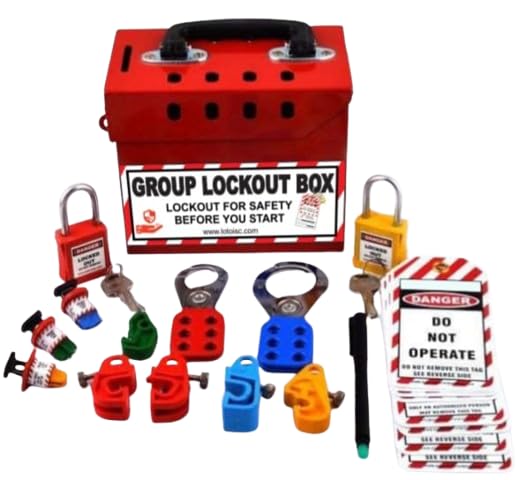
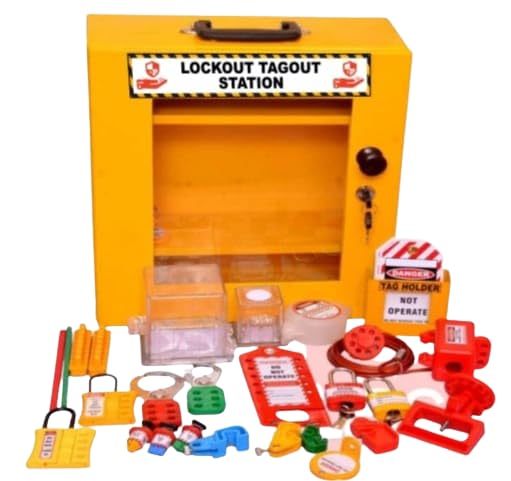
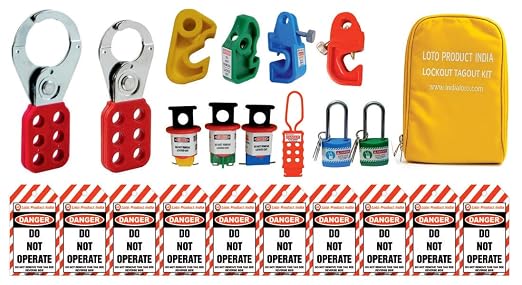
Electrical isolation is often a critical part of Lockout/Tagout (LOTO) procedures.
Why Lockout/Tagout Matters
Imagine a maintenance worker entering a machine to repair a component.
The machine appears to be stopped.
But the electrical supply has not been properly isolated.
Someone elsewhere starts the machine.
The motor suddenly energizes.
The consequences could be catastrophic.
Lockout/Tagout helps prevent unexpected energization by requiring hazardous energy sources to be identified, isolated, locked, and verified before work begins, according to the applicable procedure.
The basic principle is:
Don’t assume equipment is dead. Verify it.
Common Electrical Safety Mistakes
Many electrical accidents are not caused by a lack of technology.
They are caused by unsafe decisions.
1. Working on Energized Equipment Without Proper Controls
People sometimes work on energized equipment because:
“It will only take five minutes.”
Five minutes is enough time for a serious accident.
Where work can safely be performed de-energized, that should be the preferred approach.
2. Using Damaged Equipment
Damaged plugs, cables, tools, sockets, and electrical equipment should not simply be ignored.
Defects should be reported and corrected.
3. Improvised Repairs
Electrical systems should not be repaired using makeshift methods.
Improper repairs can create hidden hazards.
4. Ignoring Tripped Protection Devices
If a breaker repeatedly trips, resetting it repeatedly without identifying the underlying problem can be dangerous.
A tripped protective device is often telling you that something needs investigation.
5. Using the Wrong Equipment
Electrical equipment should be suitable for its intended application and environment.
This becomes especially important in:
- Wet locations
- Hazardous areas
- Outdoor environments
- High-temperature locations
- Dusty environments
6. Assuming Low Voltage Means No Risk
Lower voltage does not automatically mean zero risk.
The actual hazard depends on the electrical system and conditions.
Workers should follow the site’s electrical safety requirements rather than making assumptions.
Electrical Safety Starts With Prevention
The safest electrical incident is the one that never happens.
Prevention begins with proper design.
Electrical systems should be:
- Correctly designed
- Properly installed
- Appropriately protected
- Properly grounded where required
- Adequately maintained
- Periodically inspected
- Used within their design limitations
Good electrical safety is therefore not simply about telling workers:
“Don’t touch electricity.”
It is about building a system in which people are protected from electrical hazards.
Basic Electrical Safety Rules for Workers
Every worker should understand some fundamental principles.
1. Treat electrical equipment with respect
Never assume equipment is safe simply because it looks normal.
2. Report defects immediately
Damaged cables, plugs, sockets, panels, or equipment should be reported.
3. Keep electrical equipment away from unsuitable conditions
Protect equipment from water, chemicals, physical damage, and other environmental hazards.
4. Never bypass protective devices
Do not defeat breakers, fuses, interlocks, or other protective systems.
5. Use authorized personnel for electrical work
Electrical installation and maintenance should be performed by appropriately competent and authorized people.
6. De-energize before maintenance where required
Follow the site’s electrical isolation and LOTO procedures.
7. Verify isolation
Never rely only on the assumption that equipment is de-energized.
8. Use appropriate PPE
Where electrical work is authorized, PPE should be selected based on the hazard and applicable procedures.
9. Keep electrical panels accessible
Do not block electrical panels with materials, boxes, or equipment.
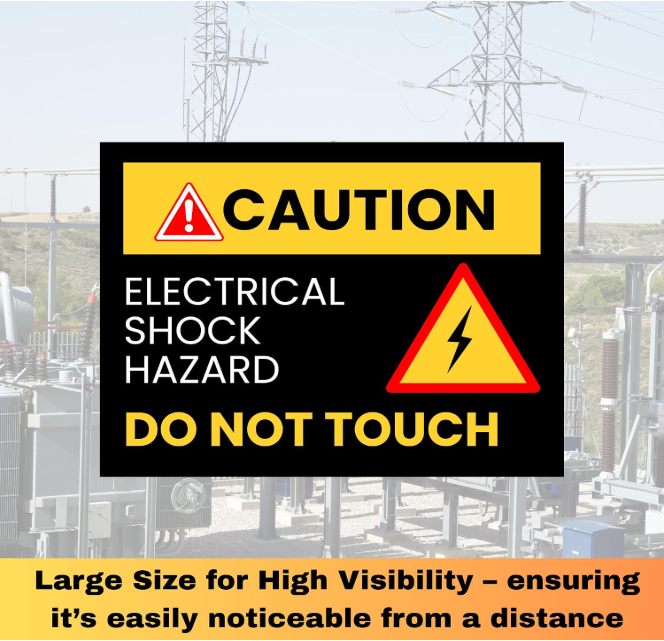
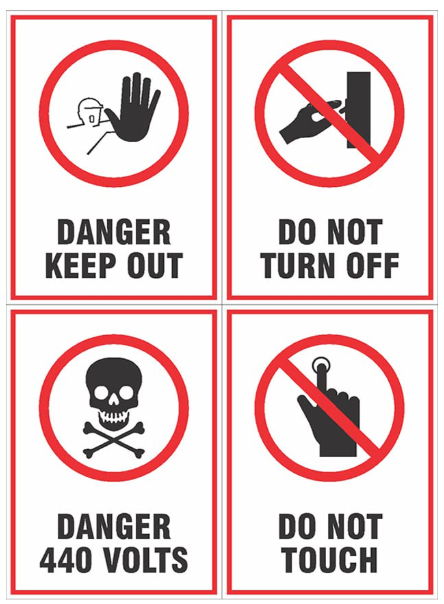
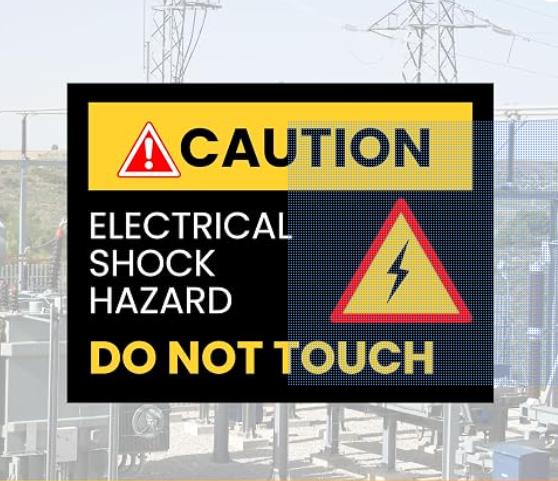
10. Never ignore warning signs
Warning labels and barriers exist for a reason.
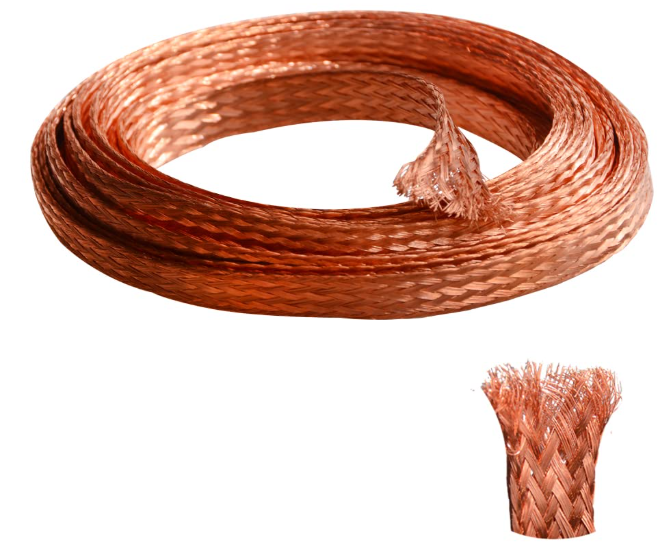
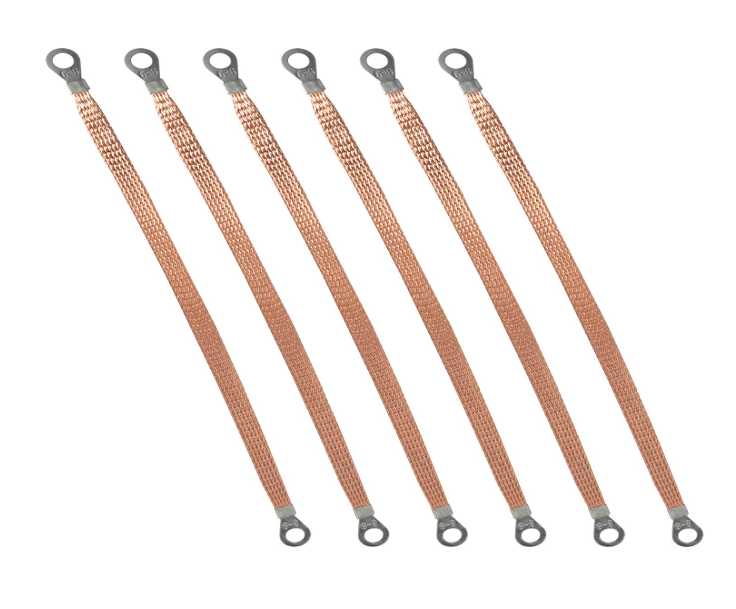
The Role of Grounding and Protection
Grounding and protective devices are important elements of electrical safety.
Depending on the system, electrical protection may include:
- Fuses
- Circuit breakers
- Residual-current protection
- Grounding systems
- Protective relays
- Interlocks
- Overload protection
These systems are designed to help limit or interrupt dangerous conditions.
However, protective equipment should not encourage careless behavior.
A circuit breaker is a safety barrier, not permission to work unsafely.

Electrical Safety Is Everyone’s Responsibility
A common misconception is:
“Electrical safety is the electrician’s responsibility.”
That is not entirely true.
Electricians and electrical professionals have specialized responsibilities, but everyone interacts with electricity.
A general worker may:
- Use a power tool
- Connect equipment
- Operate a machine
- Charge a battery
- Walk through an electrical area
- Report a damaged cable
Therefore, everyone needs basic electrical awareness.
Workers should know:
What they can safely do.
What they should never do.
When they must stop work.
Who they should contact when an electrical problem is identified.
What Should You Do If You See an Electrical Hazard?
Suppose you notice:
- A damaged cable
- Sparks from equipment
- Burning smell
- Smoke from a panel
- Exposed conductors
- Water near electrical equipment
- Repeated breaker trips
- Overheated electrical components
Do not simply walk away.
Depending on the situation and your site’s emergency procedures:
- Stop the activity if it can be done safely.
- Keep people away from the hazard.
- Inform the responsible person.
- Report the condition through the site’s reporting system.
- Do not attempt unauthorized electrical repairs.
- Follow emergency procedures if there is immediate danger.
Early reporting can prevent a small defect from becoming a major incident.
Electricity and Safety Culture
A strong electrical-safety culture is built on one important attitude:
Respect the energy you cannot see.
Electricity does not need to look dangerous to be dangerous.
A cable can look perfectly normal while being energized.
A panel can appear quiet while containing enormous amounts of electrical energy.
A machine can appear stopped while stored or connected energy remains present.
Safety culture means workers don’t rely on appearance or assumptions.
They rely on:
- Procedures
- Competence
- Isolation
- Verification
- Engineering controls
- Protective devices
- Appropriate PPE
- Communication
Electricity: Powerful Friend, Dangerous Enemy
Let’s return to the original statement.
“Electricity is a friend of men but it can become an enemy too.”
Why is electricity a friend?
Because it:
- Powers our homes.
- Drives our industries.
- Supports healthcare.
- Enables communication.
- Provides lighting.
- Improves productivity.
- Supports transportation.
- Makes modern technology possible.
Why can it become an enemy?
Because uncontrolled electrical energy can:
- Pass through the human body.
- Produce severe burns.
- Cause arc-flash injuries.
- Start fires.
- Ignite hazardous atmospheres.
- Energize machinery unexpectedly.
- Damage equipment.
- Cause serious injuries or fatalities.
The important word is “can.”
Electricity does not automatically become dangerous simply because it exists.
The danger comes from exposure to electrical energy without adequate controls.
A Simple Formula for Electrical Safety
Electrical safety can be remembered through five basic principles:
IDENTIFY → ISOLATE → VERIFY → PROTECT → CONTROL
IDENTIFY
Identify the electrical energy source and associated hazards.
ISOLATE
Where required, isolate the energy before performing work.
VERIFY
Confirm that the equipment is actually in the safe state required for the task.
PROTECT
Use engineering controls, protective devices, barriers, procedures, and appropriate PPE.
CONTROL
Prevent unauthorized access, unexpected energization, and unsafe operation.
This simple approach can help workers develop the right mindset around electrical hazards.
What EHS Professionals Can Do
EHS professionals play an important role in developing electrical safety awareness.
They can support organizations through:
- Electrical safety training
- Workplace inspections
- Risk assessments
- Incident investigations
- Emergency preparedness
- Contractor management
- Permit systems
- LOTO programs
- Electrical hazard awareness campaigns
- Preventive maintenance programs
- Periodic audits
An effective EHS program should focus not only on what happens after an electrical accident but also on identifying conditions that could lead to one.
Electrical Safety Checklist
Use this simple checklist during workplace safety observations:
Electrical Equipment
- Cables are free from visible damage.
- Plugs and sockets are in good condition.
- Electrical panels are accessible.
- Equipment is suitable for its environment.
- Protective devices are not bypassed.
- Electrical equipment is properly maintained.
Work Practices
- Only authorized personnel perform electrical work.
- Appropriate isolation procedures are followed.
- LOTO is applied where required.
- Isolation is verified before work.
- Appropriate PPE is used.
- Unsafe electrical conditions are reported.
Workplace Conditions
- Water is controlled around electrical equipment.
- Combustible materials are appropriately controlled.
- Hazardous-area requirements are followed.
- Electrical rooms are kept clear.
- Emergency access is maintained.
Frequently Asked Questions
Is electricity always dangerous?
Electricity always has the potential to cause harm, but properly designed, installed, protected, maintained, and controlled electrical systems can be used safely.
Why is electricity called a friend?
Because it provides enormous benefits to society. It powers homes, industries, hospitals, communication systems, transportation, and countless everyday devices.
Why can electricity become an enemy?
Uncontrolled electrical energy can cause electric shock, burns, arc flash, fires, explosions in certain environments, unexpected machine movement, and other serious hazards.
Can electricity cause fire?
Yes. Electrical faults such as overloads, short circuits, damaged insulation, loose connections, and equipment failures can generate sufficient heat or arcing to cause fires.
Can a small electrical fault become serious?
Yes. A small defect can worsen over time, particularly if it is ignored. Early identification, reporting, and corrective action are important.
Why should electrical work be done by qualified personnel?
Electrical work involves hazards that may not be visible. Competent personnel have the knowledge and training necessary to assess, isolate, test, repair, and restore electrical systems safely.
Why is LOTO important?
LOTO helps prevent unexpected energization or release of hazardous energy during maintenance and servicing activities.
What should I do if I see a damaged electrical cable?
Do not use it or attempt an unauthorized repair. Keep people away from the hazard where appropriate and report it through the site’s established safety or maintenance process.
Conclusion: Respect Electricity, and It Will Serve You
Electricity has transformed human civilization.
It lights our homes.
Runs our factories.
Powers our hospitals.
Connects our world.
Supports our technology.
Makes countless tasks faster, easier, and more productive.
In that sense, electricity truly is a friend of humanity.
But electricity does not forgive carelessness.
When electrical energy is uncontrolled, improperly installed, poorly maintained, or encountered unexpectedly, the consequences can be severe.
That’s why electrical safety is not about being afraid of electricity.
It is about respecting it.
Respect means understanding the hazard.
Respect means following procedures.
Respect means using properly designed equipment.
Respect means isolating energy before maintenance.
Respect means verifying that isolation.
Respect means reporting defects.
Respect means never bypassing safety systems.
And most importantly, respect means understanding that an electrical system can look completely normal while still containing dangerous energy.
The safest attitude is simple:
Treat every electrical hazard seriously, control the energy before exposure, and never take electricity for granted.
Electricity will continue to be one of humanity’s greatest tools.
Whether it remains our friend or becomes our enemy depends largely on how responsibly we use and control it.
Use its power. Respect its danger. Make electrical safety a habit—not an afterthought.
Important Safety Note
This article is intended for general electrical-safety and EHS awareness. Electrical systems and work practices must be assessed according to the actual installation, equipment, voltage level, environment, applicable laws and standards, manufacturer’s instructions, and site-specific procedures.
Electrical installation, testing, maintenance, isolation, and repair should be performed only by appropriately competent and authorized personnel. When electrical work is required, follow the applicable safe-work procedures, isolation/LOTO requirements, risk assessment, and PPE requirements.
🔁 Readers also enjoyed these blog posts:
- Safety Management’s Role: The Unsung Hero Behind Every Successful Organization
- Safety Management and Its Responsibilities: Protecting People, Preventing Hazards, and Promoting a Culture of Care
- Benchmarking for Safety Performance: A Key to Continuous Improvement
“Start Your Website Journey Today – Exclusive Hostinger Discounts!”