 by
by Introduction: Why Radiant Heat Matters More Than You Think
Have you ever stepped into a room that feels unbearably hot—even when the air temperature doesn’t seem that high? That’s radiant heat at work. Unlike convection (heat carried by air) or conduction (heat transferred through contact), radiant heat travels in waves, directly warming surfaces and objects—including your body.
Understanding how to control radiant heat isn’t just about comfort—it’s about saving energy, improving indoor living conditions, and even protecting your health during extreme temperatures. Whether you’re dealing with scorching summers or trying to keep heat where it belongs in winter, mastering radiant heat control can make a noticeable difference.
Let’s break it down and explore practical, real-world ways to manage radiant heat effectively.
What Is Radiant Heat? A Quick Breakdown
Radiant heat is a form of energy transfer that doesn’t need a medium like air or water. It moves in electromagnetic waves—similar to sunlight—and heats anything it touches.
Think about:
- The warmth you feel from the sun on your skin
- Heat radiating from a hot stove
- Walls and ceilings that seem to “emit” heat in summer
All of these are examples of radiant heat in action.
Unlike air temperature, radiant heat directly affects how warm or cool you feel, which is why controlling it is essential for comfort.
Why Controlling Radiant Heat Is Important
1. Improved Indoor Comfort
Even with air conditioning, poorly controlled radiant heat can make a room feel stuffy and uncomfortable.
2. Energy Efficiency
Reducing radiant heat gain lowers your reliance on cooling systems, cutting electricity bills.
3. Better Building Performance
Proper heat control improves the lifespan of materials and reduces wear on HVAC systems.
4. Sustainability
Lower energy usage means a smaller carbon footprint—good for both your wallet and the planet.
Key Sources of Radiant Heat in Buildings
Before you can control radiant heat, you need to know where it’s coming from:
1. Roofs and Ceilings
The biggest culprit—especially in hot climates. Sunlight directly heats the roof, which radiates heat downward.
2. Walls
Exterior walls absorb solar radiation and transfer heat indoors.
3. Windows and Glass Surfaces
Glass allows sunlight (and heat) to enter easily, increasing indoor temperatures.
4. Floors
In some cases, especially with poor insulation, floors can radiate heat from below.
Effective Methods to Control Radiant Heat
Now let’s get to the good stuff—how to actually control it.
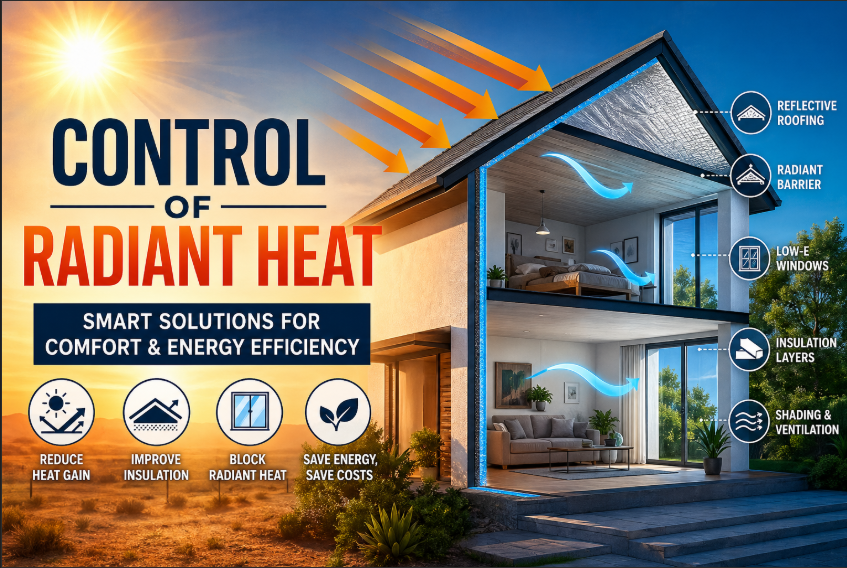
1. Reflective Insulation: The First Line of Defense
Reflective insulation is designed specifically to combat radiant heat. It works by reflecting heat away instead of absorbing it.
How It Works:
- Uses materials like aluminum foil
- Reflects up to 95% of radiant heat
- Installed in roofs, walls, and attics
Best Use Cases:
- Attics in hot climates
- Roof underlays
- Industrial buildings
2. Cool Roof Technology
A cool roof reflects more sunlight and absorbs less heat than a standard roof.
Key Features:
- Light-colored or reflective coatings
- Specialized materials that reduce heat absorption
Benefits:
- Lower indoor temperatures
- Reduced cooling costs
- Increased roof lifespan
3. Double Glazing and Window Films
Windows are a major entry point for radiant heat.
Solutions:
- Double or triple-glazed windows
- Low-emissivity (Low-E) coatings
- Reflective window films
These reduce heat transfer while still allowing natural light inside.
4. Thermal Barriers and Insulation Layers
Adding insulation helps reduce heat flow through building materials.
Common Materials:
- Fiberglass
- Foam boards
- Mineral wool
When combined with reflective surfaces, insulation becomes even more effective.
5. Shading Techniques: Simple but Powerful
Never underestimate the power of shade.
Options Include:
- External shades or awnings
- Trees and landscaping
- Pergolas and overhangs
Blocking sunlight before it hits surfaces is one of the most effective ways to reduce radiant heat gain.
6. Ventilation and Airflow Management
While ventilation mainly deals with air movement, it indirectly helps manage radiant heat.
Why It Helps:
- Removes heat buildup
- Reduces surface temperatures
- Improves overall comfort
Proper airflow prevents heat from accumulating and radiating into living spaces.
7. Radiant Barriers in Attics
Radiant barriers are a game-changer in hot climates.
Installed As:
- Foil sheets under roof rafters
- Reflective panels in attic spaces
They prevent heat from radiating into the living area below, especially during peak sunlight hours.
8. Smart Building Materials
Modern construction materials are designed to minimize heat absorption.
Examples:
- Insulated concrete forms (ICFs)
- Aerated blocks
- Phase-change materials
These materials regulate temperature by reducing heat storage and radiation.
9. Interior Design Choices Matter Too
Believe it or not, what’s inside your home can also influence radiant heat.
Tips:
- Use light-colored paints
- Choose reflective surfaces
- Avoid heavy heat-absorbing materials
Even small changes can contribute to a cooler indoor environment.
Common Mistakes to Avoid
Controlling radiant heat isn’t just about adding materials—it’s about using the right strategy.
1. Ignoring the Roof
Most heat enters through the roof, yet many overlook it.
2. Over-Reliance on Air Conditioning
AC doesn’t stop radiant heat—it only cools the air.
3. Poor Installation
Even the best materials won’t work if installed incorrectly.
4. Skipping Ventilation
Without airflow, heat gets trapped and radiates back inside.
Practical Tips for Immediate Results
If you’re looking for quick wins, try these:
- Install reflective window films
- Use blackout curtains during peak sunlight
- Add temporary shading like bamboo blinds
- Seal gaps and cracks to prevent heat entry
- Place indoor plants near windows to absorb heat
These low-cost solutions can make a noticeable difference almost immediately.
Radiant Heat Control in Different Climates
Hot and Dry Climates
Focus on reflection and shading.
Hot and Humid Climates
Combine radiant heat control with ventilation.
Cold Climates
Reverse the strategy—retain radiant heat indoors.
The Future of Radiant Heat Management
Technology is evolving fast, and radiant heat control is no exception.
Emerging Trends:
- Smart glass that adjusts transparency
- Advanced reflective coatings
- AI-based building temperature control
These innovations are making buildings more energy-efficient and comfortable than ever before.
Final Thoughts: Small Changes, Big Impact
Controlling radiant heat doesn’t require a complete home makeover. With the right mix of materials, design choices, and practical strategies, you can dramatically improve comfort and reduce energy costs.
The key is understanding where the heat comes from and stopping it before it becomes a problem.
Start small. Add a reflective layer. Improve shading. Upgrade your windows. Each step adds up—and before you know it, your space will feel cooler, more efficient, and far more livable.
Call to Action
If you found this guide helpful, consider sharing it with others who are struggling with indoor heat. And if you’re planning a home upgrade or renovation, make radiant heat control a top priority—it’s one investment that pays off every single day.
Stay cool, stay smart, and take control of radiant heat—because comfort should never be a compromise.
🔁 Readers also enjoyed these blog posts:
- Safety Management’s Role: The Unsung Hero Behind Every Successful Organization
- Safety Management and Its Responsibilities: Protecting People, Preventing Hazards, and Promoting a Culture of Care
- Benchmarking for Safety Performance: A Key to Continuous Improvement
“Start Your Website Journey Today – Exclusive Hostinger Discounts!”

Turn Any Idea into Viral,
Jaw-Dropping AI Videos in Seconds!