 by
by Difference Between Positive & Negative Ventilation
Air quality plays a critical role in maintaining a safe, productive, and healthy workplace. Whether it’s a manufacturing plant, warehouse, hospital, chemical processing unit, or confined space, proper ventilation is essential for removing contaminants, controlling temperature, and ensuring workers breathe clean air.
Two of the most common mechanical ventilation methods used across industries are positive ventilation and negative ventilation. Although both aim to improve air quality, they work in completely different ways and are suitable for different applications.
Choosing the wrong ventilation system can result in poor indoor air quality, increased exposure to hazardous gases, higher operating costs, and serious health risks. Understanding the difference between positive and negative ventilation helps employers, safety professionals, and engineers design effective ventilation strategies that protect both people and equipment.
In this comprehensive guide, we will explain how each ventilation system works, compare their advantages and disadvantages, identify their ideal applications, and help you determine which system is best for your workplace.
What Is Ventilation?
Ventilation is the process of supplying fresh outdoor air and removing stale or contaminated indoor air from an enclosed space. A well-designed ventilation system controls:
- Heat
- Humidity
- Dust
- Smoke
- Chemical vapors
- Toxic gases
- Airborne contaminants
- Odors
Good ventilation improves indoor air quality, enhances worker comfort, and reduces the risk of occupational illnesses.
What Is Positive Ventilation?
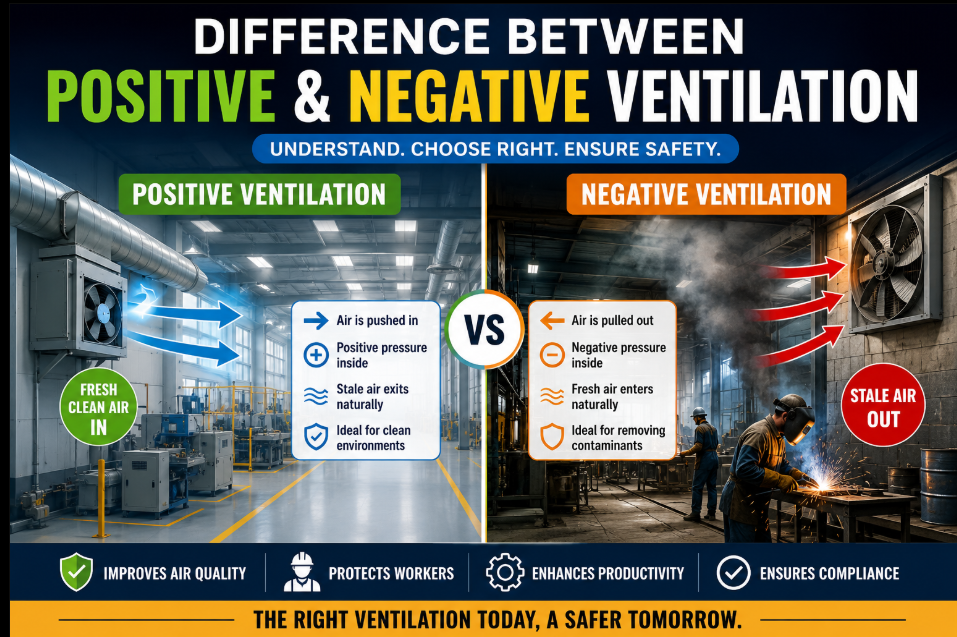
Positive ventilation is a system in which fresh, clean air is pushed into a building or work area using mechanical fans or blowers. As fresh air enters, it creates higher air pressure inside the space than outside. This pressure forces stale or contaminated air to escape through doors, windows, vents, or designated exhaust openings.
In simple terms:
Air is pushed in, and contaminated air is forced out.
Positive ventilation is commonly used where maintaining clean indoor air is a priority.
How Positive Ventilation Works
A positive pressure ventilation system typically consists of:
- Fresh air intake
- Air filters
- Supply fans or blowers
- Air ducts
- Distribution vents
Fresh filtered air is supplied continuously, creating a slight positive pressure inside the building that prevents dust, pollutants, and unfiltered outside air from entering.
Advantages of Positive Ventilation
Positive ventilation offers several important benefits:
Improved Indoor Air Quality
Continuous fresh air supply keeps oxygen levels high while reducing carbon dioxide and indoor pollutants.
Better Temperature Control
It helps maintain comfortable working conditions by distributing conditioned air evenly throughout the workspace.
Prevents Dust Entry
Since air flows outward through openings, dust and airborne contaminants from outside are less likely to enter the building.
Increased Worker Comfort
Fresh air circulation reduces fatigue, headaches, and discomfort associated with stale air.
Ideal for Clean Environments
Positive ventilation is widely used in:
- Clean rooms
- Hospitals
- Pharmaceutical industries
- Food processing facilities
- Electronics manufacturing
Disadvantages of Positive Ventilation
Despite its benefits, positive ventilation also has limitations:
- Higher energy consumption
- Increased maintenance of filters
- Less effective if exhaust paths are blocked
- May spread contaminants if air filtration is inadequate
What Is Negative Ventilation?
Negative ventilation is a system in which contaminated air is extracted from a room, creating lower air pressure inside than outside. Fresh outdoor air enters naturally through openings to replace the exhausted air.
In simple words:
Contaminated air is pulled out, allowing fresh air to enter.
This method is highly effective for removing hazardous fumes, smoke, dust, and airborne contaminants directly from the source.
How Negative Ventilation Works
A typical negative ventilation system includes:
- Exhaust fans
- Ductwork
- Air filters (where required)
- Exhaust outlets
The exhaust fan continuously removes contaminated air, creating negative pressure inside the workspace.
Advantages of Negative Ventilation
Efficient Removal of Contaminants
Negative ventilation quickly removes:
- Dust
- Welding fumes
- Chemical vapors
- Smoke
- Toxic gases
Better Source Control
Hazardous contaminants are extracted before they spread throughout the workplace.
Reduced Exposure Risks
Workers breathe cleaner air because contaminants are continuously removed.
Suitable for Hazardous Environments
Common applications include:
- Chemical plants
- Paint booths
- Welding workshops
- Laboratories
- Battery charging rooms
- Confined spaces
Disadvantages of Negative Ventilation
Some limitations include:
- Outdoor dust may enter if intake air is not filtered.
- Temperature control may be more difficult.
- High exhaust rates can increase heating or cooling costs.
- Improper balancing may reduce system efficiency.
Positive vs Negative Ventilation: Key Differences
| Feature | Positive Ventilation | Negative Ventilation |
|---|---|---|
| Airflow Direction | Fresh air pushed into the room | Contaminated air pulled out |
| Pressure | Higher than outside | Lower than outside |
| Main Purpose | Supply clean air | Remove contaminated air |
| Dust Entry | Prevents outside dust | Outside air may enter |
| Best For | Clean environments | Hazardous environments |
| Air Movement | Pushes air | Pulls air |
| Worker Comfort | Excellent | Good |
| Contaminant Removal | Indirect | Direct |
| Typical Equipment | Supply fans | Exhaust fans |
Where Positive Ventilation Is Used
Positive ventilation is commonly installed in:
- Hospitals
- Pharmaceutical manufacturing
- Food processing plants
- Electronic assembly units
- Clean rooms
- Data centers
- Office buildings
- Laboratories requiring sterile conditions
These environments require clean, filtered air and protection against external contaminants.
Where Negative Ventilation Is Used
Negative ventilation is ideal for workplaces where hazardous contaminants are generated, such as:
- Chemical processing plants
- Welding shops
- Spray painting booths
- Foundries
- Battery charging stations
- Waste treatment facilities
- Mining operations
- Confined space entry
- Industrial kitchens
Here, the priority is to remove pollutants before workers inhale them.
Positive Ventilation in Confined Spaces
Positive ventilation is often used before workers enter confined spaces such as tanks, vessels, pits, and storage silos. Fresh air is blown into the space to increase oxygen levels and dilute harmful gases.
Benefits include:
- Improved oxygen concentration
- Reduced buildup of toxic gases
- Lower heat stress
- Better visibility in dusty environments
Negative Ventilation in Confined Spaces
Negative ventilation is used when hazardous gases, fumes, or vapors are already present. Exhaust fans remove contaminated air directly from the confined space, reducing the concentration of dangerous substances.
This method is particularly useful during:
- Welding
- Cutting
- Painting
- Chemical cleaning
- Solvent handling
Factors to Consider When Choosing a Ventilation System
Selecting the right ventilation method depends on several factors:
Type of Contaminant
- Dust
- Smoke
- Chemical vapors
- Toxic gases
- Biological contaminants
Nature of Work
Processes involving hazardous substances often require negative ventilation, while clean manufacturing benefits from positive ventilation.
Size of the Workspace
Large facilities may require multiple ventilation zones or a combination of systems.
Regulatory Requirements
Occupational health and safety standards may specify minimum ventilation rates or local exhaust requirements for certain industries.
Energy Efficiency
Well-designed systems balance airflow with energy consumption to reduce operating costs while maintaining safe air quality.
Can Positive and Negative Ventilation Be Used Together?
Yes. Many modern industrial facilities use a balanced ventilation system that combines both methods. Fresh, filtered air is supplied through positive ventilation while contaminated air is removed using negative ventilation.
Benefits of a combined system include:
- Better air quality
- Improved temperature control
- Efficient contaminant removal
- Enhanced worker comfort
- Reduced energy waste when properly designed
Best Practices for Effective Workplace Ventilation
To maximize the effectiveness of any ventilation system:
- Inspect fans and ducts regularly.
- Replace or clean filters as recommended.
- Monitor airflow performance.
- Ensure exhaust outlets remain unobstructed.
- Perform routine maintenance.
- Conduct periodic indoor air quality assessments.
- Train employees on ventilation system operation.
- Integrate ventilation with other engineering controls where appropriate.
Frequently Asked Questions (FAQ)
Which ventilation system is better?
Neither system is universally better. The best choice depends on the workplace, the type of contaminants present, and the desired air quality.
Does positive ventilation remove contaminants?
Yes, but indirectly. Fresh air pushes contaminated air out through exhaust openings. It is most effective where the goal is to maintain clean indoor conditions.
Is negative ventilation suitable for chemical plants?
Yes. Negative ventilation is widely used in chemical plants because it removes hazardous vapors and gases before they accumulate.
Can both systems operate simultaneously?
Yes. Many industrial facilities use balanced ventilation systems that combine positive air supply with negative exhaust for optimal performance.
Why is ventilation important for workplace safety?
Proper ventilation reduces worker exposure to hazardous substances, improves comfort, controls temperature and humidity, and helps prevent occupational illnesses.
Conclusion
Both positive and negative ventilation are essential tools for maintaining safe and healthy workplaces, but they serve different purposes. Positive ventilation focuses on supplying clean, filtered air and creating a healthier indoor environment, making it ideal for clean rooms, hospitals, and food processing facilities. Negative ventilation, on the other hand, is designed to remove hazardous contaminants such as dust, fumes, smoke, and chemical vapors, making it indispensable in industrial settings where airborne hazards are generated.
Understanding the difference between these systems allows employers and safety professionals to choose the most effective solution based on workplace hazards, operational requirements, and regulatory standards. In many cases, combining positive and negative ventilation provides the best balance of air quality, worker comfort, and contaminant control. Investing in the right ventilation strategy not only protects employee health but also improves productivity, equipment performance, and overall workplace safety.
🔁 Readers also enjoyed these blog posts:
- Safety Management’s Role: The Unsung Hero Behind Every Successful Organization
- Safety Management and Its Responsibilities: Protecting People, Preventing Hazards, and Promoting a Culture of Care
- Benchmarking for Safety Performance: A Key to Continuous Improvement
“Start Your Website Journey Today – Exclusive Hostinger Discounts!”

Turn Any Idea into Viral,
Jaw-Dropping AI Videos in Seconds!