 by
by Air Conditioning and Hazards Associated With It: What You Need to Know Before You Turn the AC On
Meta Title
Meta Description
Tags
Introduction: The Comfort We Love, The Risks We Ignore
There’s no denying it—air conditioning has become an essential part of modern life. Whether you’re escaping the scorching summer heat or creating a comfortable indoor workspace, AC systems offer instant relief. But behind that refreshing blast of cool air lies a side we rarely talk about.
What if the very system keeping you comfortable is quietly affecting your health, your environment, and even your wallet?
This article dives deep into the lesser-known hazards of air conditioning. Don’t worry—it’s not about scaring you into switching off your AC forever. Instead, it’s about helping you use it smarter, safer, and more responsibly.
1. Health Hazards of Air Conditioning
1.1 Respiratory Problems and Poor Air Quality
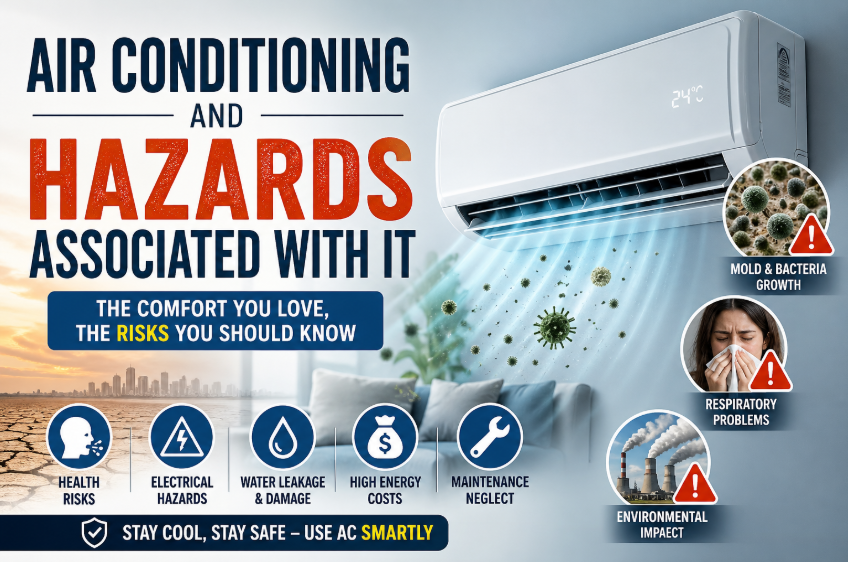
One of the most common issues linked to air conditioning is poor indoor air quality. AC units recirculate air within a closed environment, and if not properly maintained, they can spread dust, mold, and bacteria.
This can lead to:
- Allergies
- Asthma flare-ups
- Sinus congestion
- Persistent coughing
Dirty filters and ducts become breeding grounds for harmful particles. Every time the AC runs, these particles are pushed back into the room—straight into your lungs.
1.2 Dry Skin and Dehydration
Air conditioners remove humidity from the air, which is great for comfort—but not so great for your skin and body.
Extended exposure to dry, cool air can cause:
- Dry skin and irritation
- Chapped lips
- Eye dryness
- Dehydration
If you’ve ever noticed your skin feeling tight or itchy after long hours in an air-conditioned room, your AC might be the culprit.
1.3 Temperature Shock and Body Stress
Stepping out of extreme heat into an overly chilled room can shock your system. This sudden temperature shift forces your body to work harder to adapt.
Common effects include:
- Headaches
- Fatigue
- Muscle stiffness
- Increased susceptibility to colds
Your body prefers gradual temperature changes—not dramatic swings from 40°C outdoors to 18°C indoors.
1.4 “Sick Building Syndrome”
This is a real phenomenon where occupants of a building experience health issues without a clear cause. Poor ventilation and air-conditioned environments often play a role.
Symptoms include:
- Dizziness
- Nausea
- Difficulty concentrating
- Irritated eyes, nose, or throat
The moment you step outside, these symptoms often improve—a clear sign your indoor environment needs attention.
2. Hidden Biological Risks
2.1 Mold Growth Inside AC Systems
Moisture buildup inside air conditioners creates the perfect environment for mold growth. Once mold spores enter the airflow, they spread rapidly.
Health risks include:
- Lung infections
- Severe allergic reactions
- Chronic respiratory issues
Mold exposure over time can become a serious health concern, especially for children and elderly individuals.
2.2 Bacterial Contamination
If AC systems are neglected, they can harbor harmful bacteria. Some of these microorganisms thrive in damp environments like cooling coils and drainage systems.
Improperly maintained systems can circulate contaminated air throughout your home or office.
3. Environmental Hazards
3.1 Increased Carbon Footprint
Air conditioners consume a significant amount of electricity, much of which still comes from fossil fuels.
This contributes to:
- Greenhouse gas emissions
- Global warming
- Increased demand on power grids
Ironically, the more we rely on ACs to combat heat, the more we contribute to rising global temperatures.
3.2 Refrigerant Leakage
AC systems use refrigerants to cool air. Older units may contain harmful substances that damage the ozone layer.
Leaks can:
- Harm the environment
- Reduce cooling efficiency
- Pose health risks if inhaled
Modern refrigerants are safer, but improper disposal or leakage still remains a concern.
4. Lifestyle and Behavioral Impacts
4.1 Reduced Natural Adaptation to Heat
Frequent AC use can reduce your body’s natural ability to tolerate heat. Over time, even mild warmth can feel unbearable.
This creates:
- Increased dependency on artificial cooling
- Lower heat tolerance
- Discomfort in natural environments
4.2 Sedentary Indoor Lifestyle
Air-conditioned comfort often keeps people indoors for extended periods.
This can lead to:
- Reduced physical activity
- Vitamin D deficiency
- Mental fatigue
Sometimes, stepping outside—even in warm weather—can be more beneficial than staying inside all day.
5. Electrical and Safety Hazards
5.1 Fire Risks
Faulty wiring, overloaded circuits, or poor installation can turn your AC into a fire hazard.
Warning signs include:
- Burning smells
- Frequent tripping of circuit breakers
- Unusual noises
Ignoring these signs can lead to serious accidents.
5.2 Water Leakage and Structural Damage
Clogged drainage systems can cause water to leak from AC units.
This can result in:
- Wall damage
- Ceiling stains
- Mold growth in hidden areas
Regular maintenance helps prevent these issues before they escalate.
6. Economic Impact: The Hidden Costs
6.1 High Energy Bills
Running your AC for long hours can significantly increase your electricity bill.
Inefficient usage habits—like setting very low temperatures—only make things worse.
6.2 Maintenance and Repair Costs
Neglecting your AC system leads to:
- Frequent breakdowns
- Expensive repairs
- Shortened lifespan
Preventive maintenance is always cheaper than emergency fixes.
7. How to Use Air Conditioning Safely
Now that we’ve explored the risks, let’s focus on practical solutions. You don’t have to give up your AC—just use it wisely.
7.1 Maintain Your AC Regularly
- Clean or replace filters every 2–4 weeks
- Schedule professional servicing at least once a year
- Keep ducts clean
7.2 Set a Moderate Temperature
Ideal indoor temperature: 24–26°C
This:
- Reduces energy consumption
- Minimizes body stress
- Keeps you comfortable without overcooling
7.3 Improve Ventilation
- Open windows occasionally
- Use exhaust fans
- Allow fresh air circulation
Fresh air helps dilute indoor pollutants.
7.4 Stay Hydrated
Drink plenty of water to counteract dryness caused by AC environments.
7.5 Use a Humidifier (If Needed)
If the air feels too dry, a humidifier can help maintain balance.
7.6 Limit Continuous Exposure
Take breaks from air-conditioned environments. Even a short walk outside can help your body reset.
7.7 Upgrade to Energy-Efficient Models
Modern AC units are:
- More energy-efficient
- Environmentally friendly
- Better at maintaining air quality
Look for high energy ratings when purchasing.
8. Smart Alternatives to Overusing AC
Consider combining AC use with these methods:
- Ceiling fans for air circulation
- Natural ventilation
- Thermal curtains
- Indoor plants for improved air quality
These reduce dependence on constant cooling.
Conclusion: Balance Is the Key
Air conditioning is not the enemy—it’s how we use it that makes all the difference.
When used responsibly, AC systems can provide comfort without compromising your health or the environment. But ignoring maintenance, overusing cooling, and neglecting ventilation can turn this modern convenience into a hidden hazard.
So the next time you switch on your AC, remember: a little awareness goes a long way.
Stay cool—but stay smart.
Final Thought
Comfort should never come at the cost of your well-being. By making small adjustments in how you use and maintain your air conditioning system, you can enjoy the best of both worlds—cool air and a healthier life.
Ready to breathe easier and live smarter? Start with your AC habits today.
🔁 Readers also enjoyed these blog posts:
- Safety Management’s Role: The Unsung Hero Behind Every Successful Organization
- Safety Management and Its Responsibilities: Protecting People, Preventing Hazards, and Promoting a Culture of Care
- Benchmarking for Safety Performance: A Key to Continuous Improvement
“Start Your Website Journey Today – Exclusive Hostinger Discounts!”

Turn Any Idea into Viral,
Jaw-Dropping AI Videos in Seconds!