 by
Physiology of Electric Shock: How Electricity Affects the Human Body and What Causes Electric Shock
Electricity is an essential part of almost every modern workplace. Machines, lighting systems, computers, pumps, motors, tools and production equipment all depend on electrical energy.
But the same energy that makes equipment work can become extremely dangerous when it passes through the human body.
An electrical shock may be as minor as a brief tingling sensation or as severe as deep burns, respiratory failure, cardiac arrest or death. The outcome depends on several factors, including the amount of current, voltage, duration of contact, current pathway through the body, frequency and condition of the person’s skin.
This brings us to an important EHS topic:
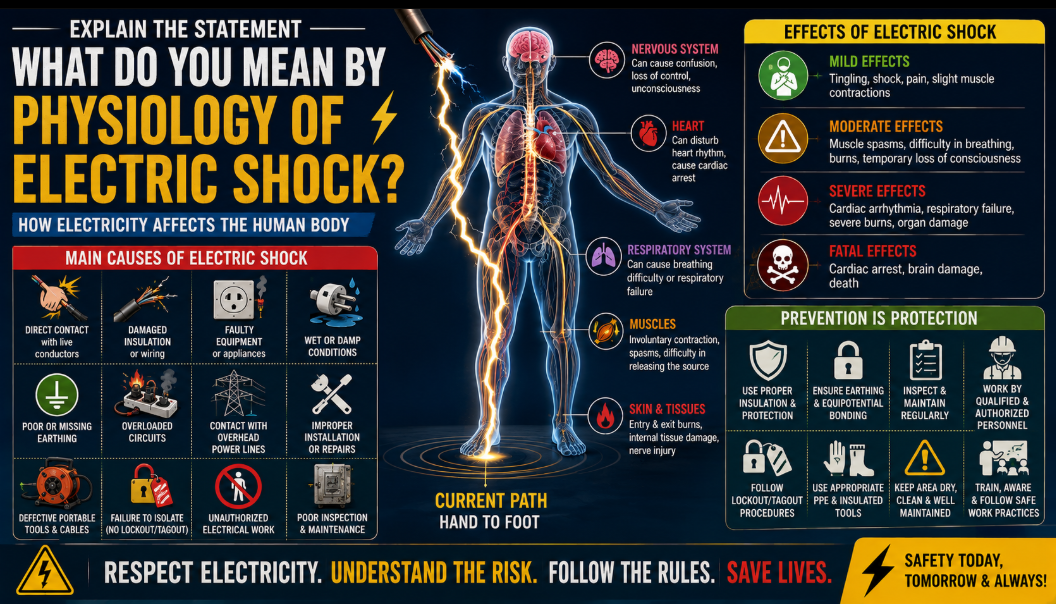
What is the physiology of electric shock, and what are the main causes of electric shock on the human body?
Understanding this subject helps workers and safety professionals appreciate why seemingly ordinary electrical equipment can become life-threatening.
What Is Electric Shock?
An electric shock occurs when the human body becomes part of an electrical circuit and electric current flows through it.
Normally, electrical current is intended to flow through conductors such as:
- Copper cables
- Busbars
- Wires
- Electrical equipment
- Circuit components
The human body is not intended to be part of this circuit.
However, if a person touches an energized conductor while simultaneously providing a path to another potential—or to earth—current can flow through the body.
For example:
Live conductor → Human body → Earth
The body has therefore become part of the electrical circuit.
The resulting physiological effects depend largely on how much current flows, where it flows and for how long.
What Does “Physiology of Electric Shock” Mean?
The word physiology refers to how a living organism functions.
Therefore, the physiology of electric shock means:
The study of how electric current affects the normal functioning of the human body and its vital systems.
Electricity can interfere with several physiological functions, particularly:
- The nervous system
- Muscular system
- Respiratory system
- Cardiovascular system
- Skin and tissues
- Brain function
The human body operates through complex electrical signals.
The nervous system uses electrical impulses to communicate.
The heart depends on electrical activity to coordinate its rhythm.
Muscles respond to electrical signals from nerves.
When an external electrical current passes through the body, it can interfere with these natural electrical processes.
That is why electric shock can be much more serious than a simple skin injury.
Why Is Electric Current Dangerous to the Human Body?
The human body contains water, electrolytes, blood and tissues that allow electrical current to pass.
However, the body is not equally conductive everywhere.
The skin provides significant resistance, especially when it is dry.
But this resistance can decrease dramatically when the skin is:
- Wet
- Sweaty
- Damaged
- Cut
- Contaminated with conductive substances
This explains why electrical equipment can become particularly dangerous in:
- Bathrooms
- Wet process areas
- Construction sites
- Outdoor locations
- Wash-down areas
- Chemical plants
- Areas with conductive floors
A person’s condition and the surrounding environment can therefore significantly influence the severity of an electrical shock.
Voltage vs Current: Which Is More Important?
People often say:
“Voltage kills.”
A more useful explanation is that current flowing through the body produces the physiological effects, while voltage provides the electrical pressure that drives that current.
The amount of current depends on factors such as:
- Applied voltage
- Body resistance
- Contact conditions
- Current pathway
- Duration of contact
A simplified relationship is represented by Ohm’s law:
I = V / R
Where:
- I = current
- V = voltage
- R = resistance
This does not mean voltage is unimportant.
Higher voltage can drive greater current through the body under comparable conditions.
Therefore, both voltage and current must be considered when assessing electrical risk.
How Does Current Enter and Leave the Body?
For an electrical shock to occur, there must generally be a complete electrical path.
For example:
Hand-to-hand contact
Live conductor → One hand → Body → Other hand → Source
This pathway is especially dangerous because current may pass through the chest.
Hand-to-foot contact
Live conductor → Hand → Body → Foot → Earth
Again, current can potentially pass through the chest and other vital organs.
Foot-to-foot contact
A person can also experience dangerous voltage differences between their feet, such as during certain ground-fault conditions.
This is commonly associated with the concept of step potential.
Why Is the Current Path So Important?
Not all electric shocks have the same consequences.
A small current passing through a finger may produce a localized sensation.
A similar current passing across the chest can be far more dangerous because the heart and respiratory muscles may be affected.
Potentially hazardous pathways include:
- Hand to hand
- Hand to opposite foot
- Hand to both feet
- Head to foot
In electrical safety, the pathway through the body is therefore one of the critical factors in determining injury severity.
How Electric Current Affects the Nervous System
The nervous system communicates using electrical signals.
An external electrical current can interfere with normal nerve function.
Possible effects include:
- Pain
- Tingling
- Numbness
- Muscle contraction
- Loss of coordination
- Confusion
- Loss of consciousness
The nervous system is particularly important because it controls and coordinates many functions of the body.
A severe electrical shock can disrupt normal neurological activity and may result in unconsciousness or other serious effects.
Effect on Muscles
One of the characteristic effects of electrical current is involuntary muscle contraction.
When current stimulates muscles, they may contract suddenly.
This creates a dangerous situation.
Imagine a worker holding an energized conductor.
The electrical current causes the hand muscles to contract.
The worker may be unable to release the conductor voluntarily.
This phenomenon is commonly called the “let-go” problem.
The longer the person remains in contact with the energized source, the greater the potential for serious injury.
This is one reason why rapid disconnection of electrical energy is so important.
Effect on the Respiratory System
Electric current can interfere with the muscles responsible for breathing.
Depending on the severity and pathway of the shock, a person may experience:
- Difficulty breathing
- Respiratory muscle paralysis
- Irregular breathing
- Respiratory arrest
If breathing stops, the brain and other organs rapidly become deprived of oxygen.
Therefore, a serious electrical shock must always be treated as a potentially life-threatening emergency.
Effect on the Heart
Perhaps the most serious physiological consequence of electric shock is interference with the heart.
The heart operates through its own coordinated electrical activity.
An external current passing through the chest can interfere with this electrical system.
Possible consequences include:
- Abnormal heart rhythm
- Ventricular fibrillation
- Cardiac arrest
Ventricular fibrillation is particularly dangerous because the heart’s lower chambers quiver rather than pumping blood effectively.
Without rapid medical intervention, this can become fatal.
This is why electrical accidents should never be underestimated simply because there are no obvious burns.
Effect on Skin and Body Tissues
Electrical current can also produce thermal injury.
Depending on the circumstances, electrical contact may cause:
- Entry burns
- Exit burns
- Deep tissue damage
- Skin burns
- Muscle injury
- Nerve damage
An important point is that the visible skin injury may not reflect the extent of internal damage.
Electrical energy can travel through deeper tissues.
Therefore, a person who has experienced a significant electrical shock should receive appropriate medical evaluation even if the skin appears relatively normal.
Electrical Burns
Electrical burns can occur when current passes through body tissues.
Heat can be generated because body tissues resist current flow.
The resulting injury may affect:
- Skin
- Muscles
- Blood vessels
- Nerves
- Deeper tissues
High-energy electrical incidents can produce extensive thermal injuries.
Arc-flash events can also produce severe burns without requiring direct contact with an energized conductor.
Common Effects at Different Current Levels
The response to electrical current varies significantly between individuals and situations. Therefore, current values should never be interpreted as guaranteed injury thresholds.
As a general safety illustration, increasing current can progress from:
Perception → Pain → Muscle contraction → Difficulty releasing → Respiratory effects → Dangerous heart rhythm → Cardiac arrest
The severity depends on:
- Current magnitude
- Duration
- Frequency
- Current pathway
- Skin condition
- Individual physiology
- Environmental conditions
Even relatively small currents can become dangerous when they pass through critical parts of the body or when contact is prolonged.
AC vs DC Electric Shock
The physiological response can also depend on whether the electrical source is alternating current (AC) or direct current (DC).
Industrial and domestic electrical systems commonly use AC.
DC is found in systems such as:
- Batteries
- Solar photovoltaic systems
- Battery storage systems
- Certain industrial equipment
- Electric vehicles
The effects of AC and DC are not identical.
Frequency is particularly important for AC because alternating electrical signals can interact with the body’s neuromuscular and cardiac systems.
This is why electrical safety assessments must consider the characteristics of the electrical source rather than looking only at voltage.
Main Causes of Electric Shock on the Human Body
Now let’s examine the main causes of electrical shock in workplaces and everyday environments.
1. Direct Contact With a Live Conductor
This is one of the most obvious causes.
A person touches an energized conductor such as:
- Exposed wire
- Live terminal
- Busbar
- Electrical connection
- Open panel
- Damaged electrical component
If another part of the person’s body provides a return path, current can flow through the person.
2. Damaged Electrical Insulation
Electrical insulation is designed to separate energized conductors from people and other conductive surfaces.
When insulation becomes damaged because of:
- Age
- Heat
- Abrasion
- Chemicals
- Moisture
- Mechanical impact
- Rodent damage
a dangerous conductor may become exposed.
Damaged cables should therefore be removed from service or repaired through an approved process.
Never cover a severely damaged electrical cable with ordinary tape and continue using it as a permanent solution.
3. Faulty Electrical Equipment
Equipment can develop internal faults.
Examples include:
- Motors
- Pumps
- Power tools
- Welding machines
- Heaters
- Distribution boards
- Transformers
If a fault causes a normally non-energized metal enclosure to become energized, a person touching it may receive a shock.
This is where proper protective earthing and fault protection become extremely important.
4. Poor or Missing Earthing
Poor earthing can increase the risk associated with electrical faults.
If an equipment enclosure becomes energized because of an insulation failure, an effective protective earthing arrangement can provide a low-impedance fault path and assist protective devices in disconnecting the supply.
If the earthing system is absent, damaged or improperly maintained, the equipment enclosure may remain at a dangerous potential.
5. Wet or Damp Conditions
Water and moisture can significantly change electrical risk.
Wet skin generally provides less resistance than dry skin.
Therefore, electrical work in wet conditions can be especially hazardous.
Examples include:
- Wet floors
- Rain
- Wet hands
- Washing areas
- Water leakage
- Outdoor electrical work
Electrical equipment must be appropriate for its environment, and workers should avoid using electrical equipment under unsafe wet conditions.
6. Damaged Plugs and Sockets
Broken plugs, loose sockets and damaged connectors can expose workers to energized components.
Warning signs include:
- Cracked plug
- Burn marks
- Loose connection
- Sparking
- Overheating
- Damaged pins
- Loose socket
- Melted plastic
Such equipment should be isolated and reported rather than repeatedly used.
7. Overloaded Electrical Circuits
Overloading occurs when electrical equipment demands more current than the circuit is designed to carry.
Overloading can cause:
- Excessive heating
- Insulation deterioration
- Equipment damage
- Fire
- Failure of electrical components
While overload itself does not necessarily mean a person will receive a shock, overheating and equipment deterioration can eventually create conditions that increase electrical hazards.
8. Improper Electrical Repairs
Improvised electrical repairs are a common source of risk.
Examples include:
- Exposed wire joints
- Incorrect cable connections
- Improperly sized cables
- Bypassed protection
- Makeshift connections
- Unauthorized panel modifications
Electrical repairs should be performed by appropriately competent personnel following approved procedures.
9. Contact With Overhead Power Lines
Overhead electrical lines present a major hazard.
A person does not always have to physically touch a conductor to be exposed to electrical danger, particularly with high-voltage systems where electrical arcing can occur across an air gap.
High-risk activities include:
- Crane operations
- Scaffolding
- Construction
- Lifting long materials
- Tree cutting
- Excavation near electrical infrastructure
Safe clearance and appropriate controls are essential.
10. Faulty Portable Electrical Equipment
Portable tools are frequently moved, dropped and exposed to harsh conditions.
Examples include:
- Electric drills
- Grinders
- Cutters
- Welding machines
- Portable lamps
- Extension leads
- Pumps
Repeated movement can damage cables and plugs.
Portable equipment should therefore be inspected before use and periodically as required by the site’s electrical-safety program.
11. Failure to Isolate Electrical Energy
One of the most serious causes of electrical accidents is working on equipment that has not been properly isolated.
A worker may believe equipment is de-energized because:
- The machine has stopped.
- A local switch is OFF.
- A control panel indicates OFF.
- Someone said the power was disconnected.
None of these assumptions should replace proper energy isolation and verification.
A robust Lockout/Tagout (LOTO) process helps control hazardous electrical energy during maintenance.
12. Unauthorized Electrical Work
Electrical systems should not be modified or repaired by people who do not have the required competence and authorization.
Unauthorized work can result in:
- Incorrect connections
- Missing protection
- Poor earthing
- Improper cable sizing
- Unexpected energization
- Equipment damage
- Electric shock
Competence is therefore an important engineering and administrative control.
13. Poor Housekeeping
Poor housekeeping can indirectly contribute to electrical accidents.
Examples include:
- Water around electrical equipment
- Combustible material near panels
- Cables lying across walkways
- Blocked electrical panels
- Dust accumulation
- Oil contamination
Good housekeeping reduces the likelihood of electrical incidents and makes emergency response easier.
14. Bypassing Safety Devices
Protective devices exist for a reason.
Examples include:
- Circuit breakers
- Fuses
- Earth-leakage protection
- Interlocks
- Protective relays
Bypassing or defeating such devices can expose workers and equipment to dangerous conditions.
A common unsafe attitude is:
“The breaker keeps tripping, so let’s bypass it.”
The correct question is:
“Why is the breaker tripping?”
Repeated tripping may indicate a fault that requires investigation.
15. Lack of Electrical Inspection and Maintenance
Electrical installations deteriorate over time.
Without inspection and maintenance, problems can remain hidden.
Potential defects include:
- Loose terminals
- Damaged insulation
- Corrosion
- Failed protective devices
- Poor earthing
- Overheating
- Improper modifications
Regular inspection and preventive maintenance are therefore essential components of an electrical-safety management system.
Factors That Determine the Severity of Electric Shock
The severity of an electric shock is influenced by several factors.
Current Magnitude
Generally, increasing current through the body increases the potential for serious physiological effects.
Duration
The longer the current flows, the greater the potential for injury.
Current Path
A current path through the chest can be particularly dangerous.
Voltage
Voltage provides the driving force that can push current through the body.
Skin Resistance
Dry, intact skin generally provides more resistance than wet or damaged skin.
Frequency
The physiological response can differ depending on electrical frequency.
Environment
Wet or conductive surroundings can increase risk.
Individual Factors
Physical condition and other individual characteristics can influence the response.
Electric Shock vs Electric Burn
These terms are sometimes used interchangeably, but they are not the same.
Electric Shock
Primarily refers to the physiological effects of electrical current passing through the body.
Electrical Burn
Refers to tissue damage caused by electrical energy and associated heating.
A person can experience both simultaneously.
For example:
Current flows through the body → nervous system and heart are affected → tissue heating causes burns.
Arc Flash: A Related Electrical Hazard
Electric shock is not the only way electricity can injure a person.
An arc flash occurs when electrical energy travels through an unintended electrical arc.
It can produce:
- Extreme heat
- Intense light
- Molten metal
- Pressure
- Sound
- Severe burns
A person can therefore suffer serious injury even without directly touching an energized conductor.
This is particularly relevant when working on higher-energy electrical systems.
How Can Electric Shock Be Prevented?
Understanding physiology is useful, but the ultimate objective of EHS training is prevention.
Electrical safety should follow the hierarchy of controls wherever practicable.
1. Eliminate the Hazard
The safest electrical work is often work that does not need to be performed on an energized system.
De-energize equipment whenever possible.
2. Engineering Controls
Use:
- Insulation
- Enclosures
- Barriers
- Earthing
- Circuit protection
- Interlocks
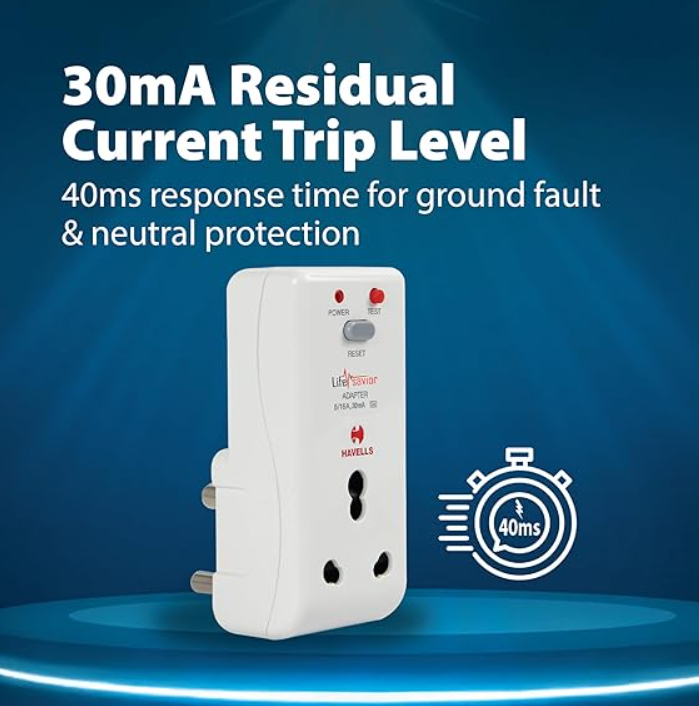
- Residual-current protection where appropriate
- Appropriate equipment selection


3. Administrative Controls
Implement:
- Electrical procedures
- Permit-to-work systems
- LOTO
- Training
- Authorization systems
- Inspection programs
- Preventive maintenance



4. Personal Protective Equipment
Depending on the hazard assessment, appropriate PPE may include:
- Electrical insulating gloves
- Safety footwear
- Face protection
- Arc-rated clothing
- Safety helmet
- Eye protection
PPE should be considered the last line of defense, not the primary method of controlling electrical hazards.
What Should You Do After an Electric Shock?
An electrical accident should always be taken seriously.
The first priority is to prevent further exposure.
Do not touch a person who is still in contact with an energized source unless the electrical hazard has been safely controlled.
The electrical source should be disconnected through a safe method by a competent person where possible.
Emergency medical assistance should be obtained for significant electrical shocks, particularly when the person has:
- Lost consciousness
- Difficulty breathing
- Chest symptoms
- Abnormal behavior
- Burns
- Persistent pain
- Neurological symptoms
- Any significant exposure to electrical energy
Appropriate first-aid and emergency-response procedures should be followed by trained personnel.
Practical EHS Checklist for Preventing Electric Shock
Before Electrical Work
- Identify all electrical energy sources.
- Determine whether the equipment can be de-energized.
- Isolate the electrical supply.
- Apply LOTO where required.
- Verify the safe condition using an appropriate procedure.
- Establish the work boundary.
- Use appropriate PPE.
During Work
- Use properly rated tools.
- Keep electrical equipment dry.
- Maintain appropriate clearances.
- Prevent unauthorized access.
- Follow the approved procedure.
- Never bypass protective devices.
- Maintain good housekeeping.
After Work
- Inspect the equipment.
- Remove tools and temporary connections.
- Confirm guards and covers are restored.
- Follow the approved LOTO removal procedure.
- Re-energize only when authorized.
- Monitor equipment for abnormal conditions.
Frequently Asked Questions
What is the physiology of electric shock?
The physiology of electric shock refers to how electrical current affects the normal functioning of the human body, particularly the nervous, muscular, respiratory and cardiovascular systems.
What happens when electricity passes through the human body?
Electrical current can stimulate nerves and muscles, interfere with breathing, disturb the heart’s electrical rhythm and generate heat that can damage tissues.
What is the most dangerous path for electric current?
A pathway involving the chest can be particularly dangerous because the current may affect the heart and respiratory system. Hand-to-hand and hand-to-foot paths can therefore present serious risks.
Can low-voltage electricity cause death?
Yes. The severity of an electrical incident cannot be determined from voltage alone. Current magnitude, duration, pathway, skin condition and other factors all influence the outcome.
Why is wet skin dangerous around electricity?
Moisture can reduce skin resistance, potentially allowing more current to flow through the body under otherwise similar conditions.
Why can a person be unable to release an electrical conductor?
Electrical stimulation can cause involuntary muscle contraction. Under certain conditions, this can make it difficult or impossible for a person to voluntarily release an energized conductor.
Is electric shock always accompanied by burns?
No. A person can suffer serious physiological effects without having obvious external burns.
Is arc flash the same as electric shock?
No. Electric shock involves current passing through the body. An arc flash involves an electrical arc that can produce intense heat, light, pressure and molten material. A single incident can involve both hazards.
Conclusion
The physiology of electric shock explains one of the most important facts in electrical safety:
The human body can be seriously affected when electrical current interferes with its normal biological functions.
Electricity can affect the nervous system, muscles, respiratory system and heart, while electrical energy can also cause severe burns and tissue damage.
The severity of an electrical injury depends on several factors—not simply the voltage printed on a piece of equipment.
The major causes of electric shock include:
- Direct contact with energized conductors
- Damaged insulation
- Faulty electrical equipment
- Poor earthing
- Wet conditions
- Damaged plugs and sockets
- Improper electrical repairs
- Contact with overhead lines
- Defective portable tools
- Failure to isolate energy
- Unauthorized electrical work
- Poor housekeeping
- Bypassed protective devices
- Inadequate inspection and maintenance
For EHS professionals and workers, the most important lesson is simple:
Do not wait for an electrical shock to teach you about electricity.
Identify the hazard before starting work.
De-energize whenever possible.
Isolate the energy.
Verify the safe condition.
Use competent personnel.
Maintain electrical equipment.
And never underestimate an electrical source simply because it looks small or familiar.
Respect electricity, control electrical energy, and make electrical safety part of every job—not just an emergency response.
Important EHS Safety Note
This article is intended for general electrical-safety education and workplace EHS awareness. Electrical work should be performed only by appropriately qualified, competent and authorized personnel and in accordance with applicable laws, regulations, standards, site procedures and manufacturer’s instructions.
In an actual electrical emergency, prioritize safe isolation of the electrical source and professional emergency medical assistance. Do not put yourself at risk while attempting to rescue someone from an energized circuit.
🔁 Readers also enjoyed these blog posts:
- Safety Management’s Role: The Unsung Hero Behind Every Successful Organization
- Safety Management and Its Responsibilities: Protecting People, Preventing Hazards, and Promoting a Culture of Care
- Benchmarking for Safety Performance: A Key to Continuous Improvement
“Start Your Website Journey Today – Exclusive Hostinger Discounts!”