 by
by ❄️ Introduction: Why “Feels Like” Temperature Matters More Than You Think
Have you ever stepped outside on a winter morning and thought, “It doesn’t feel as cold as the thermometer says” — or sometimes, “Wow, it feels much colder than this!”?
That’s where temperature indices come into play.
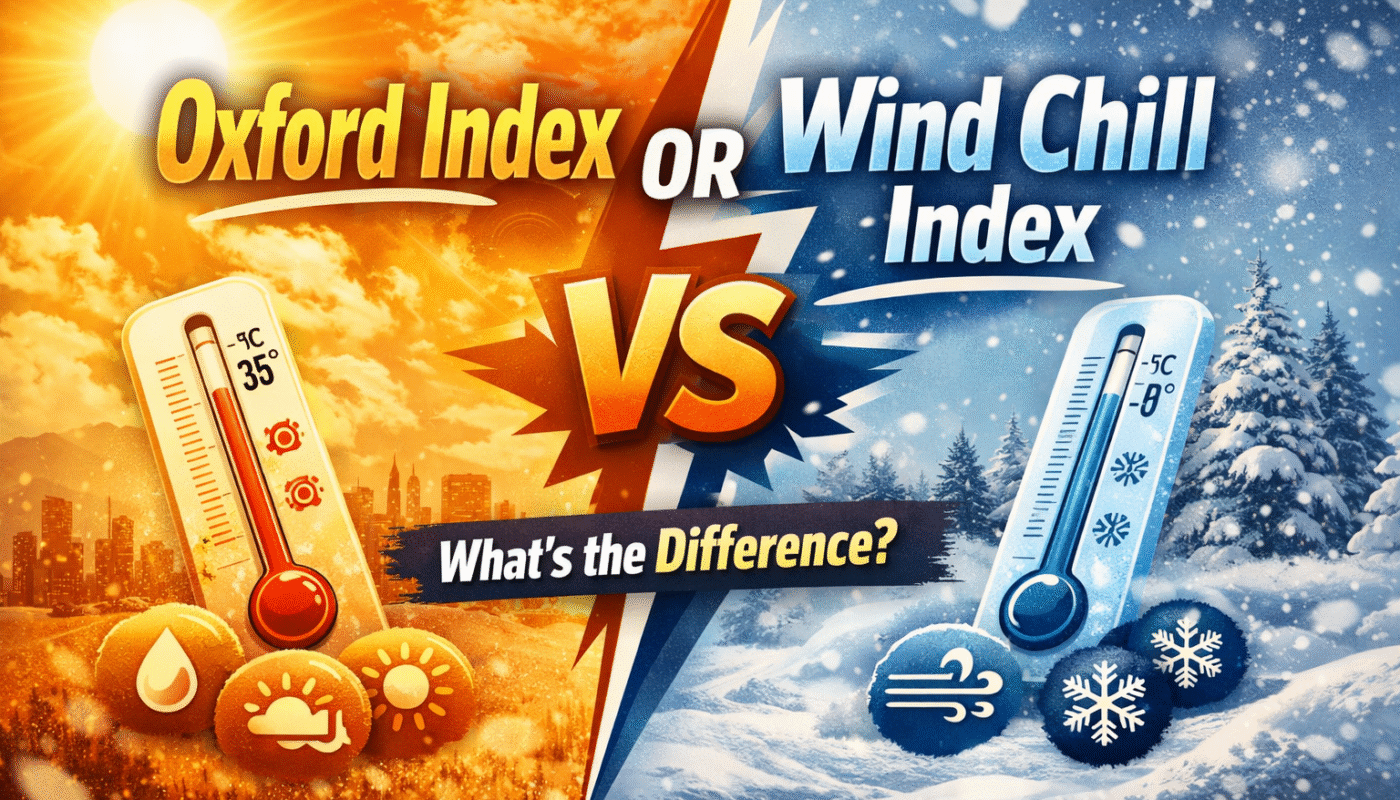
While most of us rely on basic temperature readings, meteorologists use specialized indices like the Oxford Index and the Wind Chill Index to give a more accurate picture of how the weather actually feels to the human body.
In this article, we’ll break down both concepts in a simple, conversational way — no complicated science jargon — so you can understand:
- What each index means
- How they are calculated
- Their differences
- And why they matter in your everyday life
Let’s dive in.
🌡️ What Is the Oxford Index?
The Oxford Index is not as widely discussed in everyday weather reports as the wind chill index, but it plays an important role in understanding environmental conditions.
📖 Simple Definition
The Oxford Index refers to a composite environmental comfort indicator, often used in academic and research contexts to evaluate how temperature, humidity, and other atmospheric factors affect human comfort.
🧠 What It Actually Measures
Unlike simple temperature readings, the Oxford Index considers multiple factors:
- Air temperature
- Relative humidity
- Sometimes radiation and airflow
- Human thermal comfort
It aims to answer a key question:
👉 “How comfortable or uncomfortable is this environment for humans?”
🌍 Where It’s Used
The Oxford Index is mainly used in:
- Climate studies
- Environmental research
- Urban planning
- Workplace safety assessments
It’s especially useful in places where temperature alone doesn’t tell the full story — like humid or densely populated urban areas.
🌬️ What Is the Wind Chill Index?
Now, this is something you’ve probably heard in weather forecasts.
📖 Simple Definition
The Wind Chill Index measures how cold it feels when wind speed is factored in along with air temperature.
🧊 Why Wind Matters
Wind removes heat from your body faster than still air. So even if the temperature is 10°C, strong wind can make it feel like 5°C or even lower.
👉 That’s why meteorologists say “feels like temperature.”
📊 Key Factors in Wind Chill
The wind chill index depends on:
- Actual air temperature
- Wind speed
🧮 Basic Idea Behind the Formula
While the exact formula is complex, the concept is simple:
👉 Higher wind speed = Faster heat loss = Colder feeling
⚖️ Oxford Index vs Wind Chill Index: Key Differences
Let’s make things crystal clear with a direct comparison.
| Feature | Oxford Index | Wind Chill Index |
|---|---|---|
| Purpose | Measures overall comfort | Measures perceived cold |
| Factors | Temperature, humidity, environment | Temperature + wind speed |
| Usage | Research & planning | Weather forecasts |
| Focus | Human comfort | Heat loss from body |
| Popularity | Less common publicly | Widely used |
🌡️ Real-Life Example to Understand Better
Imagine two different scenarios:
❄️ Scenario 1: Cold but Calm
- Temperature: 8°C
- No wind
👉 It feels slightly chilly but manageable.
🌬️ Scenario 2: Same Temperature with Wind
- Temperature: 8°C
- Strong wind
👉 Suddenly, it feels like 3°C or lower — that’s wind chill in action.
🌫️ Scenario 3: Hot and Humid Day
- Temperature: 35°C
- High humidity
👉 It feels like 42°C — this is where an index like the Oxford Index becomes useful.
🧠 Why These Indices Matter More Than You Think
Most people ignore these indices — but they actually impact your daily life in several ways.
👕 1. Clothing Choices
- Wind chill helps you decide how many layers to wear
- Oxford Index helps in hot climates (light vs breathable clothing)
🏃 2. Outdoor Activities
- Planning a jog? Wind chill can affect endurance
- High discomfort index? You might tire faster
🏥 3. Health & Safety
- Extreme wind chill can cause frostbite
- High discomfort levels can lead to heat exhaustion
🚧 4. Workplace Safety
Construction workers, factory employees, and outdoor laborers rely on these indices for safe working conditions.
❄️ Wind Chill and Health Risks
Let’s talk about something serious.
⚠️ Frostbite Risk
When wind chill drops significantly, exposed skin can freeze quickly.
🥶 Hypothermia
Prolonged exposure to low wind chill temperatures can lower your body temperature dangerously.
⏱️ Time Matters
In extreme cases, frostbite can occur in:
- 30 minutes
- 15 minutes
- Even under 10 minutes in severe conditions
🌡️ Oxford Index and Heat Stress
While wind chill deals with cold, the Oxford Index is helpful in understanding heat stress.
🔥 Heat Exhaustion
High discomfort levels can cause:
- Heavy sweating
- Weakness
- Dizziness
🚑 Heat Stroke
In extreme conditions:
- Body temperature rises dangerously
- Can become life-threatening
🌍 Role in Climate Change Awareness
These indices are becoming increasingly important due to global climate changes.
📈 Rising Temperatures
Even a small rise in temperature can significantly affect perceived heat.
🌪️ Changing Wind Patterns
Wind behavior is becoming less predictable, affecting wind chill calculations.
🏙️ Urban Heat Islands
Cities often feel hotter due to:
- Concrete structures
- Lack of greenery
Oxford Index helps measure this effect.
📊 How Weather Apps Use These Indices
Next time you check your weather app, look closely.
📱 What You’ll See
- “Feels Like” temperature → Wind Chill or Heat Index
- Humidity levels
- UV index
🤖 Smart Calculations
Apps combine multiple data points to give you:
👉 A more realistic weather experience
💡 Practical Tips for Daily Life
Here’s how you can use this knowledge smartly.
🧥 In Cold Weather
- Always check wind chill
- Wear windproof jackets
- Cover exposed skin
🧴 In Hot Weather
- Stay hydrated
- Avoid peak sun hours
- Wear breathable fabrics
📅 Planning Ahead
- Use “feels like” temperature instead of actual temperature
- Plan outdoor activities accordingly
🔍 Common Myths Debunked
Let’s clear up some confusion.
❌ Myth 1: Temperature is all that matters
👉 Reality: Wind and humidity change everything
❌ Myth 2: Wind chill affects objects
👉 Reality: It affects only living beings losing heat
❌ Myth 3: High temperature always means extreme heat
👉 Reality: Humidity can make it feel worse than it is
🧠 Easy Way to Remember the Difference
Here’s a simple trick:
- 🌬️ Wind Chill Index = Cold + Wind
- 🌡️ Oxford Index = Comfort + Environment
✍️ Conclusion: Understanding Weather Beyond Numbers
Weather isn’t just about numbers on a thermometer — it’s about how your body experiences those conditions.
While the Wind Chill Index helps you understand how cold it feels in windy conditions, the Oxford Index gives a broader view of environmental comfort, especially in hot and humid climates.
By paying attention to these indices, you can:
- Stay safer
- Plan better
- Live more comfortably
So next time you check the weather, don’t just look at the temperature — look at how it feels.
Because in real life, feeling matters more than numbers.
❓ FAQ Section
What is the difference between wind chill and actual temperature?
Wind chill represents how cold it feels due to wind, while actual temperature is the measured air temperature.
Is the Oxford Index used in daily weather reports?
No, it is mostly used in research and environmental studies rather than daily forecasts.
Can wind chill affect cars or objects?
No, wind chill only affects living beings that lose heat.
Why does humidity make weather feel hotter?
Humidity reduces the body’s ability to cool itself through sweating, making it feel hotter.
How can I check wind chill?
Most weather apps show a “feels like” temperature, which includes wind chill.
🔁 Readers also enjoyed these blog posts:
- Safety Management’s Role: The Unsung Hero Behind Every Successful Organization
- Safety Management and Its Responsibilities: Protecting People, Preventing Hazards, and Promoting a Culture of Care
- Benchmarking for Safety Performance: A Key to Continuous Improvement
“Start Your Website Journey Today – Exclusive Hostinger Discounts!”

Turn Any Idea into Viral,
Jaw-Dropping AI Videos in Seconds!