 by
by 🌡️ Introduction: Why Heat Tolerance Matters More Than Ever
If you’ve ever worked under the blazing sun or inside a hot industrial environment, you already know how exhausting it can get. But what many people don’t realize is that not everyone can tolerate heat the same way.
In workplaces like factories, construction sites, foundries, boiler rooms, and even outdoor jobs, high temperatures are a serious safety hazard. Reduced ability to withstand heat doesn’t just affect comfort—it can lead to fatal incidents like heat stroke, dehydration, and accidents due to fatigue.
So the real question is:
👉 What actually reduces a person’s ability to handle heat at work?
Let’s break it down in a practical, easy-to-understand way.
🔥 What is Heat Tolerance?
Heat tolerance refers to the body’s ability to maintain a stable internal temperature even when exposed to hot environments.
A healthy body cools itself through:
- Sweating
- Increased blood circulation
- Hydration balance
But when certain factors interfere, the body fails to regulate heat effectively, leading to dangerous conditions.
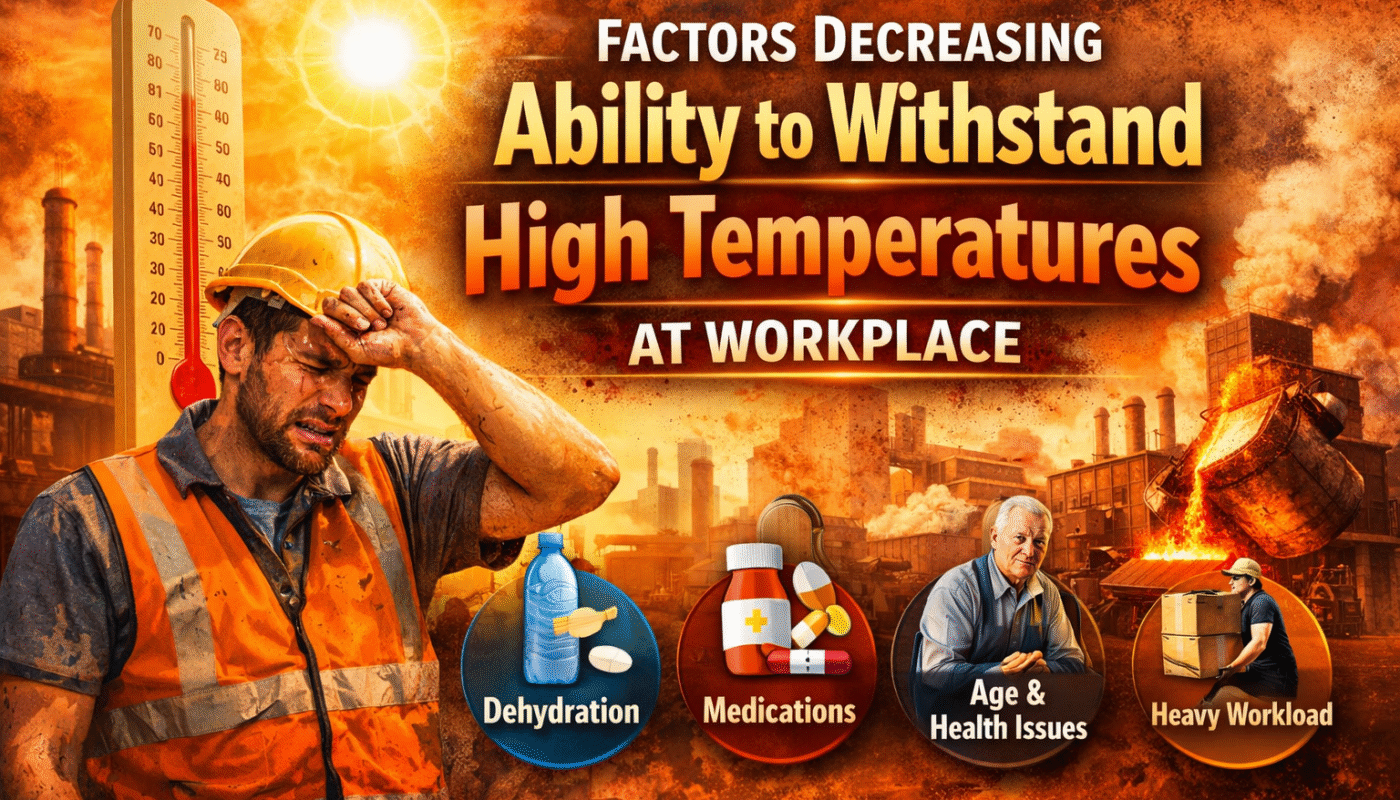
⚠️ Major Factors Decreasing Ability to Withstand High Temperatures
Let’s explore the key factors one by one 👇
1️⃣ Dehydration – The Silent Danger
This is the most common and most dangerous factor.
When your body loses water through sweat and you don’t replenish it:
- Blood volume decreases
- Sweating reduces
- Body temperature rises quickly
🚨 Impact:
- Dizziness
- Fatigue
- Heat exhaustion
- Heat stroke
💡 Real-world example:
Workers in construction or factories often avoid drinking water frequently to reduce breaks—this increases risk significantly.
👉 Tip: Drink water every 15–20 minutes, even if you’re not thirsty.
2️⃣ Lack of Acclimatization
Acclimatization means your body gradually adapts to working in heat.
❌ Problem:
New workers or those returning after a break:
- Sweat less efficiently
- Feel tired faster
- Are more prone to heat illness
💡 Example:
A worker joining a hot factory for the first time may feel exhausted within 1–2 hours, while experienced workers manage better.
👉 Solution: Gradually increase exposure over 7–14 days.
3️⃣ Poor Physical Fitness
Your physical condition plays a major role in heat tolerance.
⚠️ Effects of low fitness:
- Faster heart rate
- Reduced stamina
- Poor sweating response
Overweight individuals are especially vulnerable because:
- Fat acts as insulation
- Heat dissipation becomes difficult
👉 Tip: Regular exercise improves heat tolerance over time.
4️⃣ Age Factor
Both young and older workers are at higher risk.
👶 Young Workers:
- Lack experience
- Ignore warning signs
👴 Older Workers:
- Reduced sweating ability
- Slower body response
- Existing health conditions
👉 Important: Extra monitoring is required for these groups.
5️⃣ Medical Conditions
Certain health conditions reduce the body’s ability to handle heat.
Common conditions:
- Heart disease
- Diabetes
- High blood pressure
- Kidney disorders
🚨 Why dangerous?
These conditions affect:
- Blood circulation
- Fluid balance
- Temperature regulation
👉 Recommendation: Workers with medical conditions should undergo fitness assessment before working in hot environments.
6️⃣ Medications That Affect Heat Tolerance
Some medicines interfere with the body’s cooling system.
Examples:
- Diuretics (increase water loss)
- Antihistamines
- Blood pressure medications
- Antidepressants
⚠️ Risk:
- Reduced sweating
- Dehydration
- Heat buildup
👉 Advice: Always inform workplace safety officers about medications.
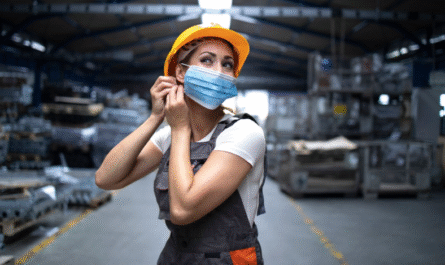
7️⃣ Inadequate Clothing and PPE
Clothing plays a major role in heat absorption and dissipation.
❌ Problems:
- Heavy PPE
- Non-breathable fabrics
- Dark-colored clothes
These:
- Trap heat
- Increase sweating
- Reduce comfort
💡 Example:
Workers wearing full protective suits in chemical plants face extreme heat stress.
👉 Solution:
- Use breathable fabrics
- Provide cooling PPE where possible
8️⃣ High Humidity Levels
Heat becomes more dangerous when combined with humidity.
⚠️ Why?
Sweat doesn’t evaporate easily in humid conditions.
👉 Result:
- Body cannot cool itself
- Temperature rises rapidly
📍 Example:
Coastal and monsoon regions often experience high humidity, making moderate heat feel extreme.
9️⃣ Workload and Physical Activity
The more intense the work, the more heat your body generates.
🔥 High-risk tasks:
- Heavy lifting
- Continuous machine operation
- Outdoor labor
⚠️ Result:
- Increased internal heat
- Faster dehydration
👉 Tip: Follow work-rest cycles to reduce risk.
🔟 Poor Ventilation at Workplace
Indoor workplaces can become heat traps if ventilation is poor.
❌ Causes:
- Lack of airflow
- Closed environments
- Heat-generating machines
🚨 Impact:
- Heat accumulates
- Oxygen levels drop
- Worker fatigue increases
👉 Solution:
- Install exhaust fans
- Improve airflow systems
1️⃣1️⃣ Alcohol and Caffeine Consumption
What you consume before or during work matters.
🍺 Alcohol:
- Causes dehydration
- Reduces alertness
☕ Excess caffeine:
- Increases fluid loss
- Raises heart rate
👉 Advice: Avoid alcohol and limit caffeine before working in hot conditions.
1️⃣2️⃣ Lack of Proper Rest and Sleep
Fatigue reduces your body’s ability to cope with heat.
⚠️ Effects:
- Slower response time
- Reduced sweating efficiency
- Increased accident risk
👉 Tip: Ensure proper sleep, especially during summer months.
🚨 Warning Signs of Reduced Heat Tolerance
Workers and supervisors should watch out for:
- Excessive sweating or no sweating
- Muscle cramps
- Headache
- Nausea
- Confusion
- Rapid heartbeat
👉 These can quickly escalate into heat stroke, which is life-threatening.
🛡️ Preventive Measures for Workplace Safety
Now that we know the causes, let’s focus on prevention 👇
✅ 1. Hydration Policy
- Provide clean drinking water
- Encourage frequent intake
- Use electrolyte drinks if needed
✅ 2. Work-Rest Cycles
- Schedule breaks in shaded/cool areas
- Reduce workload during peak heat hours
✅ 3. Training & Awareness
- Educate workers about heat risks
- Teach early symptom recognition
✅ 4. Engineering Controls
- Ventilation systems
- Cooling fans
- Heat shields
✅ 5. Personal Protective Measures
- Light-colored clothing
- Cooling vests
- Proper PPE selection
✅ 6. Health Monitoring
- Regular medical checkups
- Fitness-to-work assessments
🌍 Why This Topic is Crucial Today
With rising global temperatures and intense summers, heat-related workplace risks are increasing rapidly.
Industries must understand that:
👉 Worker safety is directly linked to productivity and efficiency
Ignoring heat stress factors can lead to:
- Accidents
- Reduced output
- Legal liabilities
✍️ Conclusion: Safety Starts with Awareness
The ability to withstand high temperatures is not just about strength—it’s about health, awareness, and proper workplace systems.
By identifying and controlling the factors discussed above, organizations can:
- Protect workers
- Improve performance
- Prevent life-threatening incidents
👉 Remember:
Heat stress is preventable, but only if taken seriously.
❓ Frequently Asked Questions (FAQ)
Q1. What is the most common cause of heat stress at workplace?
Dehydration is the most common cause, followed by high workload and poor ventilation.
Q2. How can workers increase heat tolerance?
Through proper hydration, gradual acclimatization, and maintaining good physical fitness.
Q3. Who is most at risk?
New workers, older employees, and those with medical conditions.
Q4. What is the first sign of heat exhaustion?
Fatigue, dizziness, and excessive sweating are early warning signs.
🔁 Readers also enjoyed these blog posts:
- Safety Management’s Role: The Unsung Hero Behind Every Successful Organization
- Safety Management and Its Responsibilities: Protecting People, Preventing Hazards, and Promoting a Culture of Care
- Benchmarking for Safety Performance: A Key to Continuous Improvement
“Start Your Website Journey Today – Exclusive Hostinger Discounts!”

Turn Any Idea into Viral,
Jaw-Dropping AI Videos in Seconds!