 by
Electrical energy powers almost every aspect of modern industrial operations. From production machinery and motors to lighting, control panels, laboratory equipment and automated manufacturing systems, electricity plays an essential role in keeping workplaces running.
However, electricity is also one of the most dangerous workplace hazards when it is not properly controlled.
A moment of carelessness, an incorrect electrical connection, damaged insulation or failure to isolate an electrical supply can result in severe injuries, burns, electric shock, fires and even fatalities.
Electrical accidents do not always happen because employees lack technical knowledge. In many cases, they occur because of routine shortcuts, inadequate supervision, poor maintenance practices or a failure to follow established safety procedures.
Whether you are an electrician, electrical maintenance technician, engineer, contractor or EHS professional, understanding and implementing appropriate electrical safety measures is essential.
In this article, we will explore the most important safety measures for electrical work, including risk assessment, lockout/tagout (LOTO), PPE, electrical isolation, working at height, electrical panel safety and emergency response.
The objective is simple: No electrical job should be started unless it can be performed safely.
1. Understand the Major Hazards Associated with Electrical Work
Before discussing preventive measures, it is important to understand the hazards associated with electrical activities.
Electrical energy can cause serious injuries even when a person does not directly touch an electrical conductor.
The most common electrical hazards include:
Electric shock: When electrical current passes through the human body, it can interfere with normal muscle, nerve and heart functions. The severity depends on factors such as current, duration of exposure, body resistance and current path.
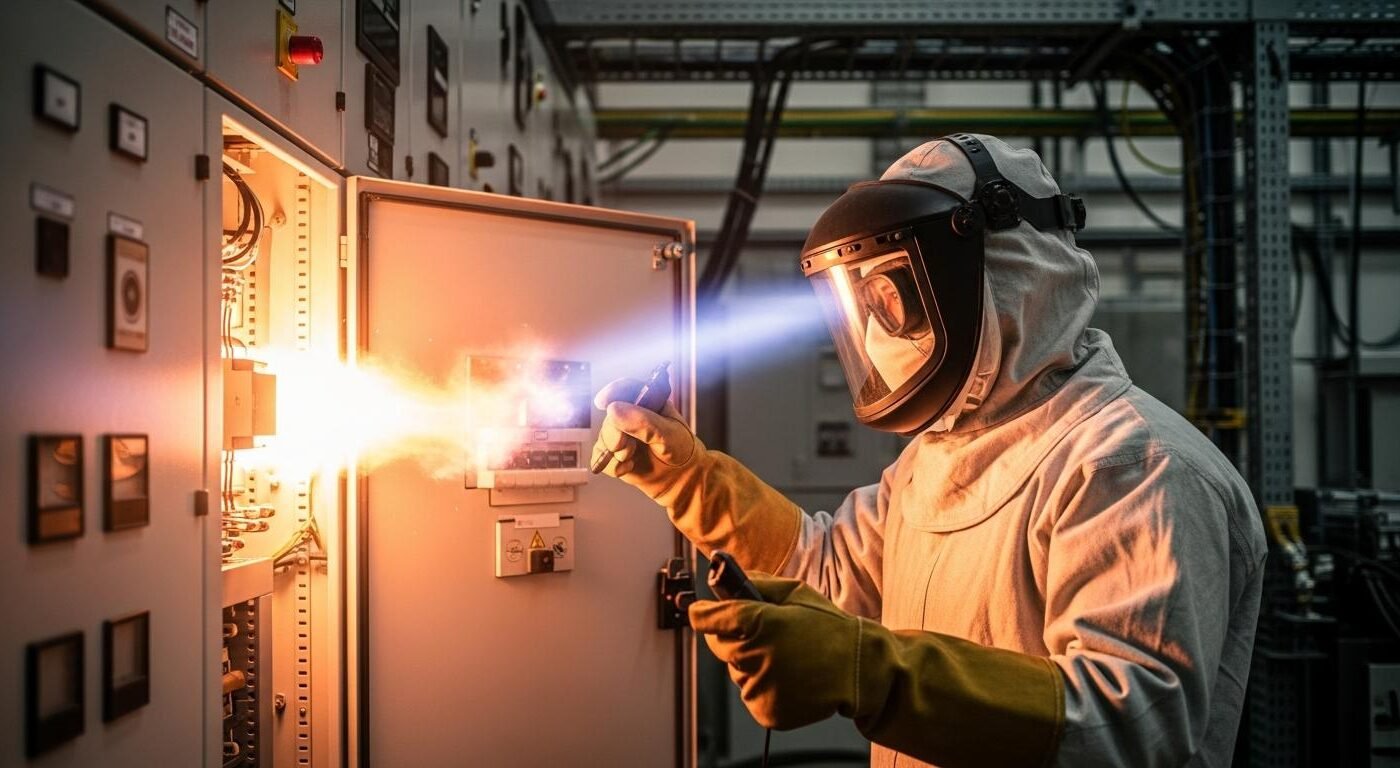
Electrical burns: Contact with live electrical components can cause severe burns. Arc flash incidents can also produce extremely high temperatures capable of causing serious skin injuries.
Arc flash and arc blast: An electrical arc can release enormous amounts of thermal energy, intense light, pressure and molten metal. These incidents can cause life-threatening injuries.
Electrical fires: Overloaded circuits, loose connections, damaged cables, incorrect protection devices and short circuits can result in fires.
Secondary injuries: An electrical shock may cause a worker to fall from a ladder, scaffold or elevated platform, resulting in additional injuries.
Recognising these hazards is the first step towards preventing electrical accidents.
2. Conduct a Risk Assessment Before Starting Electrical Work
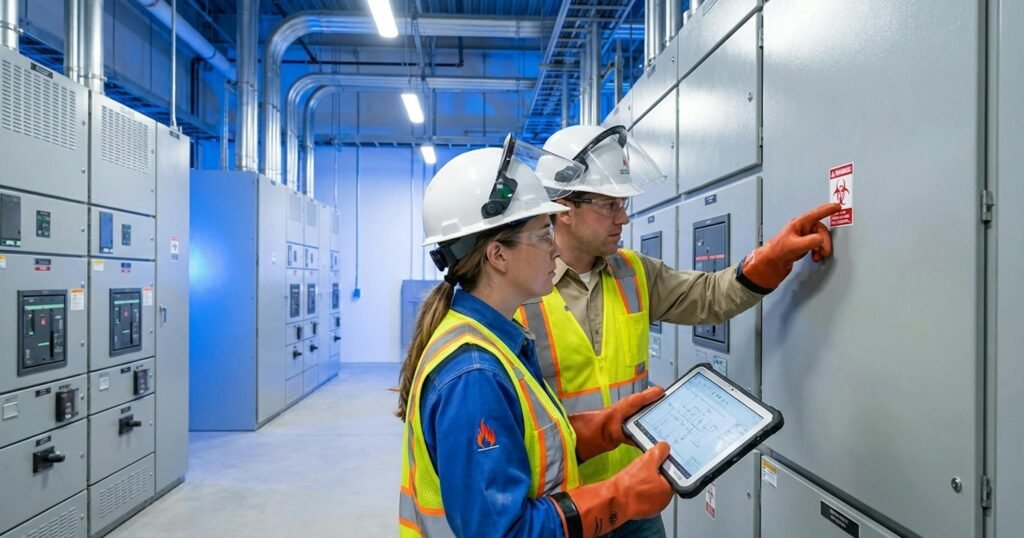
Every electrical job should begin with a suitable risk assessment.
Even seemingly simple electrical maintenance activities can involve unexpected hazards.
Before starting work, evaluate:
- Electrical voltage and available fault current.
- Possibility of contact with live electrical parts.
- Arc flash and arc blast hazards.
- Condition of cables, insulation and electrical equipment.
- Possibility of accidental energisation.
- Presence of moisture, water or conductive materials.
- Working at height and confined-space hazards.
- Nearby equipment and other simultaneous activities.
- Availability of emergency response arrangements.
For complex electrical maintenance activities, prepare a detailed Job Safety Analysis (JSA) or Job Hazard Analysis (JHA).
A permit-to-work system should be implemented wherever required by the site’s electrical safety procedures.
EHS recommendation: Never treat electrical risk assessment as a paperwork exercise. Discuss the actual hazards with the people performing the job and verify that the proposed controls are practical.
3. Always Isolate the Electrical Supply Before Starting Work


One of the most important electrical safety measures is ensuring that equipment is properly isolated before maintenance or repair.
Working on equipment that is still energised creates an unnecessary and potentially fatal risk.
The preferred approach is to de-energise electrical equipment before starting work.
Follow these steps:
- Identify all electrical energy sources connected to the equipment.
- Inform affected employees and operating personnel.
- Shut down the equipment using the approved procedure.
- Isolate the electrical supply using the appropriate isolation device.
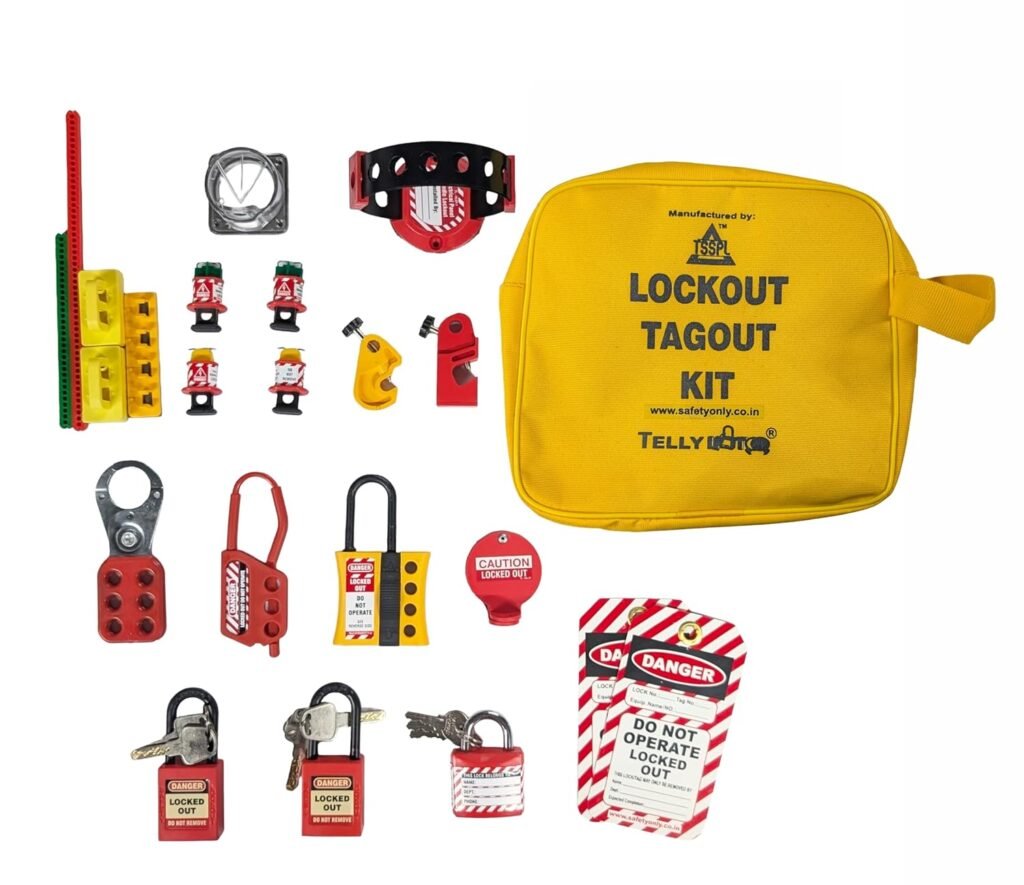
- Apply personal lockout and tagout devices.
- Release or control stored electrical energy.
- Verify that the equipment cannot restart.
- Test for the absence of voltage using an appropriately rated instrument.
- Confirm the tester’s operation before and after testing.
- Begin work only after the isolation has been verified.
Remember that equipment may have multiple electrical energy sources, including:
- Main electrical supply.
- Backup generators.
- UPS systems.
- Battery systems.
- Solar photovoltaic supplies.
- Control circuits.
- Capacitor banks.
- Automatic transfer systems.
All relevant energy sources must be identified and controlled.
Important: Turning off a machine using its normal STOP button does not constitute electrical isolation.
4. Follow Lockout/Tagout (LOTO) Procedures Strictly
Lockout/Tagout is a critical safety system designed to prevent unexpected energisation or the release of hazardous energy during maintenance.
A proper LOTO programme should include:
- Written energy control procedures.
- Identification of isolation points.
- Individual locks for authorised employees.
- Identification tags with employee details.
- Group lockout arrangements where necessary.
- Verification of zero-energy conditions.
- Controlled removal of locks.
- Periodic inspection and auditing of the LOTO programme.
Each authorised employee should apply their own personal lock wherever the procedure requires it.
Never remove another employee’s lock unless following a formally approved exceptional removal procedure.
A well-implemented LOTO system protects electrical technicians, contractors, operators and other employees who may be exposed to unexpected equipment energisation.
5. Use Appropriate Personal Protective Equipment (PPE)
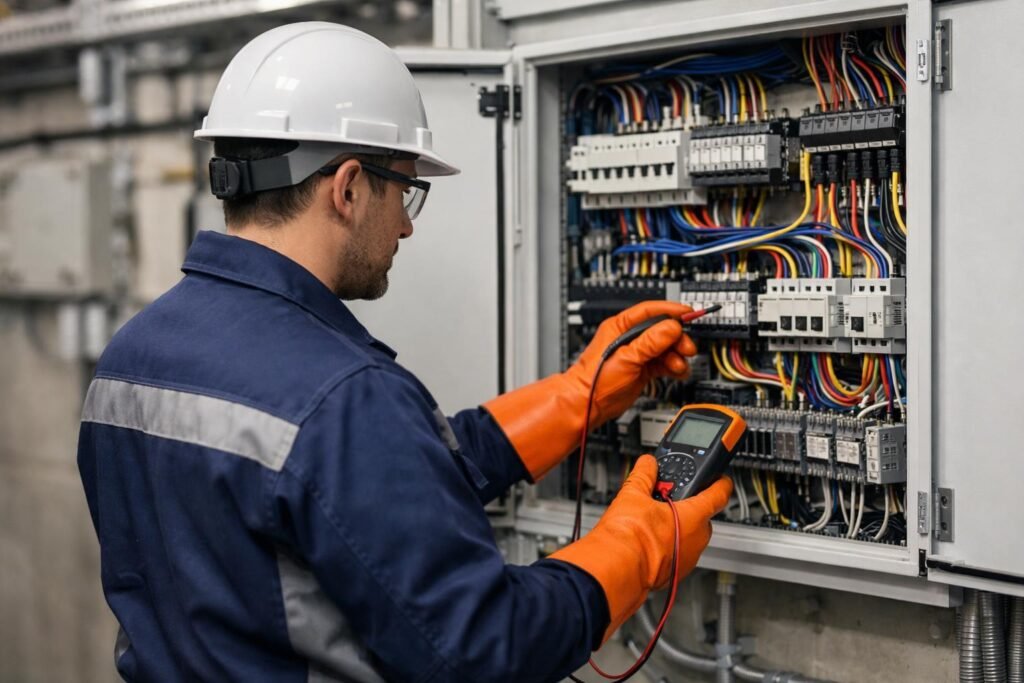
Personal Protective Equipment is an important layer of protection during electrical work.
However, PPE should not replace electrical isolation, safe working procedures or engineering controls.
The selection of PPE must be based on the electrical hazards and the risk assessment.
Common electrical safety PPE includes:
| PPE | Purpose |
|---|---|
| Insulated gloves | Protection against electrical contact within their rated limits |
| Safety helmet | Protection against impact and other identified hazards |
| Arc-rated face shield | Protection against arc flash thermal hazards |
| Arc-rated clothing | Reduction of thermal injury from arc exposure |
| Safety footwear | Protection against mechanical and electrical hazards as appropriately rated |
| Safety glasses | Protection against flying particles and debris |
| Hearing protection | Protection against high noise levels during certain electrical incidents |
Additional considerations:
- Inspect insulated gloves before each use.
- Perform required dielectric testing at specified intervals.
- Select gloves based on voltage classification.
- Ensure arc-rated clothing is appropriate for the assessed incident energy.
- Never use damaged or contaminated electrical PPE.
- Maintain PPE in accordance with manufacturer recommendations.
Remember: Ordinary cotton clothing, standard safety shoes and general-purpose gloves should never be assumed to provide adequate arc flash or electrical shock protection.
6. Use Properly Insulated and Tested Electrical Tools



Electrical tools must be suitable for the job and the electrical environment.
Using damaged or unsuitable tools can increase the risk of electric shock, short circuits and arc flash incidents.
Follow these precautions:
- Use appropriately rated insulated tools for electrical work.
- Inspect tools before every use.
- Check insulation for cuts, cracks and damage.
- Use voltage-rated multimeters and test instruments.
- Verify instrument category ratings and voltage limits.
- Never use damaged test leads or probes.
- Use non-conductive tools wherever appropriate.
- Keep tools clean, dry and properly stored.
For electrical testing, use instruments that are suitable for the installation’s voltage and measurement category.
A multimeter designed for low-voltage electronic circuits should not be used on industrial switchgear unless its ratings and suitability have been verified.
7. Never Work on Live Electrical Equipment Without Proper Authorisation
Working on live electrical equipment is one of the most serious electrical safety risks.
Whenever possible, equipment should be de-energised before maintenance, inspection or repair.
Sometimes, specialised activities may require energised equipment, such as certain diagnostic testing or commissioning tasks.
Such work must only be undertaken when legally permitted and justified by a documented assessment.
Essential precautions include:
- Written authorisation.
- A documented justification for energised work.
- A task-specific risk assessment.
- Qualified and authorised electrical personnel.
- Suitable shock and arc flash protection.
- Properly rated test instruments.
- Establishment of safe approach boundaries.
- Barriers and warning signs.
- Emergency arrangements and appropriate standby support.
EHS best practice: Live electrical work should never be permitted simply to save production time or avoid a routine shutdown.
8. Maintain Electrical Panels and Distribution Boards
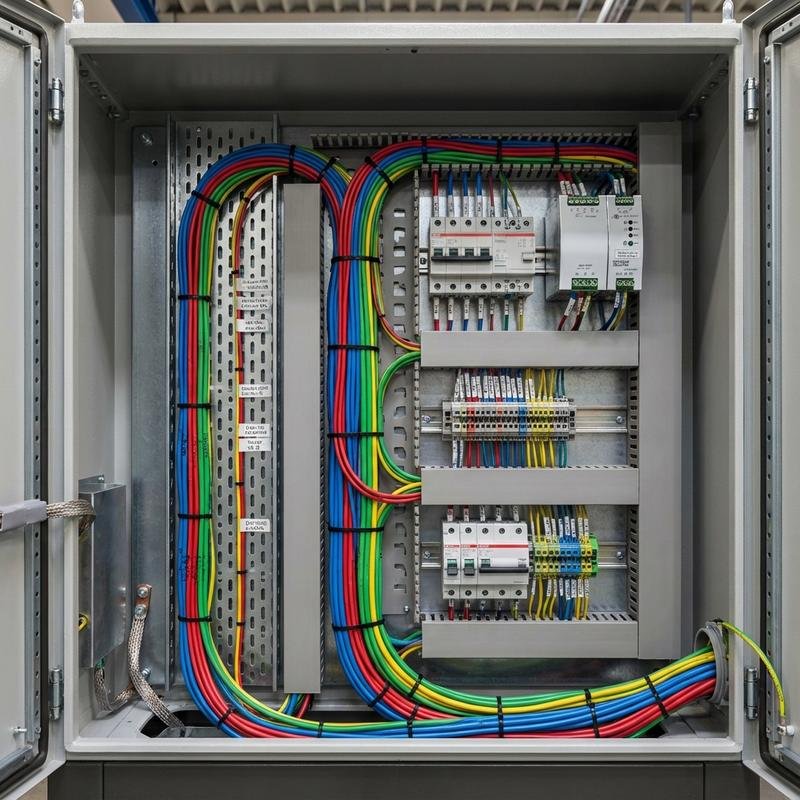
Electrical panels are critical components of industrial electrical systems.
Poor housekeeping, loose connections, inadequate ventilation and unauthorised modifications can create serious hazards.
Important preventive measures include:
- Keep electrical panels closed and properly secured.
- Ensure all panels have appropriate electrical hazard identification.
- Maintain adequate working clearance around electrical panels.
- Prevent storage of materials in front of electrical panels.
- Inspect panel enclosures, doors and cable entries.
- Check for signs of overheating, burning or abnormal noise.
- Ensure proper earthing and bonding.
- Verify that protective devices are correctly selected and maintained.
- Prevent unauthorised access.
- Keep electrical drawings and circuit identification updated.
Thermographic inspections can help identify abnormal heating at electrical connections and components.
Such inspections should be conducted by competent personnel using suitable equipment and safe procedures.
9. Ensure Proper Earthing and Electrical Bonding
Earthing is an essential electrical safety measure that helps reduce the risk of electric shock and supports the operation of protective devices.
An effective earthing system provides a suitable path for fault current, helping protective devices operate under designed fault conditions.
Important practices include:
- Ensure electrical equipment is properly earthed.
- Inspect earthing conductors and connections.
- Maintain continuity of protective earth connections.
- Ensure proper bonding of metallic enclosures.
- Inspect earthing connections during preventive maintenance.
- Test earth continuity and earth resistance as required.
- Avoid unauthorised modifications to earthing systems.
In industrial environments handling combustible dust, flammable liquids or solvents, bonding and grounding are particularly important.
Static electricity can accumulate during the transfer of combustible materials. Appropriate bonding and grounding arrangements help control this ignition hazard.
10. Follow Safe Practices While Working with Electrical Cables
Damaged cables and improper electrical connections are common causes of electrical incidents.
Electrical cables should be inspected regularly, particularly in manufacturing plants, workshops and construction areas.
Key safety precautions:
- Never use cables with damaged insulation.
- Avoid temporary and unauthorised electrical connections.
- Do not overload extension boards.
- Protect cables from mechanical damage.
- Keep cables away from hot surfaces.
- Avoid routing cables through wet areas.
- Use suitable industrial-grade plugs and sockets.
- Ensure proper strain relief at cable connections.
- Replace damaged plugs and connectors immediately.
Extension cords should not become a permanent substitute for correctly installed electrical distribution systems.
11. Maintain Safe Distance from Overhead Electrical Lines
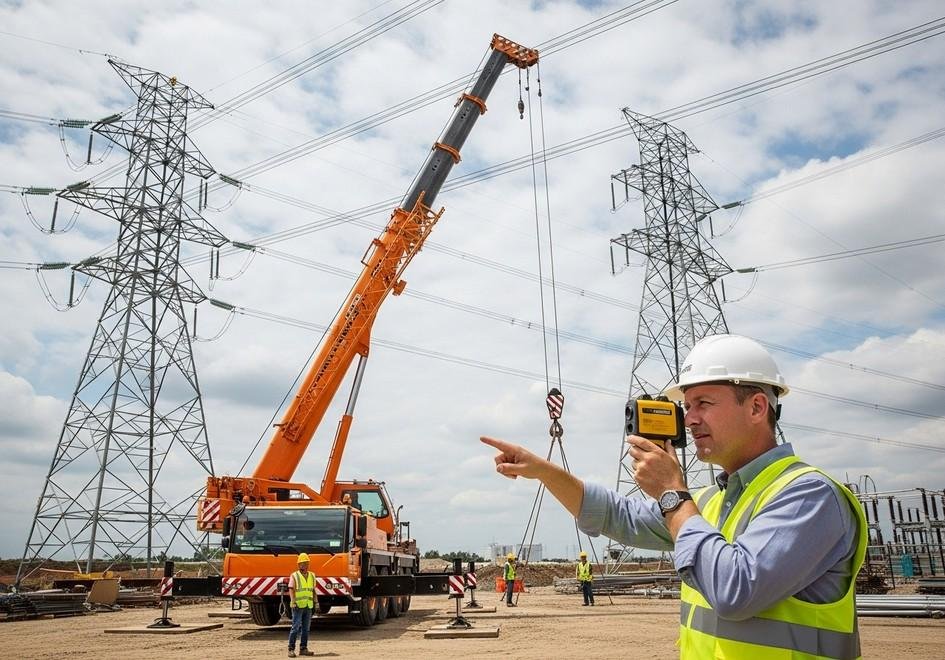
Electrical overhead lines create significant hazards during construction, crane operations, material handling and maintenance activities.
Contact with an overhead electrical line can result in fatal electric shock.
Before starting work near overhead lines:
- Identify the location and voltage of electrical lines.
- Consult the electricity utility where necessary.
- Establish the applicable minimum approach distances.
- Use physical barriers and warning signs.
- Restrict movement of cranes and lifting equipment.
- Assign trained spotters where required.
- Use suitable height and movement restrictions.
- De-energise or relocate lines wherever reasonably practicable.
Never assume that an overhead electrical line is safe to approach because it is insulated or appears inactive.
The required clearance depends on voltage, applicable regulations and the nature of the activity.
12. Take Extra Precautions When Working in Wet Conditions
Water and electricity create a particularly dangerous combination.
Wet conditions can reduce the electrical resistance of the skin and increase the risk of electric shock.
Electrical maintenance in wet areas requires additional precautions.
Follow these practices:
- Avoid electrical work in standing water.
- Ensure equipment is suitable for the environmental conditions.
- Use appropriately rated enclosures.
- Inspect electrical connections for moisture ingress.
- Use suitable residual-current protection where applicable.
- Keep electrical tools and cables dry.
- Avoid handling electrical equipment with wet hands.
- Stop work if unsafe water ingress is identified.
Portable electrical equipment used in wet or conductive environments should receive special attention during risk assessment.
13. Inspect Portable Electrical Equipment Regularly
Portable electrical equipment is frequently used in maintenance workshops, fabrication areas, laboratories and production facilities.
Examples include:
- Hand drills.
- Grinders.
- Welding machines.
- Portable lighting.
- Extension boards.
- Portable pumps.
- Electrical cleaning equipment.
A good inspection programme should include:
| Inspection point | What to check |
|---|---|
| Cable | Cuts, cracks and exposed conductors |
| Plug | Damage, loose connections and overheating |
| Body | Physical damage and missing covers |
| Switch | Correct operation |
| Earthing | Protective earth continuity, where applicable |
| Protection | Suitability and condition of protective devices |
| Test status | Inspection and testing records, as required |
Defective equipment must be removed from service immediately and clearly identified to prevent accidental use.
14. Ensure Only Competent and Authorised Personnel Perform Electrical Work
Electrical work requires appropriate technical knowledge, training and practical experience.
Employees should not be allowed to undertake electrical maintenance simply because they are familiar with the equipment.
A competent electrical worker should understand:
- Electrical hazards and control measures.
- Electrical drawings and circuit diagrams.
- Isolation and LOTO requirements.
- Electrical testing procedures.
- Safe use of tools and PPE.
- Emergency response.
- Applicable electrical standards and regulations.
Organisations should maintain an authorised electrical worker list and define the scope of work permitted for each level of competence.
Contractors must also be evaluated for their qualifications, training and experience before being permitted to undertake electrical activities.
15. Electrical Safety During Maintenance and Shutdown Activities
Planned shutdowns and maintenance activities often involve multiple contractors, simultaneous operations and complex equipment isolation.
These conditions can increase electrical risks.
Before shutdown activities begin:
- Prepare an electrical isolation plan.
- Identify all equipment requiring isolation.
- Review electrical drawings.
- Coordinate with operations and maintenance.
- Implement a permit-to-work system.
- Establish group LOTO arrangements.
- Conduct toolbox talks.
- Verify isolation before starting work.
- Maintain communication between work teams.
- Ensure proper handover before re-energisation.
Particular care is required when several teams are working on interconnected equipment.
The responsible person should verify that all personnel, tools and temporary connections are cleared before equipment is returned to service.
16. Know What to Do During an Electrical Emergency

Electrical emergencies require immediate and coordinated action.
If a person receives an electric shock, the first priority is to protect the rescuer from becoming another casualty.
Follow these steps:
Step 1: Do not touch the victim directly while they may still be in contact with an electrical source.
Step 2: Switch off the electrical supply immediately if it is safe to do so.
Step 3: If isolation cannot be achieved, do not attempt an unsafe rescue. Follow the site’s emergency procedure and obtain assistance from trained emergency responders.
Step 4: Once the electrical source is confirmed isolated, trained personnel should assess the victim.
Step 5: Check responsiveness and normal breathing.
Step 6: If the person is not breathing normally, initiate CPR and use an AED as soon as available, following your training and emergency response procedures.
Step 7: Arrange immediate medical evaluation.
Even if a person appears to recover after an electrical shock, medical assessment is important because serious internal injuries and cardiac complications may not be immediately visible.
For electrical fires, use only extinguishing agents suitable for the type of fire and electrical equipment. Do not use water on energised electrical equipment.
Emergency arrangements should be practised through periodic drills.
17. Develop an Effective Electrical Safety Inspection Programme
Electrical safety should not depend only on individual behaviour.
A structured inspection and preventive maintenance programme helps identify problems before they result in accidents.
Recommended inspection activities include:
| Inspection activity | Suggested frequency |
|---|---|
| Visual inspection of electrical panels | Routine site-defined frequency |
| Portable electrical equipment inspection | Risk-based schedule |
| Earthing and bonding inspection | Periodic |
| Electrical thermography | Risk-based, particularly for critical panels |
| LOTO compliance audit | Periodic |
| Electrical PPE inspection | Before use and as specified |
| Electrical safety training | Initial and periodic refresher |
| Electrical emergency drills | As per emergency plan |
| Protective device testing | According to manufacturer and applicable standards |
Inspection frequency should be determined by equipment criticality, environmental conditions, legal requirements, manufacturer recommendations and previous inspection findings.
18. Electrical Safety Checklist for EHS and Maintenance Teams
The following checklist can be used during routine workplace inspections and electrical safety audits.
Electrical Safety Inspection Checklist
Practical tool
0 of 16 verified
Electrical work is performed by authorised personnel
Risk assessment and work permit completed, where required
Electrical supply isolated before maintenance
LOTO applied and verified
Absence of voltage confirmed using a suitable tester
Appropriate electrical PPE available and usedInsulated tools and test instruments inspected
Electrical panels closed and properly identified
Adequate clearance maintained around panels
Earthing and bonding connections maintained
Electrical cables and plugs in good condition
No overloaded sockets or unauthorised connections
Portable electrical equipment inspected
Overhead line clearance requirements followed
Emergency response equipment and arrangements available
Electrical workers trained in emergency response
Use this as an inspection aid, not as a substitute for statutory inspections, technical testing or site-specific procedures.
19. Build a Strong Electrical Safety Culture
Electrical safety is not just the responsibility of the electrical maintenance department.
It requires active participation from operations, engineering, projects, contractors, supervisors and EHS teams.
Organisations should focus on developing a preventive safety culture.
Some effective initiatives include:
1. Electrical safety awareness campaigns
Conduct regular awareness sessions covering electrical shock, arc flash, LOTO and safe electrical practices.
2. Toolbox talks
Discuss electrical hazards before maintenance activities, shutdowns and non-routine jobs.
3. Electrical safety audits
Conduct periodic inspections to identify unsafe conditions and unsafe practices.
4. Learning from incidents and near misses
Investigate electrical incidents and near misses to identify underlying causes and prevent recurrence.
5. Contractor safety management
Ensure contractors follow the same electrical safety standards and isolation procedures as employees.
6. Leadership involvement
Plant and maintenance leaders should regularly review electrical safety performance and demonstrate commitment to safe working practices.
7. Recognise safe behaviour
Recognise employees who identify electrical hazards, stop unsafe jobs and proactively report defects.
A strong electrical safety culture is developed when employees feel empowered to stop work whenever they identify an unsafe condition.
20. Important Electrical Safety Standards and References
Organisations should establish their electrical safety procedures based on applicable legislation, recognised standards and equipment-specific requirements.
Some important references include:
- OSHA 29 CFR 1910 Subpart S: Electrical safety requirements in general industry.
- NFPA 70E: Standard for Electrical Safety in the Workplace.
- IEC 60364: Low-voltage electrical installations.
- IEC 61439: Low-voltage switchgear and controlgear assemblies.
- IEC 60903: Live working – Electrical insulating gloves.
- IS 5216: Safety procedures and practices in electrical work.
- CEA (Measures relating to Safety and Electric Supply) Regulations, 2023: Important electrical safety requirements in India.
For Indian manufacturing facilities, electrical work should also comply with applicable requirements under the Electricity Act, relevant CEA regulations, state-specific requirements and other applicable statutory provisions.
Always verify the latest applicable editions and amendments before developing or revising site procedures.
Conclusion: Electrical Safety Begins Before Switching On the Power
Electricity is essential for modern industrial operations, but its hazards should never be underestimated.
Most electrical accidents can be prevented through proper planning, effective isolation, strict LOTO compliance, appropriate PPE, competent personnel and regular inspection of electrical systems.
The most important principle is to eliminate electrical hazards wherever reasonably practicable rather than relying only on PPE or employee caution.
For EHS professionals, maintenance managers and plant leaders, the responsibility goes beyond implementing procedures. It involves building a workplace where every employee understands electrical hazards and feels confident to stop an unsafe job.
Remember these five essential principles:
- Plan the job: Identify hazards and assess risks before starting.
- Isolate the energy: Apply LOTO and verify zero-energy conditions.
- Protect the people: Use suitable PPE, tools and equipment.
- Verify the workplace: Inspect electrical systems and maintain safe conditions.
- Empower employees: Stop unsafe work without hesitation.
Electricity does not give a second chance. Every electrical job must begin with safety and end with safety.
🔁 Readers also enjoyed these blog posts:
- Safety Management’s Role: The Unsung Hero Behind Every Successful Organization
- Safety Management and Its Responsibilities: Protecting People, Preventing Hazards, and Promoting a Culture of Care
- Benchmarking for Safety Performance: A Key to Continuous Improvement
“Start Your Website Journey Today – Exclusive Hostinger Discounts!”