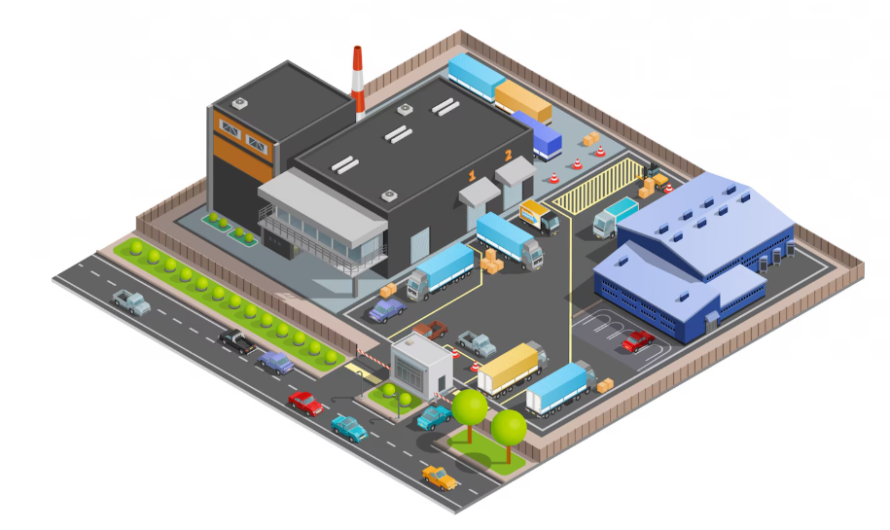
Ergonomic Factors for Layout and Design of a Factory Building
 by
by “A well-designed factory isn’t just about machines and walls — it’s about people.”
EHS content HUB
“A well-designed factory isn’t just about machines and walls — it’s about people.”
When you think of factory safety, you might immediately picture hard hats, safety goggles, or fire extinguishers. But here’s something often overlooked — the very ground you’re walking on.
Imagine building a dream factory that runs like a well-oiled machine—until one small hazard shuts everything down.
Yes, a poorly planned layout can cost not just money, but lives.
Imagine stepping into a factory where every tool is exactly where you need it, the workflow is seamless, and the risk of accidents is minimal. Sounds perfect, right?
Have you ever wondered what goes into designing a legally compliant factory building in Gujarat?
It’s not just about putting up walls and a roof — it’s about building a safe, efficient, and legally sound workplace that takes into account human needs and health. This is where the Gujarat Factories Rules, 1963, steps in with clearly laid-out specifications for infrastructure planning.
When it comes to setting up a successful manufacturing unit, the planning and design of a factory can make or break your productivity, efficiency, and compliance. While it’s easy to get caught up in machinery selection or workforce hiring, the foundation of operational excellence lies in the blueprint — literally.
In today’s industrial environment, occupational health and safety (OHS) isn’t just about compliance—it’s about caring for people. Workers are the backbone of any factory setup, and ensuring their safety is not only a legal obligation but a moral one too.
Setting up a factory is not just about putting machinery in place and hiring workers. It’s a process that starts with a solid foundation—literally. The design, layout, and construction of a factory must comply with several statutory requirements. In India, two primary frameworks govern this process: The Factories Act, 1948 (a central legislation) and the Gujarat Factories Rules, 1963 (a state-specific extension).
Let’s face it—when it comes to workplace safety, ignorance is never bliss. For factories in Gujarat, India’s fast-growing industrial hub, ensuring safety isn’t just a moral duty—it’s the law. Whether you’re a factory owner, a safety officer, or someone aspiring to work in industrial safety, understanding the statutory (legal) and non-statutory (voluntary/best practices) safety rules is absolutely essential.
Organizations that understand this don’t just enforce safety—they inspire it. One of the most effective ways to inspire a safe work environment is through a carefully designed system of financial and non-financial incentives.